

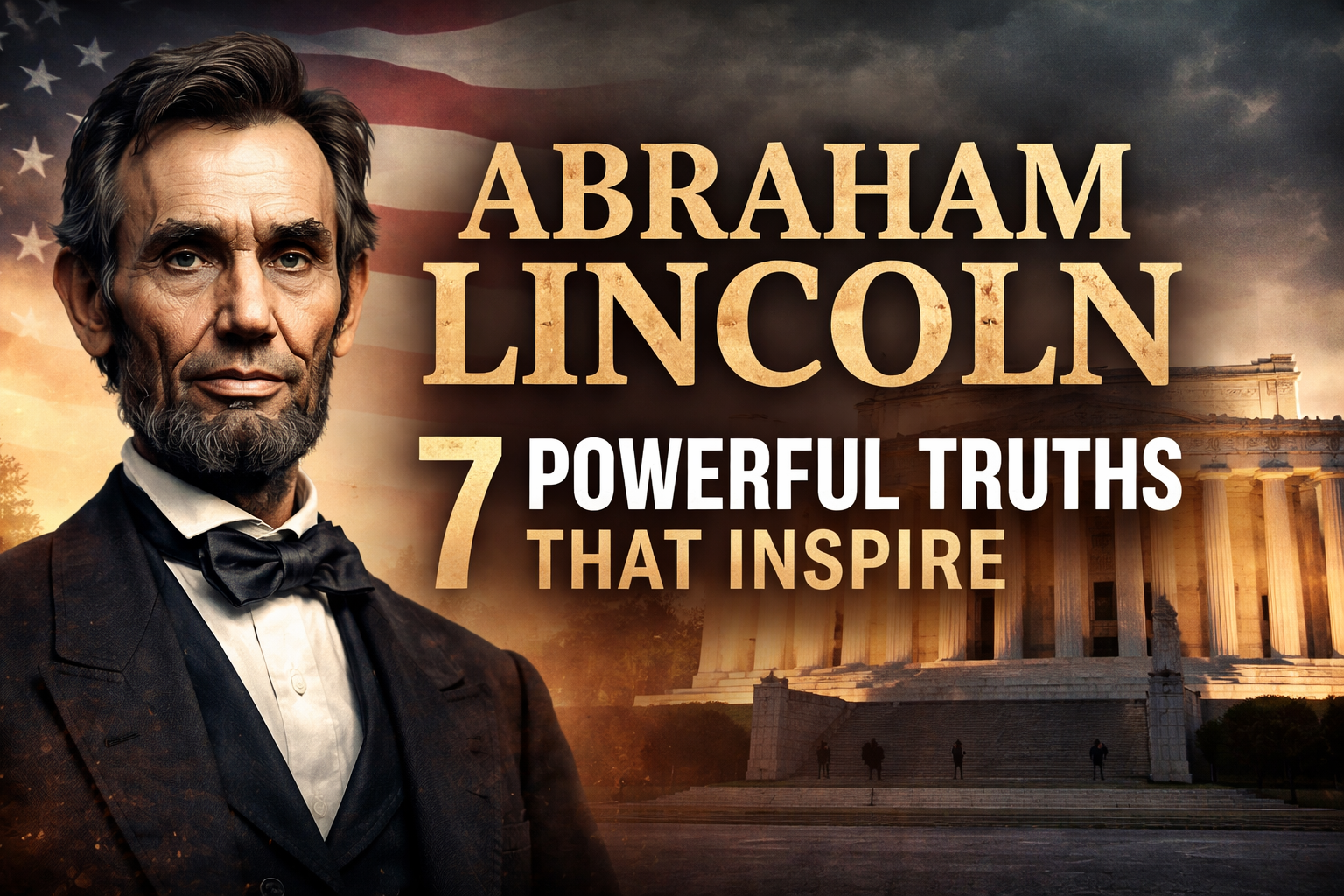
Abraham Lincoln still speaks to us because his life feels real, not distant. Have you ever wondered what leadership looks like when everything is falling apart. What kind of mindset holds steady during war and division. Abraham Lincoln faced those exact moments. His decisions were not abstract theory. They were lived choices under pressure. His story is not just history. It is guidance for anyone navigating responsibility today.
Table of Contents
Humble Start Builds Real Strength
Truth One is simple. Humility can be an advantage. Abraham Lincoln was born on February 12, 1809 near Hodgenville, Kentucky. (HISTORY.com, HISTORY.com Editors, November 16, 2009, Abraham Lincoln is born) (https://www.history.com/this-day-in-history/february-12/abraham-lincoln-is-born)
Truth Two cuts deeper. Growth is usually self made. His formal schooling lasted less than a year in total, yet he educated himself by reading borrowed books and studying by firelight after long days of labor. He did not wait for perfect conditions. He created progress inside, imperfect ones. That mindset still separates dreamers from builders.
When people only respect polished backgrounds, they miss the real engine of success. Character forms in quiet places where no audience exists. Work forms in routines that feel repetitive and unseen. Discipline forms when there is no applause and no reward. Abraham Lincoln reminds us that greatness is often built in silence long before it is recognized in public.
Words Can Carry a Whole Nation
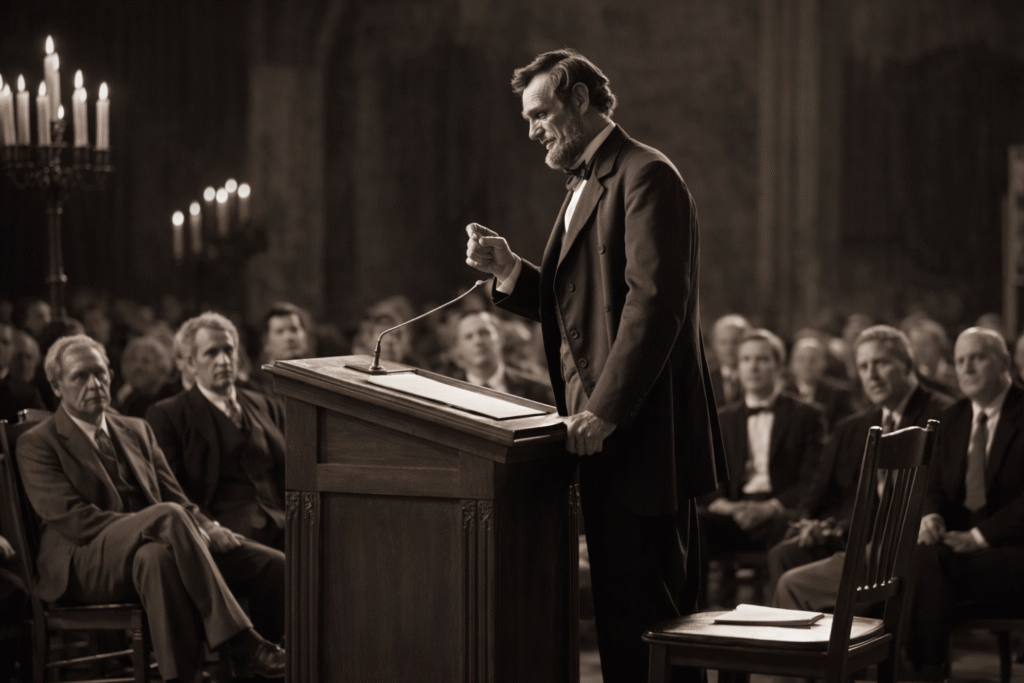
Truth Three is that leadership is communication under pressure. Abraham Lincoln used words to calm panic and to frame the moment. He did not speak to impress. But he spoke to guide.
Right after the Union victories at Gettysburg and Vicksburg, he sent a direct message to General Henry Halleck. He wrote, “Now if Gen. Meade can complete his work so gloriously prosecuted thus far, by the literal or substantial destruction of Lee’s army, the rebellion will be over.”
(National Archives, Telegram from Abraham Lincoln to Major General Henry W. Halleck, Fall 2007, Prologue Magazine) (https://www.archives.gov/publications/prologue/2007/fall/telegram-lincoln-to-halleck)
That is not ornamental language. It is clarity under pressure. It shows how Abraham Lincoln could compress national stakes into one sharp sentence.
In the famous Gettysburg Address he wrote, “Fourscore and seven years ago our fathers brought forth on this continent, a new nation, conceived in Liberty, and dedicated to the proposition that all men are created equal.”
(The Constitution Center, The Gettysburg Address (1863)) (https://constitutioncenter.org/the-constitution/historic-document-library/detail/abraham-lincoln-the-gettysburg-address-1863)
Near the end of the war, during his Second Inaugural Address, he turned toward unity rather than triumph, urging the nation forward “with malice toward none, with charity for all.” (National Park Service, Lincoln’s Second Inaugural Address) (https://www.nps.gov/articles/000/-with-malice-toward-none-lincoln-s-second-inaugural.htm)
If a leader cannot explain the problem, people create their own story. Then fear drives the room. Abraham Lincoln understood that speech is not decoration. It is strategy.
Freedom Needs a Decision, Not a Vibe
Truth Four is that courage eventually becomes policy. During the Civil War, Abraham Lincoln issued the Emancipation Proclamation on January 1, 1863. (National Archives, May 10, 2022, Emancipation Proclamation (1863)) (https://www.archives.gov/milestone-documents/emancipation-proclamation)
Truth Five is that moral change often arrives through specific language. The proclamation announced “that all persons held as slaves” in rebellious areas “are, and henceforward shall be free.” (National Archives, May 10, 2022, Emancipation Proclamation (1863)) (https://www.archives.gov/milestone-documents/emancipation-proclamation)
It is easy to praise freedom in general. It is harder to write it into action when the stakes are ugly. He chose the hard version. He accepted the backlash. He understood that history grades decisions, not slogans.
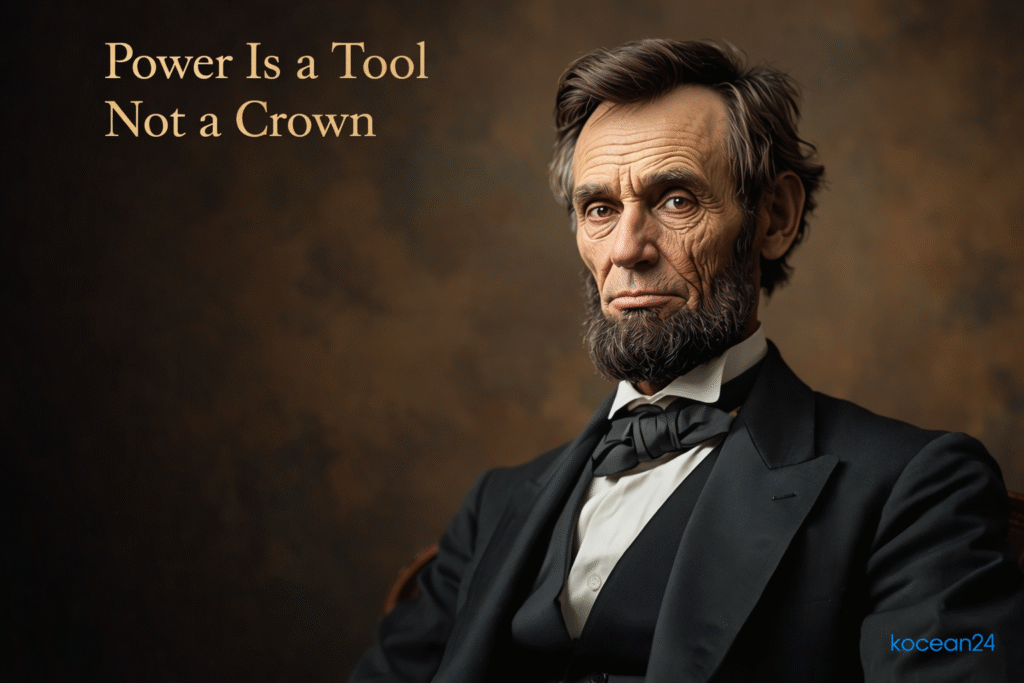
Power is a Tool, Not a Crown
Truth Six is that authority can be used for repair. Abraham Lincoln served as the 16th president from 1861 to 1865, preserved the Union during the American Civil War, and helped bring about emancipation in the United States. (Encyclopaedia Britannica, Richard N. Current, Feb. 8, 2026, Abraham Lincoln) (https://www.britannica.com/biography/Abraham-Lincoln)
He treated the Union as more than a map. He treated it as an idea worth saving. This matters because it shows a rare form of ambition. He wanted the country to survive, but he also wanted it to mean something.
In a loud culture, power gets confused with dominance. His story argues the opposite. Power is responsibility. Power is restraint. Power is the willingness to carry blame while chasing the right outcome.
Integrity Survives Even When Life Ends
Truth Seven carries weight beyond biography. Abraham Lincoln was assassinated on April 14, 1865 at Ford’s Theatre in Washington, D.C., and he died the next morning on April 15, 1865. The gunshot ended a life, but it did not silence the ideas he defended. Violence can stop a voice. It cannot erase a moral direction already set in motion. His death shocked a fractured nation, yet it also sealed his leadership in historical memory.
a. Leadership beyond the Moment
His impact is not limited to one proclamation or one battlefield decision. It rests on the inner discipline behind those choices. Abraham Lincoln believed the Union was more than territory. He believed it was a promise. That belief shaped policy, speech, and restraint. Even during civil war, he resisted revenge driven politics. His compass pointed toward preservation and principle.
b. Sacrifice and National Conscience
The personal cost was heavy. War pressure aged him. Political attacks followed him. Assassination marked him. Yet the ethical foundation he strengthened outlived him. The abolition of slavery was secured through the Thirteenth Amendment later in 1865, reinforcing the moral shift his leadership accelerated. His life shows how conviction, when sustained long enough, can change the architecture of a nation.
c. A Mirror for Every Generation
A tribute is not only a birthday reminder. It is a mirror. The life of Abraham Lincoln asks a direct question. What happens when talent meets conscience. History suggests something powerful. When integrity guides ambition, legacy survives time.
Final Words…
Integrity survives even when life ends. That is the final lesson of Abraham Lincoln. His life proves that learning, courage and conviction can outlast violence and division. He showed that leadership is not noise. It is moral direction under pressure. Today is February 12, the 217th birthday of this great leader of America. Let this generation build courage with conscience and lead with integrity in every sphere of life with the moral lesson taken from the greatest leader Abraham Lincoln.






[…] discussed in Abraham Lincoln: 7 Powerful Truths That Inspire (https://kocean24.com/abraham-lincoln-7-powerful-truths/), effective leadership depends on clarity during uncertainty. So, clarity over noise always wins. […]