Physical Address
304 North Cardinal St.
Dorchester Center, MA 02124
Physical Address
304 North Cardinal St.
Dorchester Center, MA 02124
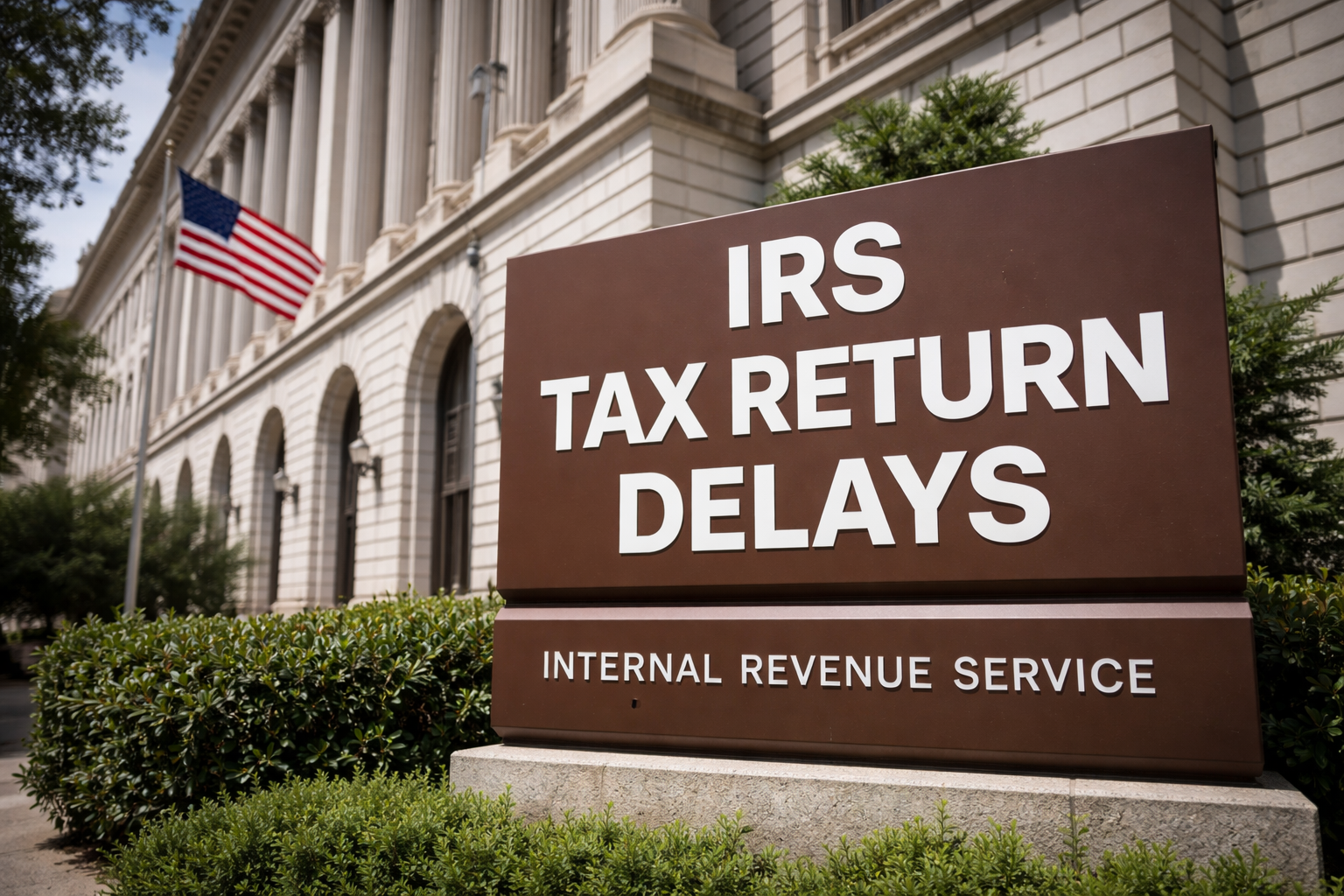
IRS Tax Return delays are rising across the USA. Staffing shortages at the Internal Revenue Service have created a backlog of nearly 590,000 amended returns. A recent Treasury watchdog report warns that cuts and slower processing are putting pressure on the agency. Millions of Americans expecting refunds may face longer waits this year.
At the same time, retroactive tax relief is increasing refund volume. Don Schneider of Piper Sandler estimates the legislation will generate $91 billion in relief, with about $60 billion paid out as refunds. That added flow of money is moving through an agency already under strain.
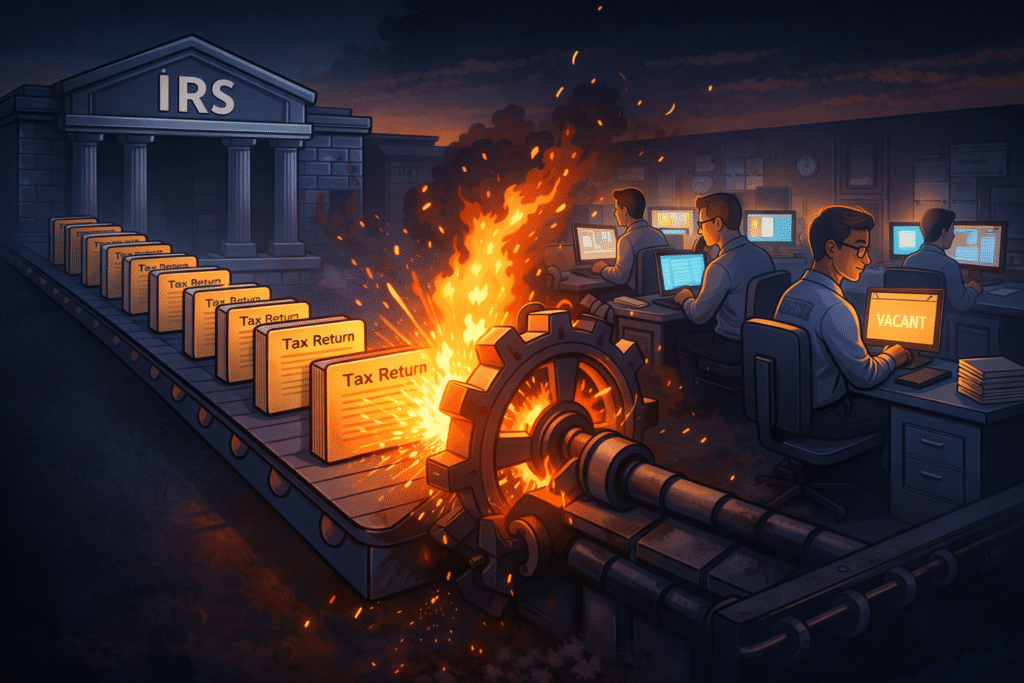
IRS Tax Return processing depends on people more than most taxpayers realize. When staffing drops, the impact shows up first in customer service, then in the backlog, then in slower work on returns that need any human review.
One report described the IRS entering the 2026 season short staffed and warned it could delay refunds and increase service problems. (Axios, Kelly Tyko, February 5, 2026, IRS staffing crunch could slow tax refunds, watchdog report says) (https://www.axios.com/2026/02/05/tax-refund-status-irs-delays-staffing)
This matters because not every return is pure automation. If a return is flagged for identity checks, mismatched income forms or manual handling, fewer trained workers means slower movement through the system. The same Axios report also notes that returns requiring manual handling are the most at risk for delays. (Axios, Kelly Tyko, February 5, 2026, IRS staffing crunch could slow tax refunds, watchdog report says) (https://www.axios.com/2026/02/05/tax-refund-status-irs-delays-staffing)
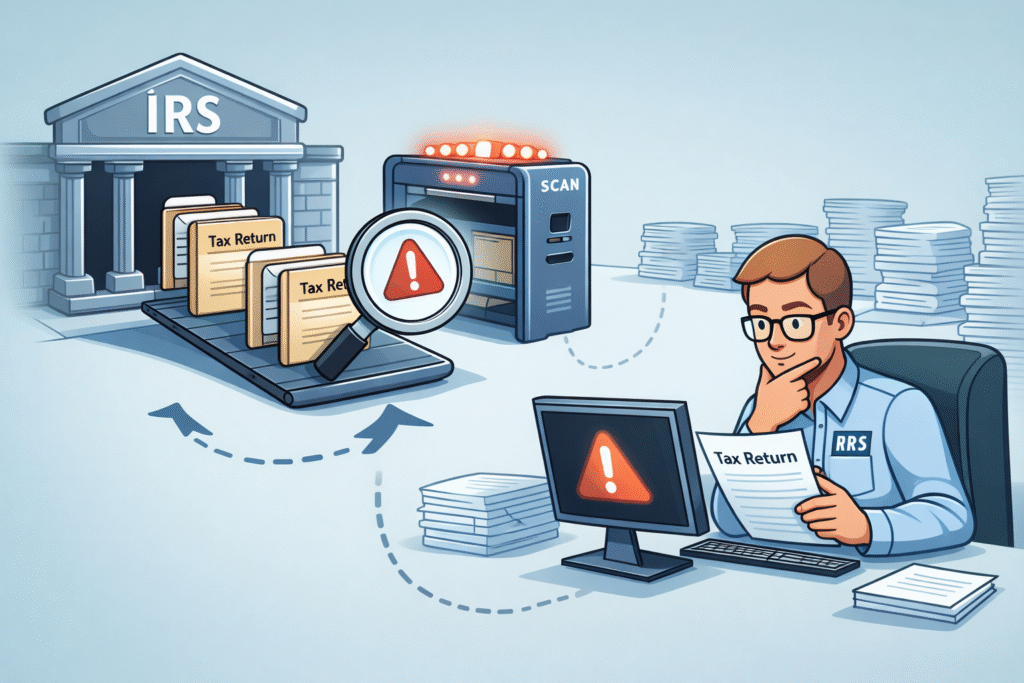
IRS Tax Return delays often begin with automated filters. The system scans income, credits, identity data and banking details. If something does not match IRS records, the return moves out of automatic processing and into review. This does not automatically mean fraud. It often means a discrepancy between what a taxpayer reported and what employers, banks or payment platforms submitted to the IRS.
The IRS itself explains that some returns require additional review and that “it may take longer than the normal 21 days to issue a refund” when errors, incomplete information or identity verification checks are involved. (Internal Revenue Service, February 16, 2024, Why It May Take Longer Than 21 Days for Some Taxpayers to Receive Their Federal Refund) (https://www.axios.com/2026/02/05/tax-refund-status-irs-delays-staffing)
When a return is pulled for review, it leaves the fast electronic lane. A human employee may need to verify details. In a season with staffing pressure, that shift can significantly extend processing time.
Common triggers that push a return into review include:
• Income mismatches between W 2 or 1099 forms and what is reported on the return
• Incorrect Social Security numbers or dependent information
• Claims for refundable credits that require extra verification
• Math errors or missing documentation
• Duplicate filings under the same Social Security number
Here comes the practical reality. One small mismatch can slow the entire IRS Tax Return process. Once flagged, the return waits in a manual queue. And manual queues move slower when fewer trained staff are available to clear them.
IRS Tax Return refunds are now more sensitive to payment delivery details. If direct deposit information is missing or rejected, the refund can be frozen until the taxpayer takes action.
Taxpayer Advocate Service explains that the IRS will temporarily freeze a refund when bank information is missing, until the taxpayer provides direct deposit details or requests a paper check. (Taxpayer Advocate Service, January 26, 2026, Direct Deposit Changes for 2026 Could Affect How and When You Get Your Refund) (https://www.taxpayeradvocate.irs.gov/news/tax-tips/direct-deposit-changes-for-2026-could-affect-how-and-when-you-get-your-refund/2026/01/)
It also states that the IRS will freeze most rejected direct deposits and will not automatically reissue them as paper checks. (Taxpayer Advocate Service, January 26, 2026, Direct Deposit Changes for 2026 Could Affect How and When You Get Your Refund) (https://www.taxpayeradvocate.irs.gov/news/tax-tips/direct-deposit-changes-for-2026-could-affect-how-and-when-you-get-your-refund/2026/01/)
That is a major shift in the refund experience. In simple terms, an incorrect routing number can now turn a normal refund into a delayed refund, even when the return itself is fine.
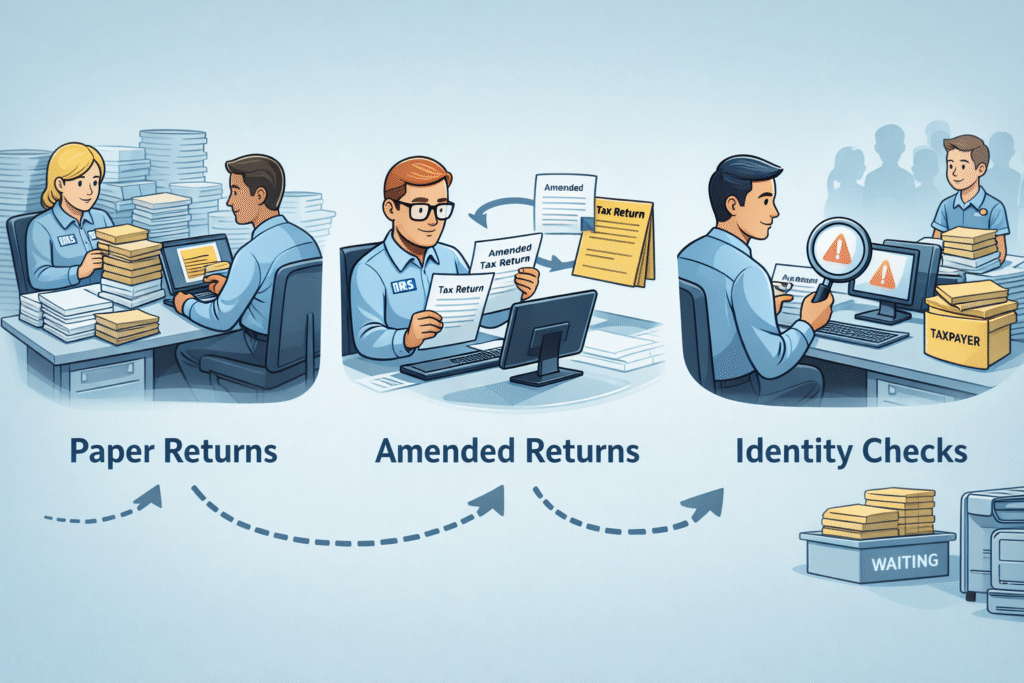
IRS Tax Return processing moves fastest when everything flows through digital systems. But many filings still require human review, and that introduces delays. Paper returns, amended filings and cases flagged for additional checks all depend on IRS staff rather than computers. When returns are pulled from automated processing and placed into manual queues, they simply take longer to clear and with staffing tight, those queues grow. A watchdog report notes that the IRS is struggling to keep up with its inventory of filed tax returns and correspondence, partly because backlogs and reduced workforce levels mean more work sits waiting for review. (The Independent, J.R. Duren, February 9, 2026, IRS tax refund delays Why yours might be late this year) (https://www.independent.co.uk/us/money/irs-tax-refund-delay-2026-b2916850.html)
Paper returns must be physically opened and entered into IRS systems by staff. Those steps are not automated, so they inherently take more time than e-filing. In a season with lots of filings, even small increases in paper volume can create a bottleneck.
An amended IRS Tax Return does not follow the quick electronic path. It must be compared with the original filing and checked for accuracy before any refund can be issued. That extra handling adds days or weeks to the timeline.
When a return is flagged for identity or data verification, it pauses progress until a human reviewer confirms the details. This protects taxpayers and the system, but it also shifts the return into a slower, manually reviewed queue. With fewer staff available this season, these queues move more slowly than many people expect.
IRS Tax Return delay risk rises when tax law changes hit during filing season, because taxpayers ask more questions and more returns include unfamiliar fields or credits. More questions mean busier phone lines. More complexity means more errors. More errors mean more review.
Business Insider reported that staffing cuts could strain customer service and slow refunds, while also noting the filing season is being handled by a much smaller IRS workforce. (Business Insider, Juliana Kaplan and Ayelet Sheffey, February 8, 2026, Get ready for a tax season run by a much smaller IRS) (https://www.businessinsider.com/tax-season-smaller-irs-staffing-slow-refunds-2026-2)
It also reports that the IRS workforce shrank sharply in 2025 and that the loss of experienced employees has real impact beyond the numbers.
When the agency is smaller and the rules are changing, delays become more likely even for normal taxpayers who did nothing wrong.
IRS Tax Return delays are not always avoidable, but many of the common triggers can be reduced with careful filing. Most delays begin with small errors, mismatched details or avoidable technical mistakes. When a return is clean, consistent and complete, it is far more likely to move through the system without being pulled into manual review.
Here is where smart preparation makes the difference:
Electronic filing keeps your IRS Tax Return in the fastest processing channel. A digitally submitted IRS Tax Return moves directly into automated systems and reduces the risk of manual data entry delays.
Bank routing and account numbers must be exact. A single incorrect digit can freeze a refund. Always double check these numbers slowly and carefully before submitting.
Ensure that W 2 and 1099 forms match what employers and payers reported. Even small discrepancies can trigger review and push a return out of automated processing.
Submitting the same IRS Tax Return more than once can confuse the system and create processing delays. File once and track status before taking further action.
The IRS Tax Return status system updates in cycles. Checking official tools before calling reduces unnecessary pressure on phone lines and provides more accurate information about your refund.
IRS Tax Return delays feel personal, but they are usually systemic. A smaller workforce, more returns pulled into review, stricter refund delivery rules and manual bottlenecks can turn a normal refund into a waiting game.
The best move is not fear. The best move is precision. File clean, match documents, confirm bank details and track status calmly. When a massive system runs under pressure, the people who win are the people who make their return easy to process.