


Ash Wednesday arrives without noise. No countdown. No fireworks. Just a cross of ashes and a quiet reminder about dust. In a world driven by speed, image and endless reaction, this day feels almost disruptive. It opens Lent with honesty, asking hard questions about mortality, habits and purpose. In 2026, that interruption may be more necessary than ever. What is the reason you think? Let’s discuss here in this article.
Table of Contents
What Ash Wednesday Really Marks
Ash Wednesday begins Lent, the 40 day season of preparation leading to Easter. The date shifts each year because it depends on the timing of Easter. In 2026, Ash Wednesday falls on February 18. (Encyclopaedia Britannica, Britannica Editors, February 17, 2026, Ash Wednesday) (https://www.britannica.com/topic/Ash-Wednesday-Christian-holy-day)
Lent lasts 40 days not counting Sundays, mirroring biblical patterns of testing and renewal. (Associated Press, Peter Smith, February 16, 2026, Ash Wednesday marks the start of Lent, a period of fasting, reflection — and fish fries) (https://apnews.com/article/ash-wednesday-prayer-fasting-catholic-christian-49f8f4e91b3bab8f8c88017e49adce72) The number carries symbolic weight in Christian tradition. It connects present practice with ancient narrative.

The ashes themselves are traditionally made by burning palm branches from the previous year’s Palm Sunday. (Encyclopaedia Britannica, Britannica Editors, February 17, 2026, Ash Wednesday) (https://www.britannica.com/topic/Ash-Wednesday-Christian-holy-day) Celebration becomes repentance. Joy becomes reflection. The material changes form, but the story continues.
With that foundation in place, the question becomes deeper. Why does this ancient ritual still resonate in 2026?
Reason 1: It Tells the Truth about Mortality
Ash Wednesday opens with a direct reminder that human existence has limits. The ash cross represents fragility and accountability. It communicates that status fades, dominance weakens and every life follows a finite path. This message aims to bring clarity rather than fear.
Contemporary society glorifies influence, wealth and image. Constant urgency shapes behavior and fuels hidden anxiety. This observance disrupts that momentum and restores perspective. Reflection replaces panic and humility reshapes priorities toward lasting values.
What This Reminder Reveals:
• Existence is temporary, therefore choices carry consequence.
• Authority has boundaries and modesty builds resilience.
• Time remains scarce, which requires intentional action.
• Reputation shifts quickly, while character sustains influence.
Ash Wednesday refines awareness and strengthens resolve. Honest recognition of limits encourages wiser direction and steadier purpose.
Reason 2: It Turns Lent into Real Training
Lent may sound abstract until Ash Wednesday makes it concrete. The season moves beyond giving up small comforts. It confronts habits that quietly shape decisions and influence character.
The traditional focus centers on prayer, fasting and almsgiving. In contemporary terms, this becomes focused attention, disciplined restraint and intentional generosity. According to the United States Conference of Catholic Bishops, “The forty days of Lent run from Ash Wednesday up to but excluding the Mass of the Lord’s Supper exclusive.” (United States Conference of Catholic Bishops, February 10, 2026, What is Lent?) (https://www.usccb.org/prayer-worship/liturgical-year/lent) The forty day structure reflects biblical patterns of preparation and renewal.
In 2026, structured discipline carries unusual relevance. Motivation fluctuates, but formation depends on repetition. Ash Wednesday introduces a defined framework that prioritizes steady growth over emotional impulse. The objective is not temporary enthusiasm but sustained transformation.
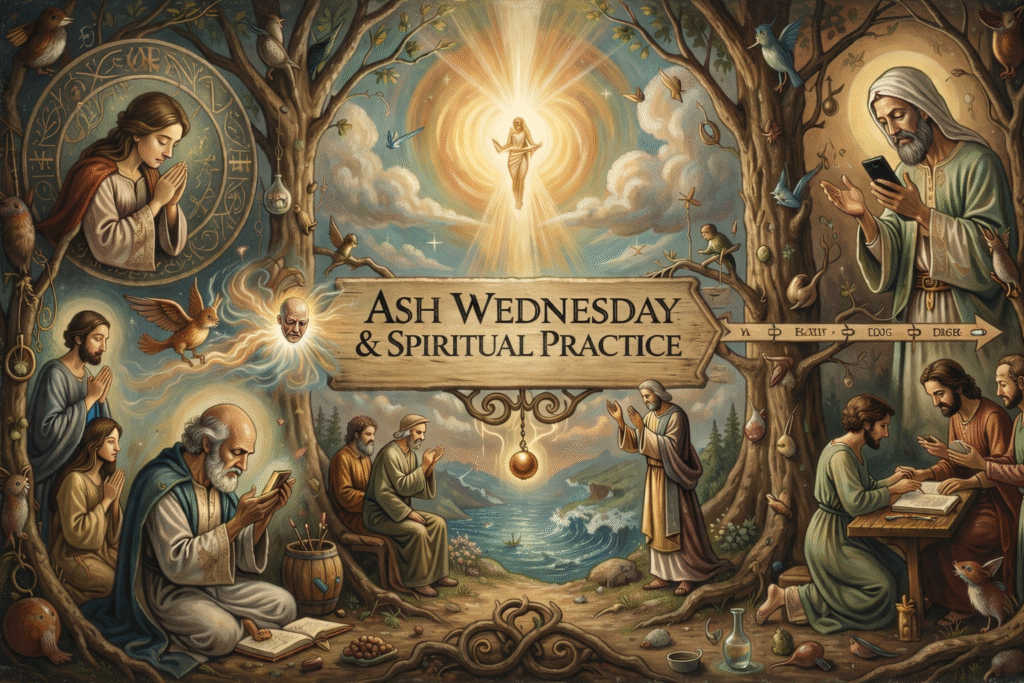
Reason 3: It Links a Modern Crowd to an Ancient Story
Ash Wednesday connects present experience with centuries of Christian practice. The ritual of placing ashes on the forehead has roots in early penitential traditions and developed formally within Western Christianity over time. According to the Catholic Encyclopedia, the use of ashes as a sign of repentance became established in the Church by the Middle Ages. (Catholic Encyclopedia, Francis Mershman, 1907, Ash Wednesday) (https://www.newadvent.org/cathen/01775b.htm) That continuity gives the day historical depth rather than seasonal novelty.
In modern settings, the observance adapts without losing meaning. Many churches now offer flexible services to accommodate work schedules and urban routines, demonstrating how tradition meets contemporary life while preserving core symbolism. The ritual remains simple, yet it binds participants to a shared narrative that extends beyond individual timelines.
This connection matters in 2026. Rapid technological change often fragments identity and community. Ash Wednesday counters that fragmentation by placing individuals within a living story shaped by memory, confession and renewal. The practice does not rely on trend or spectacle. It draws strength from continuity.
Through a brief visible mark, a modern crowd participates in an ancient confession of humility and hope. The ritual endures because it unites history with present responsibility.
Reason 4: The Ashes Carry a Full Circle Message
Ashes often come from burned palm branches used on Palm Sunday, which ties celebration to repentance in one continuous cycle. (National Catholic Register, Angelo Stagnaro, March 15, 2023, Remember: You Are Dust, and to Dust You Shall Return) (https://www.ncregister.com/blog/the-symbols-of-lent-ashes) Palms signal welcome and praise, while ashes signal humility and return. That same material moving through both moments keeps the meaning grounded and human.
This full circle pattern matters in 2026 because culture loves applause yet avoids self examination. The ash cross fades fast, but the lesson stays. A temporary mark points toward lasting choices, deeper habits, and steadier character.
Reason 5: Offers a Clean Start
Many people avoid religion because they expect it to demand perfection. Ash Wednesday does the opposite. It begins with weakness, confession and the idea that humans need mercy.
Pope Benedict XVI described Lent as “a long spiritual retreat that lasts for 40 days.” (Vatican, Pope Benedict XVI, February 6, 2008, Lent, A Great Spiritual Retreat Lasting Forty Days) (https://www.catholicculture.org/culture/library/view.cfm?recnum=8023) That idea is the heart of why Ash Wednesday still matters. A retreat is not performance. Rather it is return.
In 2026, people chase self improvement plans all year. Many of them fail because they are built on image, not truth. Ash Wednesday offers a different kind of start. It is not a glow up. You can consider it as a wake up.
It also makes room for people at different stages. Some will fast seriously. Some will start small. Some will focus on prayer. Some will focus on giving. The day does not demand one identical path. It invites sincere change.
How to Live Ash Wednesday in a Modern Way
Ash Wednesday is simple, yet depth comes through intention. Modern routines create distraction, but those pressures can become part of the discipline. The day invites one deliberate choice to remove distraction and one deliberate action to build patience or compassion. Clear structure turns reflection into practice.
Start small and measurable. A screen fast during the first hour of the morning. Five minutes of focused prayer. A weekly act of generosity that costs time rather than comfort. Silence during meals. Refusal to engage in gossip. Consistent action weakens procrastination patterns and strengthens follow through, a theme explored in Procrastination 7 Brutal Truths Killing Progress (https://kocean24.com/procrastination-7-brutal-truths-killing-progress/).
The purpose is not punishment. The purpose is freedom. Christian tradition treats restraint as preparation for deeper joy. Lent trains attention so that Easter celebration carries substance rather than sentiment.

Why This Day Still Cuts Through the Noise
Ash Wednesday endures because it speaks plainly about suffering, failure, mortality and hope without softening reality. It refuses flattery and rejects denial. In 2026, advanced technology shapes communication and productivity, yet the inner struggles of guilt, confusion and longing remain unchanged. This observance resonates because it addresses universal human needs for forgiveness, meaning and renewal with clarity rather than spectacle.
Why It Still Resonates:
• Honesty replaces illusion and exposes real priorities.
• Humility creates space for growth and accountability.
• Reflection interrupts distraction and restores focus.
• Hope follows confession and strengthens resolve.
Ash Wednesday remains quiet, yet strength often forms in silence. When noise fades, conviction becomes clearer and deliberate change begins with steadier purpose.
Conclusion
Ash Wednesday still matters in 2026 because Ash Wednesday resets focus, restores humility and opens Lent with purpose. This ancient observance answers modern anxiety with structure, truth and renewal. Noise fades when reflection leads. What direction will define the next 40 days?





детский доктор стоматолог лечение зубов под наркозом у детей
ремонта ванной комнате ключ ремонт ванной в хрущевке
дизайнеры интерьера санкт петербурга разработка интерьера
студия дизайна интерьера санкт петербург дизайнер интерьера в спб
дизайн коттеджа дизайн проект коттеджа стоимость
https://dizayna-interera-spb.ru спб дизайн
значки металлические флаги https://metalpin.ru
ToLife household dehumidifiers https://tolifedehumidifier.com are designed to effectively reduce indoor humidity. These units use semiconductor condensation and feature automatic shutoff, a night mode, a backlight, and a removable tank. Documentation is available on the official website.