Physical Address
304 North Cardinal St.
Dorchester Center, MA 02124
 Skip to content
Physical Address
304 North Cardinal St.
Dorchester Center, MA 02124

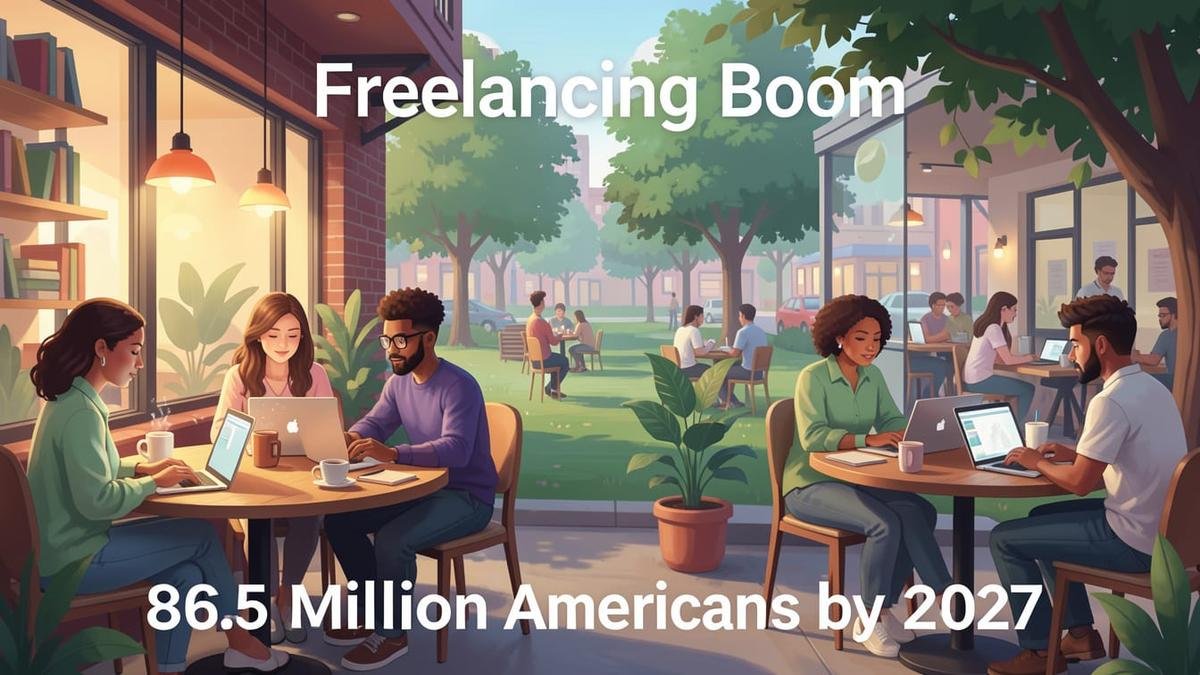
Freelancing Boom is reshaping how work gets done in America. What used to be seen as part time side income or gig hustle has evolved into a central method of earning for millions of professionals. Data forecasts suggest that freelance or independent work is transitioning toward mainstream employment, driven by technology, generational preferences and changing business strategies. As this workforce transformation accelerates, the implications are profound for individuals, companies and the structure of work itself.
Research projections indicate that more than half the U.S. workforce will comprise independent workers by 2027. According to recent data, “it’s projected that in 2027, 86.5 million people will be freelancing in the United States and will make up 50.9 percent of the total U.S. workforce.” (Upwork Research, May 29, 2025, Freelancing Stats in 2026: Market Size, Earnings, and Future Trends) (https://www.upwork.com/resources/freelancing-stats)
This shift reflects more than growth in numbers. The Freelancing Boom represents a structural transformation in how Americans earn income. Almost every major sector now includes professionals who either build full time independent careers or combine freelance projects with salaried roles. Instead of climbing a single corporate ladder, many workers build diversified skill stacks and manage multiple revenue streams.
Upwork’s independent labor forecasts also show that skilled freelancers are expanding their presence rapidly. High value service areas such as software development, marketing and strategic consulting continue to gain share within the freelance economy. This broader freelance growth signals a movement away from low skill, short term task work toward sustained, high impact independent careers that rival traditional full time employment in both earnings and professional influence.
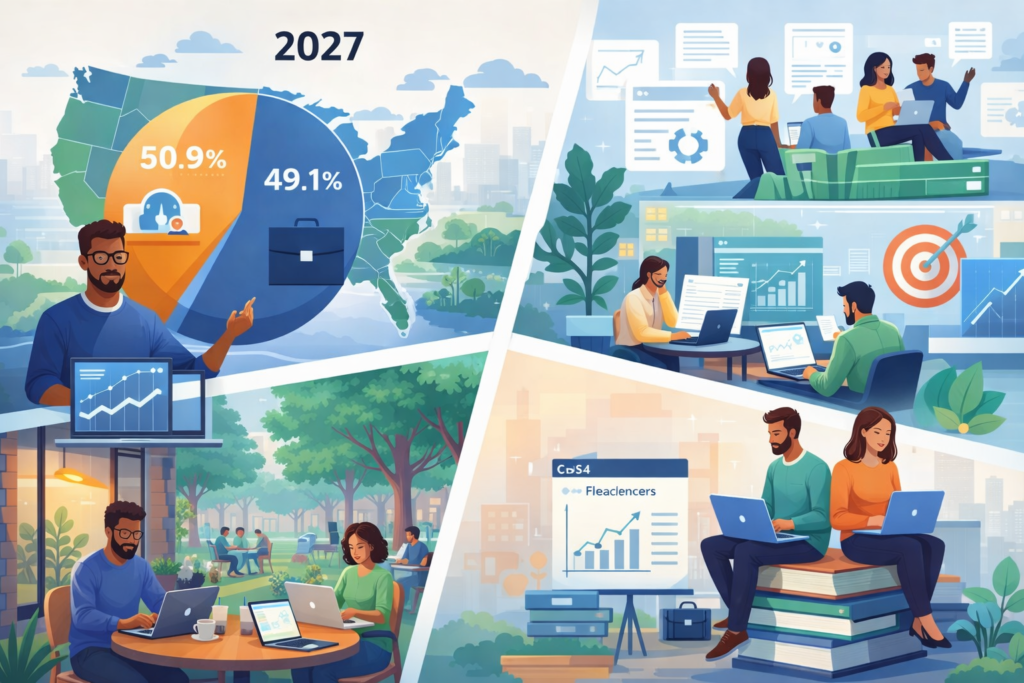
Recent workforce data confirms that independent work is firmly embedded in the U.S. labor market. An industry analysis estimates that 74.6 million Americans were freelancing in 2025, representing roughly 38 percent of the workforce.(Jobbers, September 11, 2025, Remote Work vs Freelancing: The 2025 Workforce Revolution) (https://www.jobbers.io/remote-work-vs-freelancing-the-2025-workforce-revolution/) This scale shows that the Freelancing Boom is not speculative. It reflects a measurable expansion of independent participation across sectors, income levels and professional categories.
This expansion is visible in 3 key dimensions:
a. Economic Weight
Freelancers now operate in high value industries such as technology, consulting, design and marketing. Their participation strengthens business flexibility and supports project driven growth models.
b. Generational Shift
Younger professionals show stronger interest in independent careers compared to older cohorts. Research indicates that Generation Z workers are increasingly open to freelance income and flexible work structures. (Elon University School of Communications, Career Services, Freelancing Career Guide) (https://www.elon.edu/u/academics/communications/career-services/career-guides/freelancing-career-guide/) This generational momentum reinforces the Freelancing Boom and signals long term structural change rather than short term experimentation.
c. Work Model Evolution
Independent work is increasingly blending with traditional employment rather than replacing it entirely. Many professionals now combine freelance contracts with salaried roles, creating hybrid income systems that balance stability with flexibility. Companies are also adjusting by integrating project based talent into long term operations. This shift reflects deeper economic and cultural changes in how careers are designed and sustained. The Freelancing Boom is accelerating this transition as both workers and employers recognize the advantages of adaptive work models.
This evolving structure is visible in several ways:
Hybrid work models are no longer experimental arrangements. They represent a strategic adaptation to modern economic realities, signaling that the future of work will likely be defined by flexibility, skill ownership and distributed opportunity rather than rigid employment structures.

The Freelancing Boom is not accidental or temporary. It is being driven by structural economic, technological and cultural forces that are reshaping how work functions in the modern economy. Independent work has become more accessible, more scalable and more financially viable than at any point in history. Businesses are rethinking workforce design and professionals are rethinking career security. Together, these forces are accelerating the Freelancing Boom across industries and skill levels.
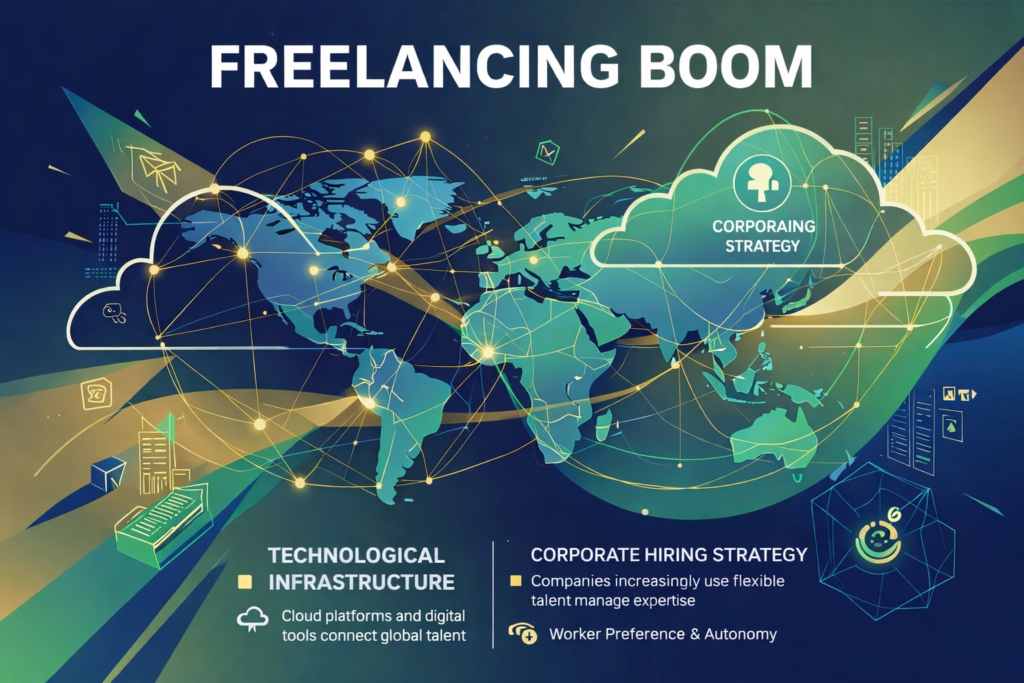
This transformation is powered by 3 primary drivers:
a. Technological Infrastructure
Digital systems have removed geographic barriers to earning. Cloud computing, collaboration software, digital payment platforms and global marketplaces allow professionals to serve clients across continents in real time. Talent is no longer confined by physical location, which expands both opportunity and competition.
b. Corporate Hiring Strategy
Organizations increasingly rely on flexible talent models to respond to market volatility. Hiring freelancers allows companies to scale expertise based on project demand without long term payroll commitments. This reduces fixed costs while preserving access to specialized knowledge.
c. Worker Preference and Autonomy
Many professionals now prioritize control over time, income diversification and creative freedom. Independent careers offer variable schedules and client selection power that traditional employment often does not provide. As more workers pursue autonomy, cultural attitudes toward stability and success continue to evolve.
The convergence of these drivers explains why independent work continues to grow. What once appeared to be an alternative path has become a strategic model for both individuals and businesses navigating modern economic realities.
As the workforce shifts, companies must rethink how talent is sourced and deployed. The Freelancing Boom is pushing organizations to move beyond fixed staffing models toward flexible expertise networks. Independent professionals now contribute directly to innovation, speed and competitive advantage. Hiring freelancers allows businesses to access specialized skills without long term payroll commitments, which increases project velocity and strategic agility.
In high demand fields such as AI implementation, cybersecurity and data analytics, companies often prefer external specialists over building permanent internal teams. This reduces long term cost exposure while preserving access to advanced knowledge. As a result, talent strategies are evolving from static workforce structures to dynamic collaboration ecosystems where independent experts integrate quickly and deliver measurable impact.
While the U.S. leads in freelance participation, global data shows similar patterns. Worldwide, working independently is growing rapidly, especially in regions with digital infrastructure, remote workforce culture and cross border marketplaces. Market analysis suggests that by 2028 global freelance participation could exceed comparable U.S. levels, with tens of millions of professionals engaging in independent work across continents. (Emapta, August 2, 2025, 65+ Number Of Freelancers Stats For 2025 & Beyond) (https://keywordseverywhere.com/blog/number-of-freelancers-stats/)
This global expansion impacts local labor markets, client expectations and wage competition. Freelancers now compete in both local and global markets, making skills and specialization essential for differentiation. Geography loses dominance when talent can deliver world class work from any location, putting pressure on education systems and upskilling opportunities globally.
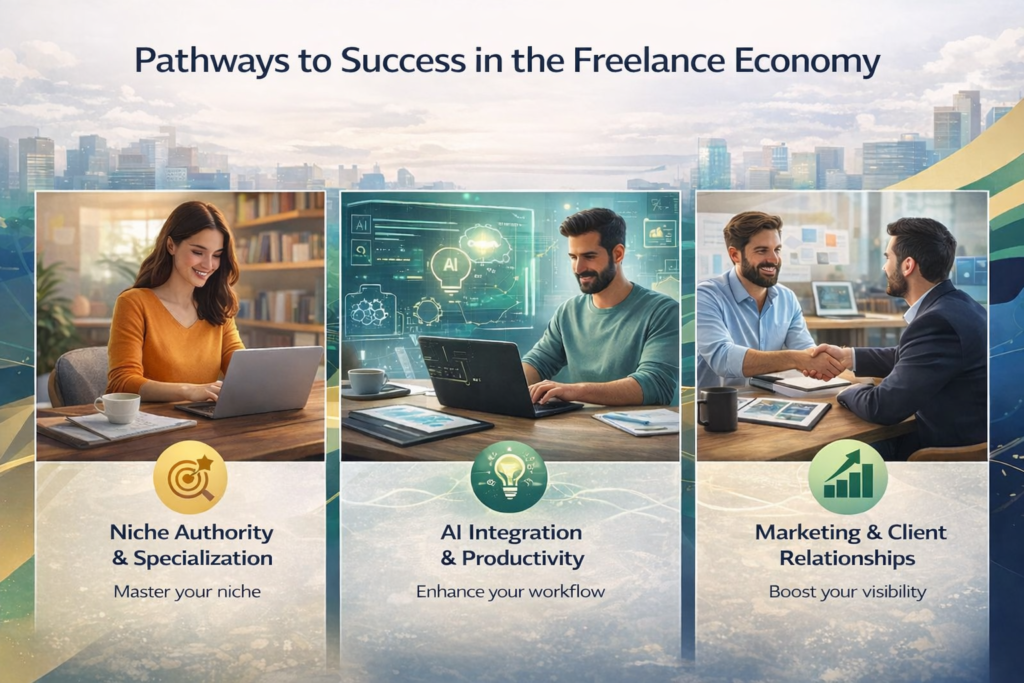
Thriving in a freelance landscape requires thoughtful strategy. According to insights from kocean24.com, selecting a niche and building deep authority in that specialization creates market advantage. Some freelancers succeed by focusing on targeted high value outcomes, while others blend multiple revenue channels to stabilize income (7 Proven Freelance Niche Strategy Secrets 2026). (https://kocean24.com/7-freelance-niche-strategy-2026/)
Another trend shaping freelance success is the integration of artificial intelligence tools to enhance productivity and delivery. Professionals who use AI to improve research, content creation or project management often outperform competitors who do not leverage these technologies. Understanding the realities of how AI influences work can help freelancers build more sustainable careers (AI Articles: 3 Harsh Realities Revealed for 2026). (https://kocean24.com/ai-articles-3-harsh-realities-revealed/)
Strong marketing, professional portfolios and disciplined client relationship management remain essential. Unlike traditional employment where tasks are assigned internally, freelancers must attract opportunities through visibility, proven results and reputation building. In the context of the Freelancing Boom, those who combine niche authority, technology adoption and strategic self positioning are far more likely to secure consistent demand and long term growth.
Despite rapid expansion, the Freelancing Boom presents significant challenges for many independent workers. Income volatility remains a persistent concern, particularly for early stage freelancers or those without established client networks. Without employer provided benefits, individuals must independently manage health insurance, retirement planning and tax compliance. Competitive global markets also exert downward pressure on pricing in certain industries, requiring freelancers to differentiate through specialization and value creation.
At the same time, the Freelancing Boom does not benefit all regions equally. Uneven access to digital infrastructure, reliable internet connectivity, and professional platforms limits participation in global freelance markets for some communities. These structural gaps create disparities in opportunity and earning potential. Addressing these barriers will require coordinated efforts from policymakers, educational institutions and technology providers to ensure that independent work growth translates into inclusive economic progress rather than widened inequality.
The freelancing boom is not a short lived trend. Projections that 86.5 million Americans will be independent workers by 2027 reflect a structural evolution of the labor market. This change reshapes how people work, how companies hire and how economies function. It opens doors to autonomy, diversified income, and unprecedented flexibility. At the same time, it demands new skills, strategic positioning, and adaptability from individuals. As the workforce landscape evolves, those who understand the dynamics of freelancing will be best positioned to thrive in this new era of work.
 Optimized by Seraphinite Accelerator