Physical Address
304 North Cardinal St.
Dorchester Center, MA 02124
Physical Address
304 North Cardinal St.
Dorchester Center, MA 02124
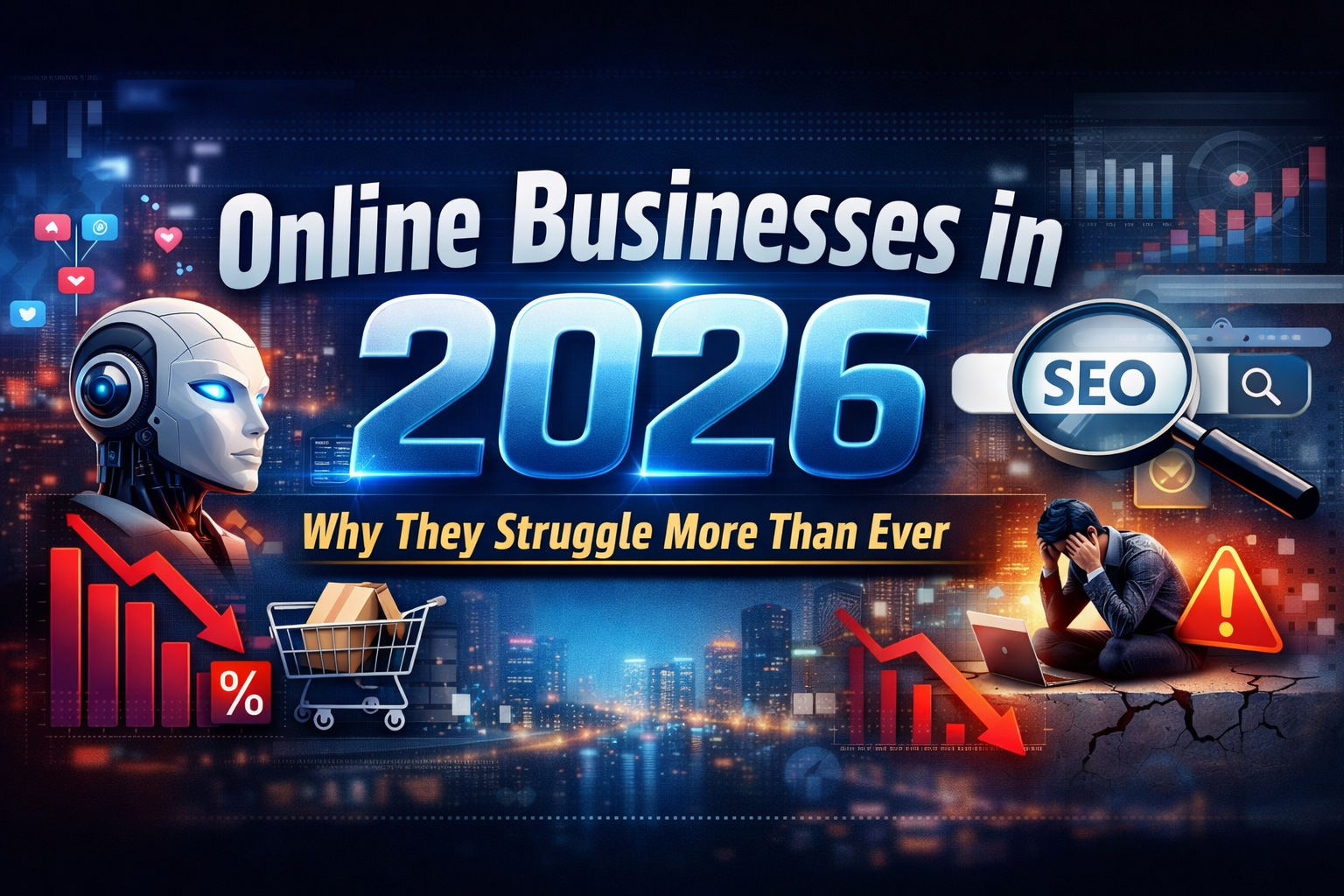
Online Businesses in 2026 are navigating a period of intense competition, rapidly evolving technology and shifting customer expectations. While opportunities for digital entrepreneurs remain vast, a surprising number of online ventures stall before they ever find momentum, not because of lack of effort, but due to strategic blind spots that quietly disrupt growth. These hidden mistakes do more damage than most founders realize and understanding them can mean the difference between stagnation and sustainable success.
The digital marketplace in 2026 is more crowded, faster and less forgiving than before. AI integration, personalized experiences and multichannel selling have raised customer expectations across every industry. Many businesses struggle not because they lack effort, but because their marketing lacks clarity and direction, which leads to scattered execution and weak returns. (Shinewell, Jan 31, 2026, Why Businesses Fail at Online Marketing in 2026) (https://shinewell.in/2026/01/31/why-businesses-fail-at-online-marketing-in-2026-best-digital-marketing-tips/)
Online Businesses in 2026 also face a deeper structural challenge. Entry barriers to digital entrepreneurship have fallen dramatically, which means thousands of new ventures launch every month using the same tools, platforms and strategies. As competition increases, only businesses that clearly understand their audience, positioning and value proposition gain sustained visibility. Online Businesses that fail to build this clarity often appear active on social platforms and advertising channels but struggle to convert attention into real growth.
When positioning is unclear and value is poorly defined, growth slows despite activity. The result is predictable and often silent. Here are 6 hidden mistakes that consistently block momentum:
Launching a product or service for online business in 2026 without confirming that customers genuinely want it remains one of the most damaging mistakes in online entrepreneurship. Many founders move quickly from idea to launch without validating whether real buyers exist, which often results in products that struggle to gain traction. Research on e-commerce performance shows that a significant portion of online ventures collapse early because founders fail to confirm market demand before investing in marketing and growth activities. (GlobalWorkDigital, Dec 21, 2025, What Percentage of E-commerce Businesses Fail in 2026?) (https://globalworkdigital.com/what-percentage-of-e-commerce-businesses-fail/)
This failure pattern often appears through several predictable signals:
• Building products based on assumptions rather than verified customer problems
• Measuring interest through social media reactions instead of real purchase intent
• Expanding marketing budgets before confirming repeat buying behavior
• Ignoring competitor analysis and realistic market size
When demand is not validated, even strong promotion cannot generate sustainable growth because the product itself does not solve a clear problem. Online Businesses in 2026 that invest time in research, customer feedback and proof of demand create stronger foundations and reduce the risk of scaling an idea the market never needed.

Marketing without focus drains both time and capital. Many businesses attempt to maintain visibility across numerous platforms without aligning their efforts to a clear strategy or a defined audience segment. This scattered approach produces low engagement, inconsistent messaging and weak conversion rates because the marketing lacks precision. Studies on digital marketing performance show that unclear targeting, vague campaign goals and weak search visibility often prevent businesses from turning traffic into customers. (Devtrios, 10 Digital Marketing Mistakes Killing ROI in 2026) (https://devtrios.com/blog/digital-marketing-mistakes/)
Real world online brands demonstrate the opposite approach. Gymshark, the fitness apparel company founded in 2012, grew rapidly by targeting a specific community of fitness enthusiasts and social media influencers instead of marketing to everyone. The brand relied heavily on influencer partnerships and community driven content on platforms such as YouTube and Instagram, which helped it build a strong identity among young fitness audiences. (Forbes, Alexandra Sternlicht, Dec 2, 2020, How Ben Francis Used TikTok And Instagram To Build Gymshark Into A Billion Dollar Sportswear Brand)(https://www.forbes.com/sites/alexandrasternlicht/2020/12/02/how-ben-francis-used-tiktok-and-instagram-to-build-gymshark-into-a-billion-dollar-sportswear-brand/)
By focusing on a narrow but passionate customer segment, Gymshark created strong brand loyalty and scaled globally through direct to consumer ecommerce. This approach shows how clear audience targeting often outperforms broad marketing attempts in crowded online markets.
Online Businesses in 2026 that succeed follow the same principle. They define the exact customer they serve, understand the problem their product solves, and communicate a distinct value proposition across every channel. Without this clarity, marketing activity may appear busy but rarely translates into sustainable growth.
Effective growth depends on relevance. Understanding your audience’s preferences, motivations, and decision patterns allows businesses to craft messaging that resonates deeply. Online businesses that fail to build this understanding struggle to convert visitors into loyal customers because their communication lacks connection and precision. (Connectica LLC, Nov 6, 2025, Top Digital Marketing Mistakes Businesses Make and How to Avoid Them) (https://www.connecticallc.com/top-digital-marketing-mistakes-businesses-make-and-how-to-avoid-them/)
This mistake often appears as inconsistent messaging or shifting brand identity. Online Businesses in 2026 that fail to define a clear audience lose trust and weaken long term customer relationships.
The website functions as the digital storefront, and its performance directly shapes customer decisions. If the user experience is slow, confusing, or outdated, conversions decline quickly because visitors lose trust and patience. Factors such as loading speed, intuitive navigation, and a simple checkout process strongly influence whether a visitor completes a purchase or leaves. Research shows that poor user experience increases abandonment rates and reduces overall revenue potential. (Outerbox Design, Sep 22, 2025, 11 Reasons Why eCommerce Businesses Fail & Websites Are) (https://www.outerboxdesign.com/articles/digital-marketing/11-reasons-ecommerce-websites-fail/)
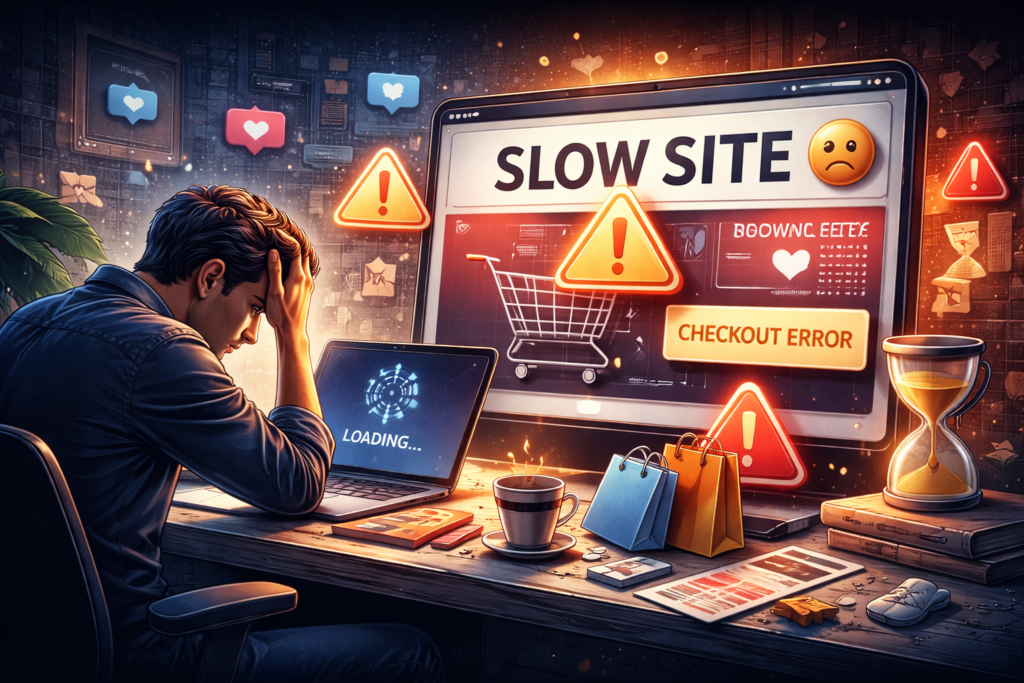
Online Businesses in 2026 often face this issue when growth efforts focus on traffic rather than experience, which creates a gap between visits and conversions:
• Slow loading pages that frustrate users within seconds
• Complicated navigation that makes products hard to find
• Confusing checkout steps that interrupt purchase flow
• Lack of mobile optimization across devices
Online Businesses in 2026 that prioritize speed, clarity, and smooth user journeys build trust and improve conversions, while those that ignore experience lose potential customers before any transaction occurs.
Online visibility is engineered through strategic content and search engine optimization. Many businesses fail because they do not target relevant keywords effectively, produce content that lacks intent alignment, or ignore authority building signals. Without strong visibility, even strong products remain buried beneath competitors. (Devtrios, 10 Digital Marketing Mistakes Killing ROI in 2026) (https://devtrios.com/blog/digital-marketing-mistakes/)
A strong SEO approach goes beyond basic keyword use. It requires consistent content built around search intent, topic authority, and user value. Businesses must create content that answers real queries, optimize pages for structure and speed, and build credibility through backlinks and relevance. Online Businesses in 2026 that align their content strategy with how users search gain steady organic traffic, stronger brand visibility, and reduced reliance on paid channels, which leads to more stable and scalable growth.
Adaptation is essential in a rapidly changing digital environment. Businesses that resist integrating AI tools, automation systems and data analytics often struggle to compete with more agile competitors. Strategic innovation improves efficiency, personalization and operational clarity. (Kocean24, AI Articles 3 Harsh Realities Revealed) (https://kocean24.com/ai-articles-3-harsh-realities-revealed/)
Adopting new systems does not mean chasing trends blindly. It means integrating tools that enhance productivity and customer experience in a measured and strategic way.
Online Businesses in 2026 operate in a demanding environment shaped by innovation, intense competition, and rising customer expectations. Growth is not blocked by effort alone but by overlooked structural mistakes. Businesses that validate demand, clarify targeting, understand their audience, optimize experience, strengthen search visibility, and embrace innovation position themselves for sustainable expansion.
The digital marketplace rewards clarity, adaptability, and disciplined strategy. Those who confront hidden weaknesses early gain a decisive advantage in an increasingly crowded world.