Physical Address
304 North Cardinal St.
Dorchester Center, MA 02124
Physical Address
304 North Cardinal St.
Dorchester Center, MA 02124
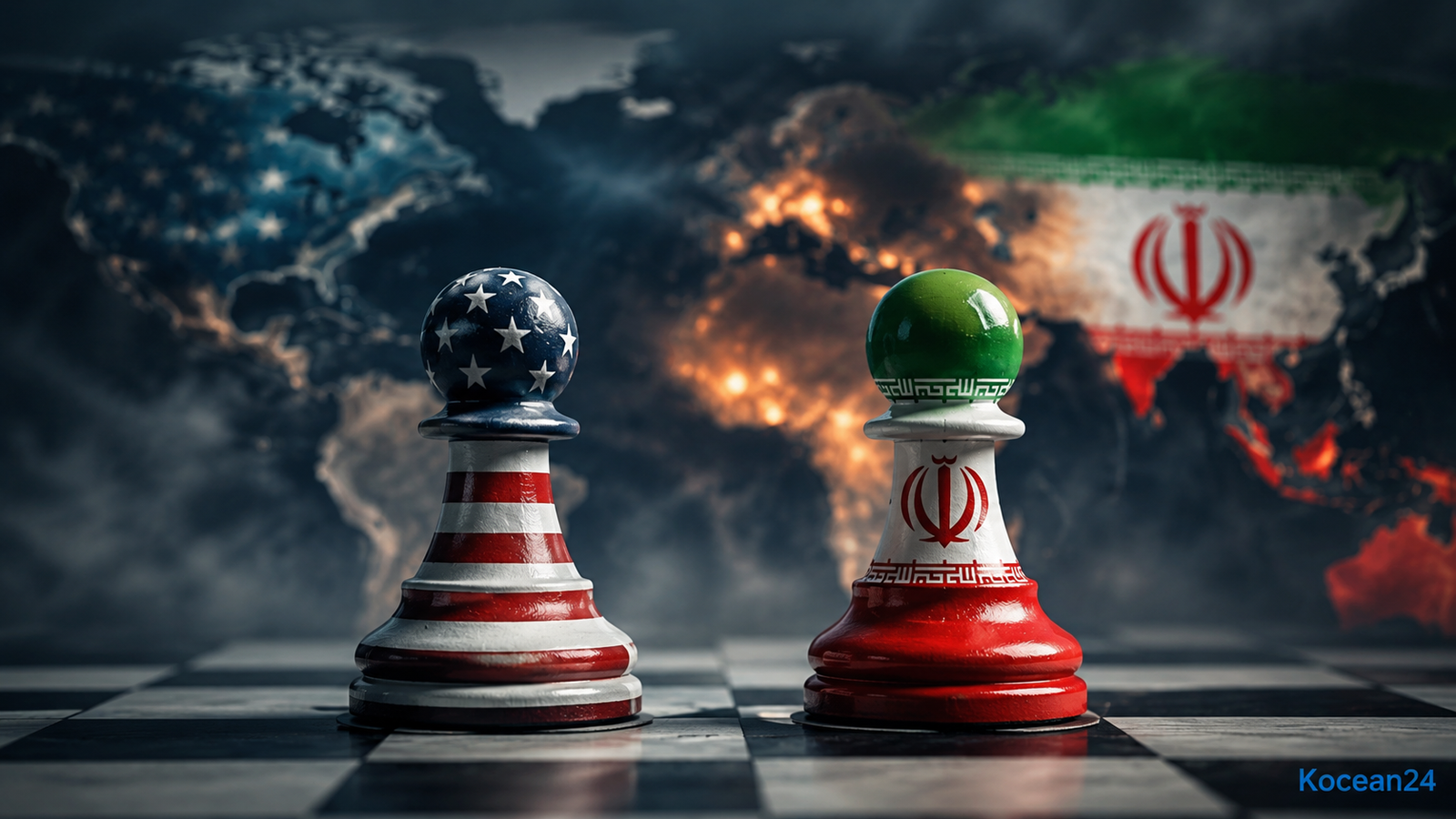
USA-Iran Peace entered a far more fragile phase after fresh exchanges of fire near the Strait of Hormuz pushed global tensions sharply higher despite weeks of ceasefire efforts and ongoing diplomatic talks. President Donald Trump insisted the ceasefire still remains active even after U.S. and Iranian forces traded strikes around the Gulf, while Iranian officials warned the latest attacks had crossed a “point of no return” and accused Washington of violating the fragile truce.
Oil markets, shipping industries and governments across Europe, Asia and the Middle East immediately reacted with growing concern as fears of wider instability returned to global politics. The crisis now looks bigger than one regional conflict because it is testing whether modern diplomacy can still survive in an era where military escalation, economic pressure and political messaging unfold at the same time.
USA-Iran Peace now stands on one of the weakest diplomatic foundations seen in recent times because both countries are publicly defending the ceasefire while simultaneously accusing each other of violating it through military action, missile activity and naval operations. Reuters reported that U.S. and Iranian forces exchanged fire near the Strait of Hormuz in what officials described as the most serious challenge yet to the month old ceasefire agreement, even as President Donald Trump continued insisting the ceasefire remained active. (Reuters, Idrees Ali, Humeyra Pamuk and Parisa Hafezi, May 7, 2026, US and Iran exchange fire, but Trump says ceasefire still in effect) (https://www.reuters.com/world/china/trump-sees-swift-end-war-iran-reviews-us-peace-proposal-2026-05-07/)
That contradiction is what makes the situation dangerous. Traditional ceasefires usually create visible separation between diplomacy and combat. This crisis is unfolding differently. Diplomatic communication, military retaliation and political messaging are now happening at the same time. It creates division in most of the times.
The fragility also comes from the absence of long term trust between the two governments. The United States and Iran have spent decades building policies around deterrence, sanctions, proxy pressure and military positioning across the Middle East. A short ceasefire cannot suddenly erase years of confrontation involving nuclear disputes, Gulf security tensions and regional influence battles stretching from Iraq to Lebanon. That history means every military movement is immediately interpreted through suspicion instead of confidence.
Another serious factor is the economic sensitivity surrounding the Gulf. The moment military exchanges intensified today, oil traders, shipping companies and investors reacted nervously because any escalation near major maritime routes threatens energy supplies and freight stability. The U.S. Energy Information Administration states that nearly 20% of global petroleum liquids consumption moves through the Strait of Hormuz, making it one of the world’s most critical energy chokepoints. (U.S. Energy Information Administration, June 16, 2025, Amid regional conflict, the Strait of Hormuz remains critical oil chokepoint) (https://www.eia.gov/todayinenergy/detail.php?id=65504)
This transforms every military incident into a global economic issue within hours. Rising tension in the Gulf can quickly affect oil prices, airline costs, shipping insurance, supply chains and inflation fears across Asia, Europe and North America.
The communication battle itself has now become part of the conflict. Trump’s repeated public insistence that the ceasefire still exists appears designed to prevent panic in markets and avoid the impression that diplomacy has collapsed completely. Iran’s warning that the attacks represented a “point of no return” appears aimed at showing strength while warning foreign powers against further escalation. Modern conflict is no longer shaped only by missiles and naval forces. It is also shaped by narratives, perception management and psychological pressure directed at the global audience.
USA-Iran Peace cannot be understood only through the Strait of Hormuz. Hormuz is important, but it is only one visible pressure point in a much larger system.
The Associated Press reported that the UAE said it responded to an Iranian missile barrage hours after the U.S. said it traded fire with Iranian forces. (Associated Press, Adam Schreck and Audrey McAvoy, May 8, 2026, UAE reports drone and missile attack after US says it traded fire with Iran) (https://apnews.com/article/iran-us-israel-war-may-8-2026-6490db55a65880a61a6233eff7acc68b)
That shows how fast one bilateral crisis can become regional. A clash between Washington and Tehran can pull Gulf states, Asian buyers, shipping firms and global investors into the same fear cycle.
This is why the issue is strategic. Modern conflict spreads through systems before it spreads through borders.
USA-Iran Peace also matters because energy routes still shape the digital world. People talk about AI, cloud computing and online economies as if they float above physical reality. They do not.
The U.S. Energy Information Administration said oil flow through the Strait of Hormuz averaged 20 million barrels per day in 2024, equal to about 20 percent of global petroleum liquids consumption. (U.S. Energy Information Administration, June 16, 2025, Amid regional conflict, the Strait of Hormuz remains critical oil chokepoint) (https://www.eia.gov/todayinenergy/detail.php?id=65504)
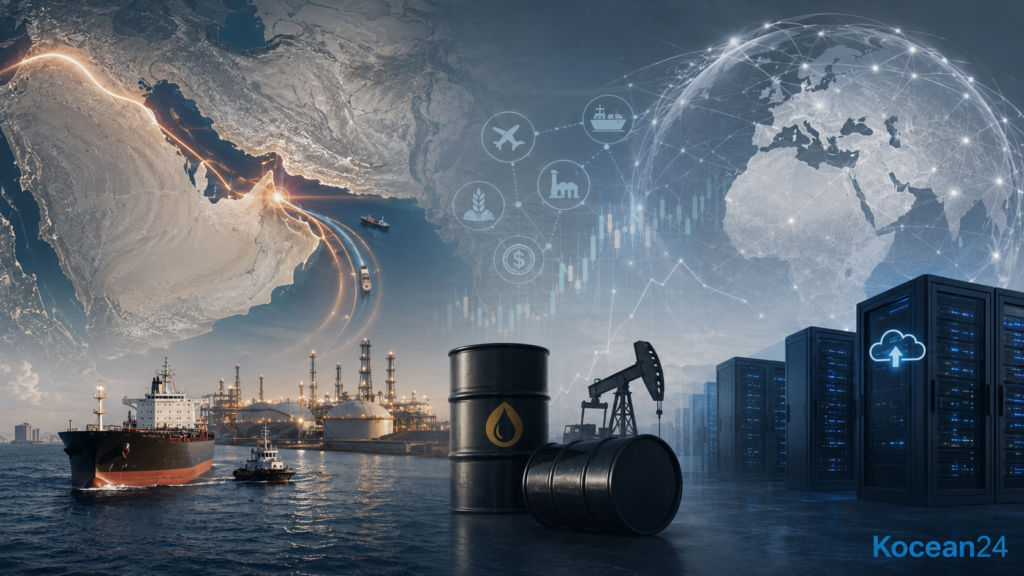
That single fact explains why markets react so quickly. Oil is not just fuel for cars. It touches aviation, shipping, food costs, manufacturing and inflation.
When energy confidence breaks, political confidence follows.
USA-Iran Peace is being tested by perception. President Trump saying the ceasefire still holds is not only a diplomatic statement. It is also a market signal.
Iran calling the situation dangerous is also not only anger. It is deterrence language. Each side wants the other side to pause, but neither wants to appear weak.
This is where modern geopolitics becomes psychological. A country can target another country’s confidence without launching a full war. It can pressure oil traders, frighten shipping companies and force governments to prepare for worse outcomes.
Kocean24 has already argued that global politics in 2026 is being shaped by economic confrontation, changing alliances and weakened norms. (Kocean24, February 21, 2026, Global Politics in 2026: 7 Powerful Challenges Ahead) (https://kocean24.com/global-politics-in-2026-7-powerful-challenges-ahead/)
This crisis fits that bigger pattern.
USA-Iran Peace will depend first on military restraint. If both sides stop treating every move as a test of strength, talks may continue.
Second, it depends on regional pressure. Gulf states do not want a wider war because their economies depend on stability, energy movement and investor trust.
Third, it depends on whether global powers push for a real political settlement instead of temporary silence. A ceasefire without a deeper deal can become a pause before another crisis.
UNCTAD described the Strait of Hormuz as one of the world’s most critical maritime chokepoints, carrying around a quarter of global seaborne oil trade and major volumes of liquefied natural gas and fertilizers. (UNCTAD, March 10, 2026, Strait of Hormuz disruptions: Implications for global trade and development) (https://unctad.org/publication/strait-hormuz-disruptions-implications-global-trade-and-development)
The next phase is not only about diplomacy. It is about food prices, shipping risk, fuel pressure and global development.
USA-Iran Peace is unfolding inside a global environment already filled with instability, economic pressure and geopolitical fatigue. Ukraine continues to drain military and financial resources across Europe, Red Sea disruptions have exposed the vulnerability of international shipping routes, and Asian economies remain deeply dependent on stable Gulf energy supplies.
Because modern trade, finance and energy systems are tightly connected, even a limited military exchange near the Gulf now carries consequences far beyond the Middle East. One confrontation can rapidly influence oil prices, airline operations, freight movement, inflation expectations and investor confidence across multiple continents. The deeper concern is not only the possibility of escalation. It is the growing public feeling that modern crises no longer fully end, and that every ceasefire may simply become a pause before another shock.
That growing pressure is reshaping how the world reacts to conflict:
Financial markets now respond to military tension within minutes because investors understand how quickly instability can spread through energy prices, shipping costs and supply chains. Even before governments release official statements, oil traders, freight companies and airlines begin preparing for disruption.
The Red Sea crisis and renewed Gulf tension have shown how a small number of maritime corridors now influence the broader global economy. Disruptions near these routes can affect food prices, manufacturing costs and energy security far from the actual conflict zone.
Repeated cycles of ceasefires followed by fresh exchanges of fire are slowly damaging public trust in international diplomacy. When military retaliation and peace negotiations happen simultaneously, people begin to question whether modern agreements still carry lasting credibility.
USA-Iran Peace is no longer only about whether Washington and Tehran stop exchanging fire near the Gulf. The deeper issue is whether both governments can restore even a minimal level of strategic restraint after years of distrust, sanctions, regional confrontation and military signaling. The latest clashes have already shown how quickly a fragile ceasefire can trigger fear across energy markets, shipping systems and diplomatic circles worldwide.
If negotiations continue, there may still be a narrow opportunity to prevent a wider crisis. If military exchanges intensify again, global instability could spread faster than political leaders can contain it.
The next phase of the situation will depend on several major developments:
The coming days may therefore shape more than a regional security crisis. They could reveal whether the world is entering another temporary geopolitical shock or a deeper era of long term instability and economic pressure.
USA-Iran Peace can still survive, but it needs more than official statements. It needs restraint, credible negotiation and regional calm. The world is watching because this crisis shows how fragile peace has become. One clash can shake oil, markets, diplomacy and public trust at once. That is why the next move matters more than the last headline.