
“Promises to Keep”: Did Robert Frost Hide the Meaning of Death in His Famous Poem?
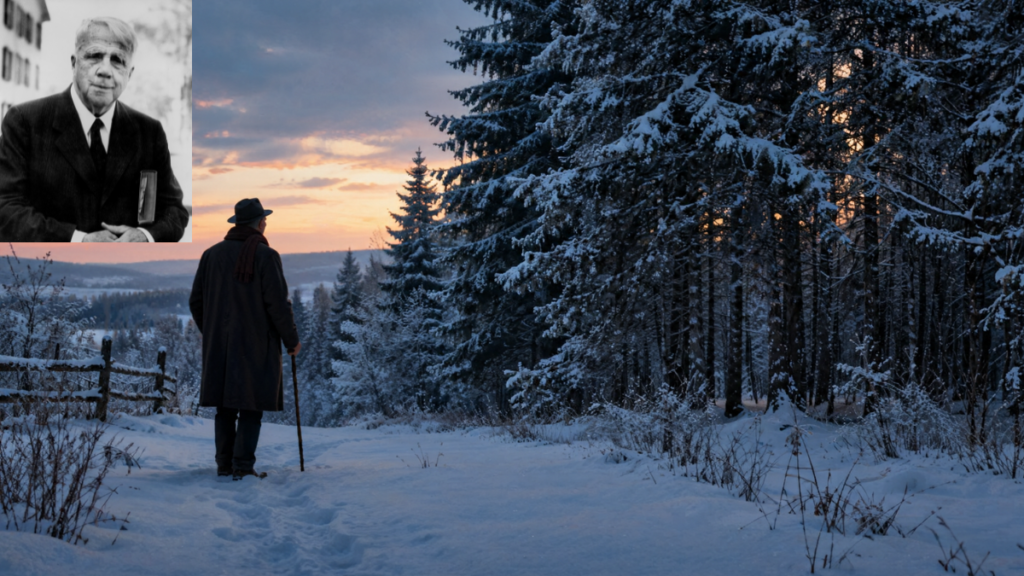
American poet Robert Frost (Mar 6, 1874- Jan 9, 1963) wrote one of the most haunting reflections on human existence without explicitly mentioning death. In Stopping by Woods on a Snowy Evening, a traveler pauses beside a snow covered forest, admires its mysterious beauty, and remembers his unfinished promises before continuing his journey. Nothing extraordinary happens, yet the poem raises a disturbing philosophical question.
Why most human beings continue their struggles when complete rest appears so inviting? Beneath the quiet winter landscape lies a possible confrontation between life and death, personal desire and moral responsibility. The woods may represent eternal silence, sleep may suggest mortality, and the promises may embody everything worth living for. Nearly a century after its publication, the poem continues to challenge readers to consider whether life’s deepest meaning emerges from happiness, achievement, or the responsibilities we refuse to abandon.
Table of Contents
Robert Frost and the Origins of a Timeless Poem
Published in 1923 as part of the collection New Hampshire, Stopping by Woods on a Snowy Evening became one of the most recognizable works in American poetry.
Its 16 lines present a deceptively simple situation. A traveler stops beside a forest while snow falls around him. His horse appears confused because they have paused far from any farmhouse. The traveler enjoys the silence but eventually remembers his obligations.
Robert Frost transforms this ordinary experience into a confrontation with questions about existence, temptation, and human purpose.
The poem’s origins add another dimension to its meaning. Literary accounts describe Frost composing it after working through the night on another poem. The contrast between exhaustion and sudden creative inspiration makes its atmosphere of rest and responsibility particularly interesting.
In his December 11, 2023 essay, Tyler Malone examines how Frost’s experiences and literary imagination shaped the poem. Malone also explains why the forest remains symbolically difficult to define, even when readers recognize its emotional power.
Source: (Poetry Foundation, Tyler Malone, December 11, 2023, Waiting for Form) (https://www.poetryfoundation.org/articles/161662/waiting-for-form)
The historical background helps explain the poem’s creation, but it cannot settle its philosophical meaning. Readers must examine the speaker’s words, his surroundings, and the decision he makes.
Do the Woods Represent Death?
Robert Frost captures the unsettling attraction of the forest in one remarkable line:
“The woods are lovely, dark and deep,”
The 3 adjectives reveal more than admiration for nature. Lovely expresses the speaker’s fascination, dark suggests an absence of light and the uncertainty of what lies ahead, while deep emphasizes the forest’s physical vastness and mysterious interior. More importantly, the speaker does not describe the darkness as frightening. He finds the woods beautiful despite their potentially dangerous qualities, perhaps even because of them.
The surrounding details strengthen this interpretation. The traveler has stopped beside a frozen lake on the darkest evening of the year, far from any farmhouse. Snow falls quietly, and the absence of human activity makes the forest appear almost detached from ordinary existence. Yet remaining in such an isolated, freezing environment could threaten his survival.
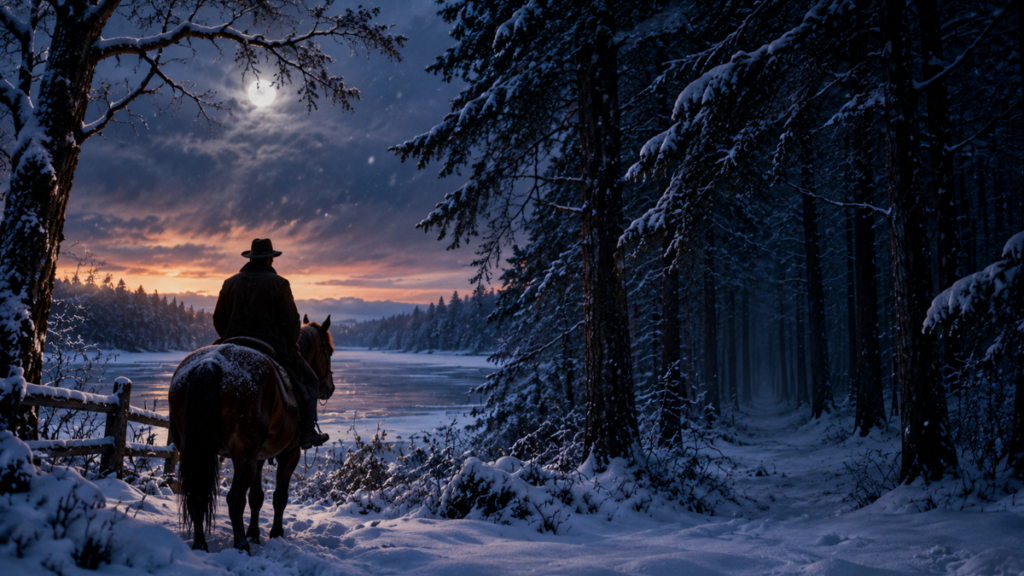
Literary scholar Adam Plunkett examines the popular interpretation of the woods as a temptation toward death, while also explaining how Frost resisted reducing the poem to a straightforward account of suicidal thoughts. The forest represents a threshold between familiar existence and an unknown possibility, rather than an explicitly identified destination. Source: (Academy of American Poets, Adam Plunkett, From “Love and Need: The Life of Robert Frost’s Poetry” by Adam Plunkett) (https://poets.org/text/love-and-need-life-robert-frosts-poetry-adam-plunkett)
The philosophical tension lies in the speaker’s attraction to a place where beauty and danger coexist. If the woods symbolize death, their appeal suggests the possibility of permanent release from life’s burdens. However, Frost carefully distinguishes contemplation from surrender. The traveler admires the forest without entering it, leaving the reader to consider whether he is merely enjoying solitude or confronting the seductive stillness of mortality.
The Attraction of Eternal Silence
Death often evokes fear, yet literature sometimes portrays it as an escape from suffering, exhaustion, and worldly responsibilities. In Robert Frost’s poem, the silent woods suggest a similar possibility, offering an imagined refuge from life’s endless demands. Their mysterious beauty makes eternal rest strangely appealing, suggesting a world beyond human struggles, obligations, and expectations.
However, Frost draws a crucial distinction between contemplating death and embracing it. The traveler never enters the forest; he remains on the road, captivated by its stillness but conscious of his unfinished journey. The woods may therefore symbolize the temptation of death, while his decision to continue reflects his commitment to life and its responsibilities.
Why the Darkness Matters
Darkness in Robert Frost’s poem represents more than the absence of light; it can symbolize humanity’s uncertainty about death and what lies beyond conscious existence. The forest’s mysterious depth suggests an unknown realm beyond the traveler’s understanding, reflecting the limits of human knowledge about mortality.
Although Frost never explicitly identifies the woods with death, their darkness, isolation, and unsettling beauty create a compelling image of life’s ultimate mystery. The speaker’s fascination reveals how the unknown can inspire both curiosity and apprehension, making the forest a powerful symbol of mortality without imposing a single definitive interpretation.
What Does “Promises to Keep” Mean in Life?
The poem changes direction when the traveler remembers:
“But I have promises to keep,”
These words interrupt his fascination with the forest. The speaker recognizes an obligation beyond his immediate desire to remain still.
But what exactly are those promises?
Robert Frost never identifies them. They could involve family, work, friendship, or commitments made to other people. They might also represent personal ambitions, moral principles, or unfinished responsibilities. The absence of specific details gives the phrase its universal significance.
Promises as the Foundation of Human Purpose
Consider a parent securing a child’s future, a student pursuing education, or someone caring for an aging relative. Each carries responsibilities extending beyond personal comfort. Such commitments often demand sacrifice, patience, and difficult choices, while also providing direction and a sense of purpose.

The traveler in Robert Frost’s poem faces a similar conflict. Remaining beside the woods would satisfy his desire for peace and solitude, while continuing his journey requires honoring earlier commitments. His promises therefore represent more than unfinished tasks; they embody the moral obligations and personal relationships connecting him to the world.
Human existence is shaped by these connections, as individual decisions influence loved ones, communities, and future possibilities. Through the traveler’s choice, Frost suggests that life’s meaning may emerge not from escaping its difficulties but from accepting responsibilities worth fulfilling. The promises become a reason to continue, even when rest appears more inviting.
Does Responsibility Make Life Meaningful?
Responsibility does not always bring happiness. Some obligations demand sacrifice, patience, and difficult choices. However, meaningful commitments give life direction, strengthen relationships, and encourage perseverance through uncertainty.
In Robert Frost’s poem, the traveler’s promises reveal how responsibility shapes human purpose:
- Personal Commitment: Keeping promises builds integrity and connects present actions with future aspirations.
- Family and Relationships: Caring for loved ones creates emotional bonds and responsibilities beyond personal interests.
- Perseverance: Continuing despite difficulties demonstrates dedication to meaningful goals.
- Sense of Purpose: Unfinished commitments provide motivation to move forward, even when rest appears more appealing.
Family relationships offer a practical example of this philosophy. Rebuilding trust and maintaining emotional connections require patience, consistent effort, and personal commitment. Kocean24 explores these responsibilities in its parenting article. (Kocean24, Alex Hamilton, October 19, 2026, 7 Powerful Ways to Reconnect With Your Child) (https://kocean24.com/2026/10/19/how-to-reconnect-with-your-child/)
Does Sleep Symbolize Death in Robert Frost’s Poem?
The final words introduce the poem’s most famous ambiguity:
“And miles to go before I sleep,”
At the literal level, the traveler has a considerable distance to cover before reaching his destination and resting for the night. However, the word sleep also carries a longstanding literary association with death. While ordinary sleep offers temporary rest, death marks the permanent end of biological life. This dual meaning allows the final line to represent both a physical journey toward nightly rest and the larger human journey toward inevitable mortality, with responsibilities and experiences still awaiting fulfillment.
The Connection Between Sleep and Mortality
The association between sleep and death has long fascinated literary scholars. In Robert Frost: Selections, the Poetry Foundation explores how the poem’s dark woods and repeated references to sleep invite interpretations involving mortality and oblivion. The peaceful winter setting strengthens this reading, presenting death not as a violent ending but as a mysterious form of permanent rest. (Poetry Foundation, Robert Frost: Selections) (https://www.poetryfoundation.org/articles/70308/robert-frost-selections)

Why the Winter Setting Strengthens the Death Symbolism
Robert Frost uses the frozen lake, falling snow, and darkest evening of the year to create an atmosphere of isolation and stillness. Winter traditionally symbolizes aging, decline, and approaching mortality, contrasting with spring’s associations with renewal and growth. The silent, snow covered landscape can therefore suggest death’s mysterious permanence, making the traveler’s attraction to the woods more significant.
However, winter also represents temporary dormancy rather than the complete absence of life. Beneath the frozen landscape, nature continues its cycle. Similarly, the traveler pauses without abandoning his journey. His decision to leave the peaceful woods and continue along the uncertain road reinforces the poem’s central tension between the attraction of final rest and the responsibilities of living.
Did Robert Frost Intentionally Conceal a Message about Death?
Although death is a compelling interpretation of Robert Frost’s poem, no conclusive evidence establishes it as his sole intended meaning. The woods may symbolize solitude, natural beauty, temptation, or mortality, while sleep can represent both physical rest and life’s final end. Similarly, the traveler’s promises may refer to ordinary responsibilities or deeper moral commitments. These interpretations can coexist, allowing the poem to explore multiple dimensions of human existence without revealing a single definitive message.
Why a Single Interpretation Cannot Explain Everything
Robert Frost preserves the poem’s ambiguity by leaving the traveler’s attraction to the woods, his promises, and his destination unexplained. The forest can represent both beauty and danger, while sleep may suggest ordinary rest or death. These overlapping meanings allow readers to explore mortality without reducing the poem to a single message.
Literary interpretation also differs from authorial intention. A poem may suggest meanings beyond those consciously planned by its creator. The Poetry Foundation discusses this distinction in its examination of poetic composition and interpretation. (Poetry Foundation, The Start: Writing Your Own Poem) (https://www.poetryfoundation.org/articles/69588/the-start-writing-your-own-poem)
Therefore, death remains a compelling interpretation of Frost’s poem, not a conclusively established hidden message.
Robert Frost and the Philosophy of Continuing Life
Robert Frost’s poem connects with existential philosophy, which explores human freedom, responsibility, mortality, and the search for meaning. French philosopher Albert Camus examined the conflict between humanity’s desire for purpose and a universe offering no guaranteed answers, a concept central to his philosophy of the absurd. Although Frost and Camus approached existence differently, both invite a fundamental question: Why continue living amid suffering and uncertainty? In Frost’s poem, the traveler’s unfinished promises offer one possible answer, suggesting that personal commitments can provide meaning even without a complete understanding of life’s ultimate purpose.
Life Does Not Require Every Mystery to Be Solved
The traveler never discovers what lies beyond the woods or resolves the mystery of death. Instead, he remembers his promises, suggesting that life’s meaning can emerge through action rather than absolute understanding. Human beings can remain uncertain about existence while loving others, pursuing knowledge, and fulfilling responsibilities. Although the road ahead remains unpredictable, the decision to continue reflects a commitment to living purposefully despite unanswered questions.
Is the Traveler Choosing Life Over Death?
If the woods symbolize death, the traveler’s decision to leave them can represent an affirmation of life. However, Robert Frost presents this choice without dramatic conflict. The speaker still admires the forest’s beauty, even as his unfinished promises compel him to continue. His attraction to stillness reflects a familiar human struggle between the desire for rest and the responsibilities of existence.
The poem does not suggest that seeking rest means rejecting life. Instead, it distinguishes temporary withdrawal from permanently abandoning one’s journey. The traveler accepts uncertainty and continues forward, suggesting that life’s meaning lies not in escaping difficulties but in honoring commitments despite them.
The Greatest Tragedy May Be the Promises Left Unfulfilled
Death brings human ambitions, relationships, and unfinished commitments to an irreversible end. A promise extends beyond the present, carrying the expectation of future action, but mortality makes its fulfillment uncertain. In Robert Frost’s poem, the traveler recognizes the distance ahead without knowing how much time remains. His promises therefore symbolize both life’s responsibilities and its limitations, while the road represents opportunities gradually diminished by the passage of time.
This awareness of mortality can make ordinary commitments more meaningful. Time spent with loved ones, neglected ambitions, and responsibilities awaiting fulfillment become increasingly precious when life is understood as finite. Frost’s poem suggests that existence gains significance not merely through its duration but through the choices people make, the relationships they preserve, and the promises they honor before their journey ends.
Conclusion: The Unfinished Journey of Human Existence
Robert Frost never explicitly reveals whether the woods represent death, but the poem’s darkness, silence, repeated reference to sleep, and emphasis on unfinished promises make mortality a compelling interpretation. The traveler encounters a beautiful place where stopping feels attractive, yet he recognizes responsibilities extending beyond his immediate desires. His decision captures a fundamental human struggle between the longing for rest and the necessity of continuing through uncertainty.
The poem does not promise an easy journey or explain what awaits at its end. Instead, it reminds readers of the value of commitments, relationships, and purposes still awaiting fulfillment. Perhaps the deepest tragedy of death is not merely the end of consciousness, but the possibility of leaving meaningful promises unfinished. Until life’s final moment arrives, however, the road remains open, and every step offers another opportunity to honor them.
