

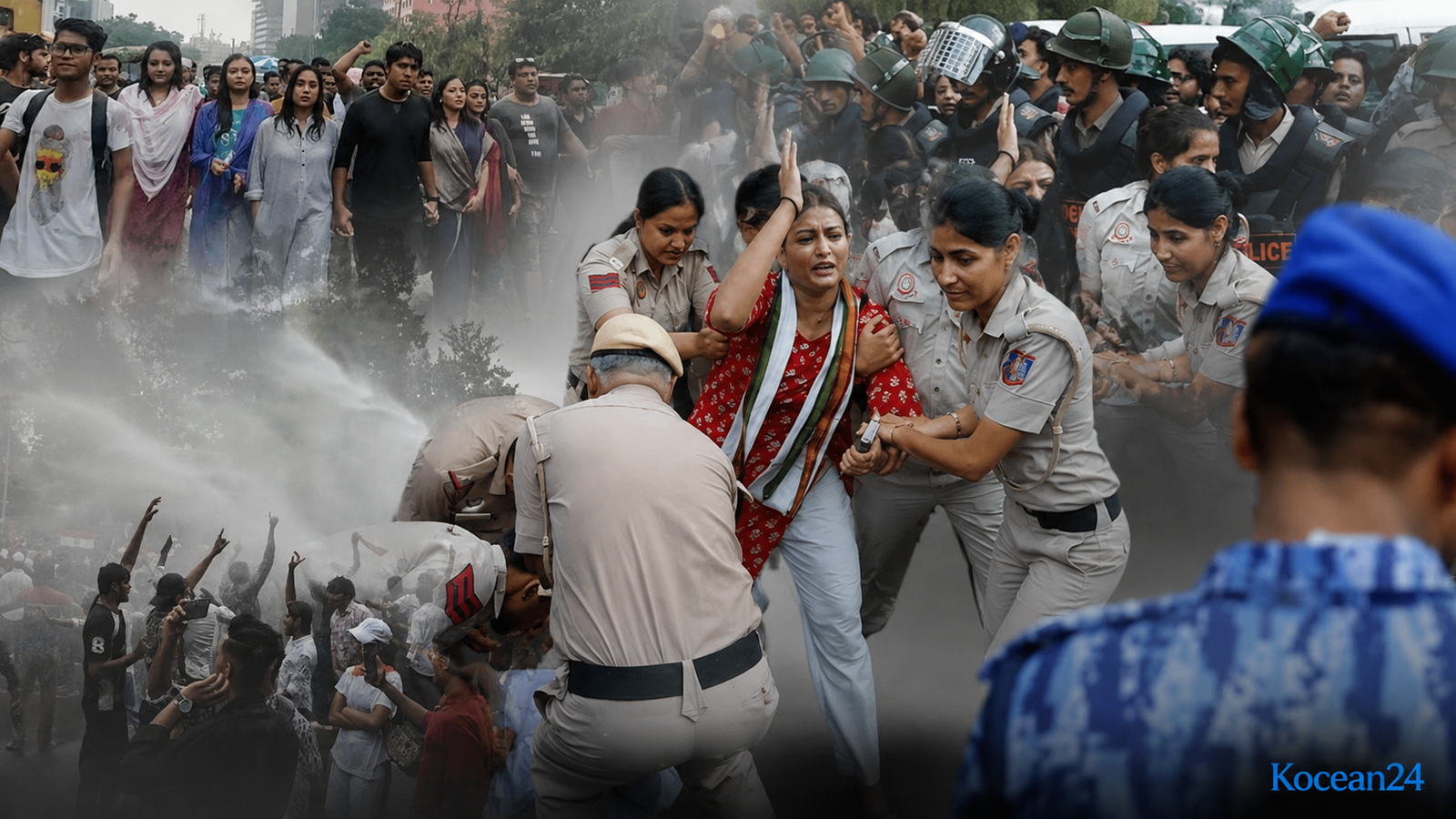
Student Protest has moved from examination halls and social media feeds to the heart of India’s national politics. What began as anger over leaked examination papers has grown into a wider demand for accountability, transparent recruitment, fair education and respect for young people whose careers depend on competitive tests.
The movement did not become powerful overnight. Students first had to turn personal disappointment into collective pressure. Online satire created a shared identity and then street demonstrations made the anger visible. Support from families, activists and celebrities expanded its reach. Afterwards, Political parties carried the dispute into Parliament, while Prime Minister Narendra Modi faced rising pressure to respond directly.
So, the story is how an education crisis became a national youth movement.
Table of Contents
The Paper Leak That Triggered the Movement
Like many other countries, competitive examinations hold enormous importance in India. A medical entrance result or government recruitment test can determine whether years of preparation lead to a career. Students often invest money, time and family savings in coaching, applications and travel.
That is why allegations involving leaked papers create more than an administrative problem. They destroy trust in the basic promise that effort and ability will be rewarded fairly.
The latest Student Protest intensified after papers connected with medical entrance examinations were allegedly leaked. Reuters reported that the controversy affected about two million candidates and became the central grievance behind protests that began in June 2026. (Reuters, Sakshi Dayal, July 22, 2026, What’s behind India’s ‘cockroach’ youth protests?) (https://www.reuters.com/world/india/whats-behind-indias-cockroach-youth-protests-2026-07-22/)
Students were not only asking whether one examination had been compromised. They started asking whether the examination system could still protect honest candidates from organized fraud.
How Online Satire Became Street Power
The Rise of the Cockroach Janta Party
The Student Protest found an unusual identity through the Cockroach Janta Party, commonly known as CJP. It began as an online satire campaign and initially attracted only a few hundred participants.
The name gave students a way to express frustration without using the language of traditional political organizations. Memes, posts and sharp responses allowed the movement to travel quickly across platforms and campuses.
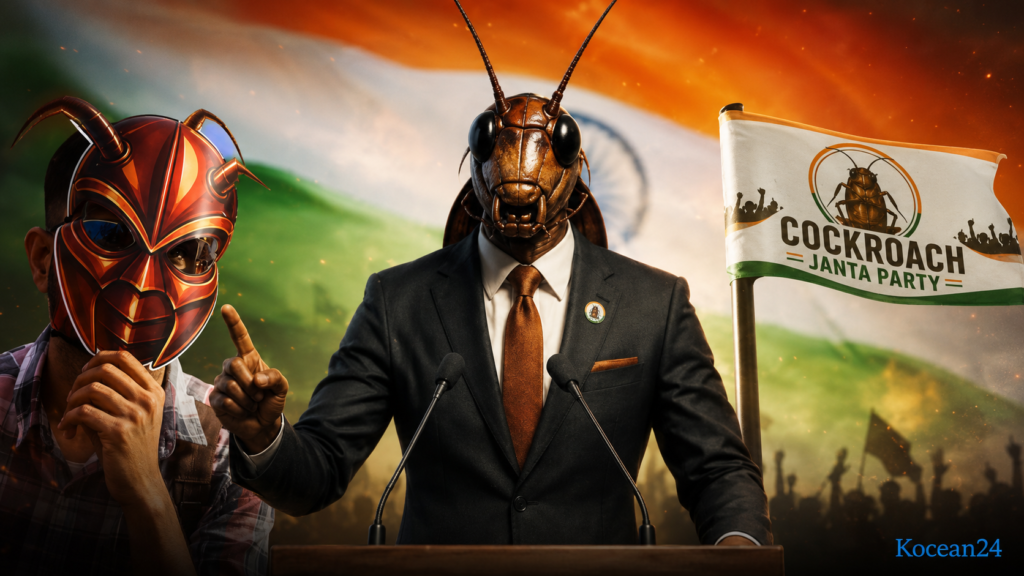
Satire worked because it made a serious issue easier to share. A long policy argument may not reach millions of people, but a recognizable symbol can. The Cockroach identity gradually became a badge of defiance rather than humiliation.
Why the Name Connected with Young People
Many young Indians already felt trapped between limited job opportunities, intense examination competition and repeated reports of recruitment irregularities. The movement gave those separate experiences a common voice.
This emotional connection explains why the campaign expanded faster than a normal examination dispute.
From Small Gatherings to a National Student Protest
The first demonstrations were limited in size, but the issue had the ingredients required for rapid growth. It affected a large number of candidates, involved education, employment and public trust. It also gave young people a clear demand around which they could organize.
Protesters gathered at Jantar Mantar in New Delhi and organized demonstrations in other cities. The movement later spread to Mumbai, Bengaluru, Kolkata, Goa, Guwahati, Thiruvananthapuram, Jammu and Ahmedabad.
Students carried the Indian flag, displayed placards and demanded responsibility from those managing the examination system. As more families and professionals joined, the Student Protest stopped looking like a narrow campus campaign.
It became a public argument about whether institutions were listening to the generation most dependent on fair examinations.
Sonam Wangchuk Gave the Movement Moral Weight
Activist and education reformer Sonam Wangchuk became one of the most influential public figures attached to the movement. His hunger strike, which began on June 28, brought fresh attention to the demands and strengthened the movement’s moral appeal.
Wangchuk’s involvement mattered because he was not a party politician trying to win an immediate electoral advantage. His public identity as an educator and activist helped connect the examination controversy with larger questions about responsibility and youth welfare.
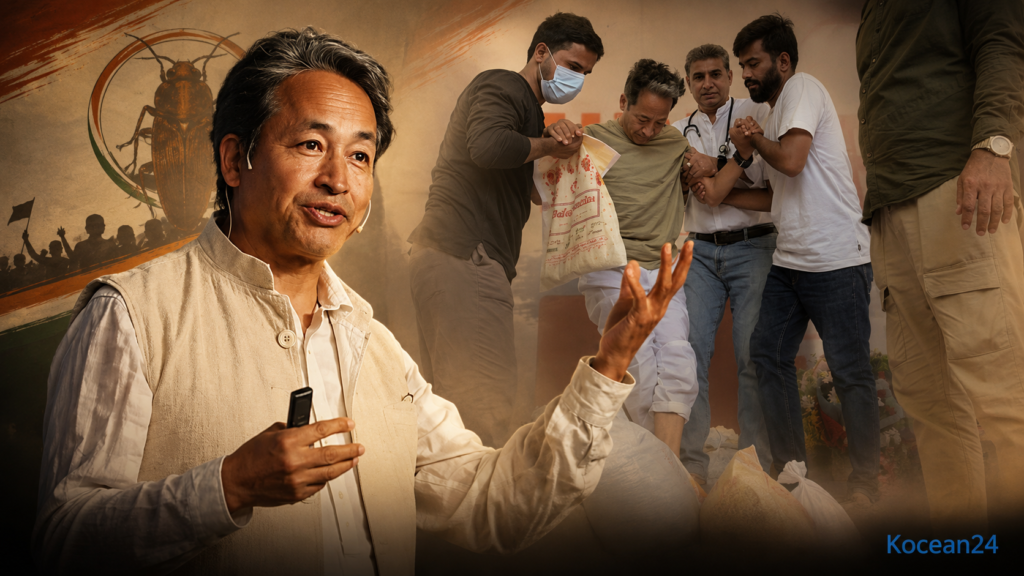
His removal to a hospital by police created another turning point. The action did not end the Student Protest. Instead, it increased public interest and raised questions about how the authorities were handling peaceful dissent.
Wangchuk later sought assurances that participants would not face retaliatory or punitive legal action for joining the movement.
The March toward Parliament Changed Everything
The student protest becomes politically unavoidable when protesters attempted to march toward Parliament in New Delhi.
Police used tear gas and batons to stop crowds, while security restrictions affected central areas of the capital. Images and videos of confrontations circulated rapidly.
The police response changed the conversation. The debate was no longer limited to the examination leak. People began discussing the right to protest, the treatment of students and the government’s willingness to engage with young citizens.
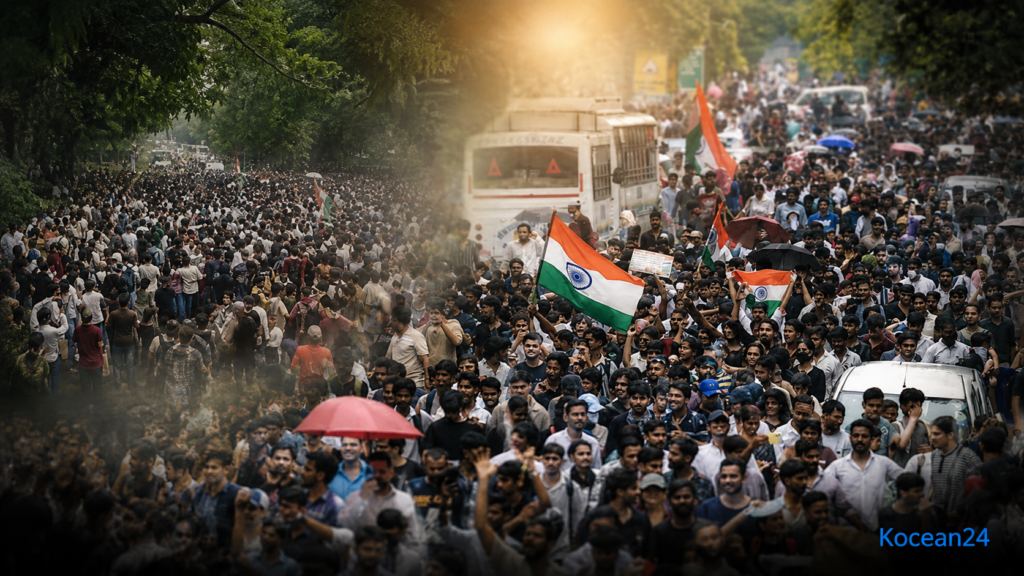
Student Protest gained new momentum because the attempt to control demonstration produced greater visibility. Students who were not present in Delhi could still witness what happened and react online or organize locally.
Political Parties Enter the Student Protest
Rahul Gandhi and Congress Back the Demands
Opposition parties recognized that the movement had become a major national issue. Congress leaders publicly supported the students and demanded the resignation of Union Education Minister Dharmendra Pradhan.
Rahul Gandhi and Priyanka Gandhi Vadra joined a sit in outside Prime Minister Modi’s residence. Police detained them along with several opposition leaders before releasing them later.
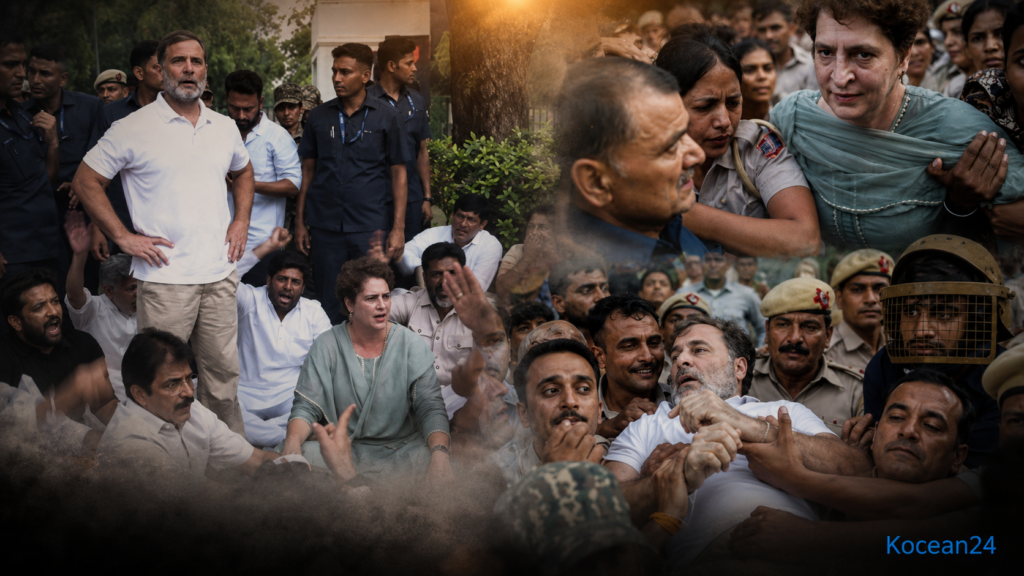
The opposition then carried the Student Protest into Parliament. Lawmakers displayed placards, raised slogans and interrupted proceedings, causing repeated suspensions in both houses.
Reuters reported that opposition lawmakers led by Rahul Gandhi backed the protesters’ calls for Pradhan’s resignation, accountability for the police response and an apology from Modi. The same report said Bharatiya Janata Party members organized counter protests in several cities. (Reuters, YP Rajesh, Tanvi Mehta and Shilpa Jamkhandikar, July 22, 2026, Indian opposition disrupts parliament to support student protesters and pressure Modi) (https://www.reuters.com/world/india/under-soaring-pressure-indias-education-minister-promises-reforms-debate-2026-07-22/)
Political Support Brought Power and Risk
Opposition involvement gave the students greater access to national media and parliamentary debate. It also increased pressure on the government.
Risk was there for the political involvement. The Student Protest could lose credibility when people began seeing it only as a battle between ruling and opposition parties.
The movement’s strength came from keeping student demands at the center. Political leaders just amplified those demands.
Celebrity Support Expanded the Audience
Public figures from Indian cinema and entertainment helped the Student Protest move beyond education pages and political reporting. Their statements, social media posts and physical participation introduced the movement to large fan communities that may not normally follow examination policy.
Celebrity involvement did not create the campaign or replace the students leading it. It amplified their demands, attracted wider media coverage and kept the paper leak controversy in public discussion.
Twinkle Khanna and Other Stars Spoke Online
Twinkle Khanna shared images from the demonstrations and praised young people for having the courage to dissent. Kareena Kapoor Khan, Varun Dhawan and Sara Ali Khan also expressed support after images of police action during the Chalo Sansad march circulated online.
These online messages mattered because each post carried the Student Protest into entertainment news, celebrity fan pages and social media conversations far outside the original examination debate.
Huma Qureshi Joined Students in Delhi
Huma Qureshi did more than post a message online. She expressed sadness over the scenes from the Chalo Sansad march and later appeared at Jantar Mantar to stand with protesters. Her brother Saqib Saleem and partner Rachit Singh were also reported to have accompanied her.
The actress said the images emerging from the demonstrations had left her with “a deep sense of sadness.” (The Times of India, July 21, 2026, Huma Qureshi breaks silence on Chalo Sansad march; says visuals from protests left her with ‘deep sense of sadness’) (https://timesofindia.indiatimes.com/entertainment/hindi/bollywood/news/huma-qureshi-breaks-silence-on-chalo-sansad-march-says-visuals-from-protests-left-her-with-deep-sense-of-sadness/articleshow/132526193.cms)
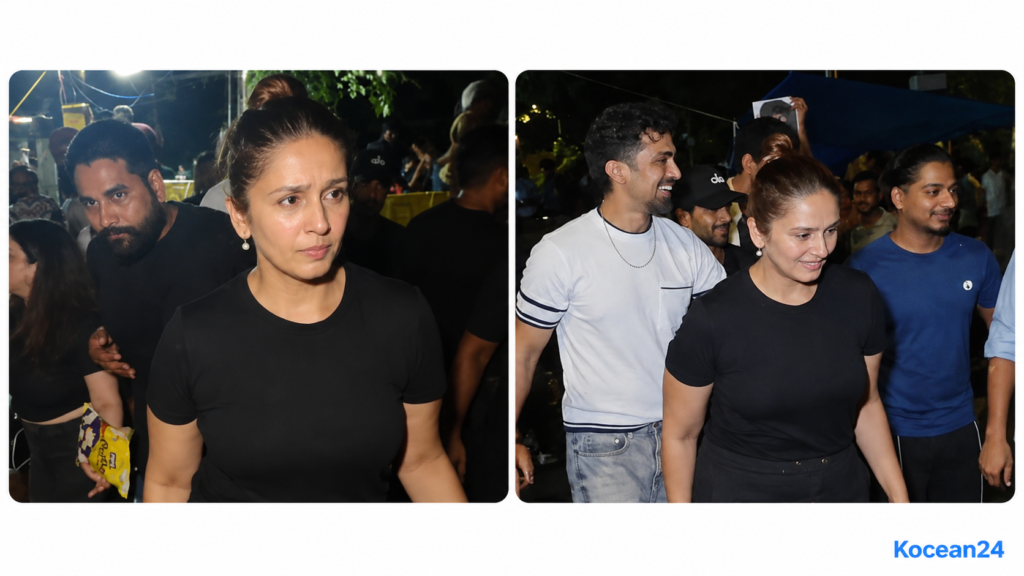
Her physical presence gave the movement a different level of visibility. It showed that celebrity support was no longer limited to carefully worded posts from a distance.
Imran Khan Marched with Protesters in Mumbai
Actor Imran Khan joined a student demonstration in Mumbai and criticized artists who avoid taking positions on major public issues. His participation connected the Delhi based agitation with solidarity gatherings taking place in other cities.
Imran argued that genuine art naturally carries the artist’s individual perspective. (The Times of India, July 23, 2026, Imran Khan slams ‘apolitical actors’ as he joins CJP led student protests: ‘True art is going to have an individual artist point of view embedded within it’) (https://timesofindia.indiatimes.com/entertainment/hindi/bollywood/news/imran-khan-slams-apolitical-actors-as-he-joins-cjp-led-student-protests-true-art-is-going-to-have-an-individual-artist-point-of-view-embedded-within-it/articleshow/132584342.cms)
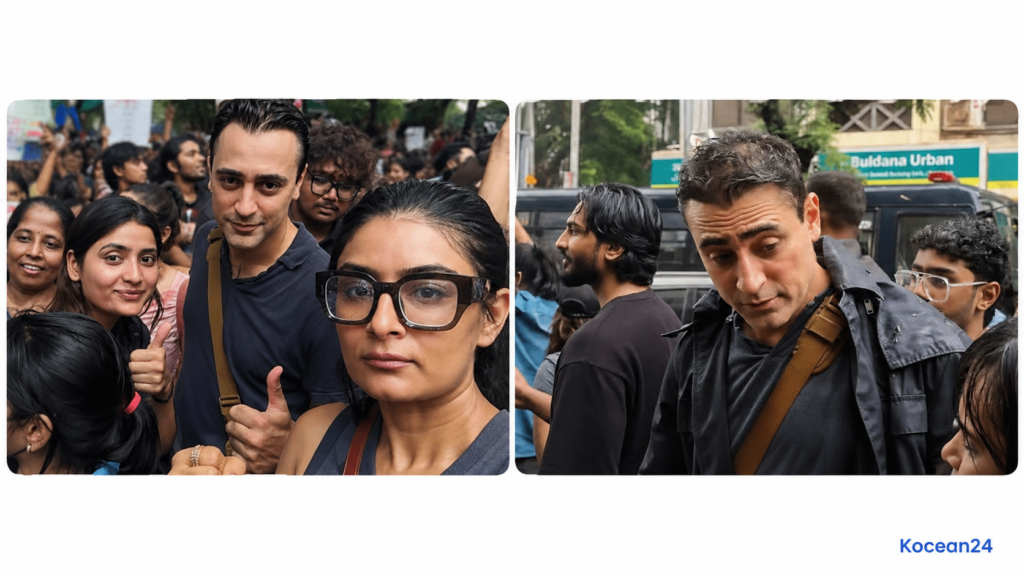
His remarks also opened a wider conversation about whether celebrities have a responsibility to speak when public institutions and young people come into conflict.
Ayesha Khan was Detained in Mumbai
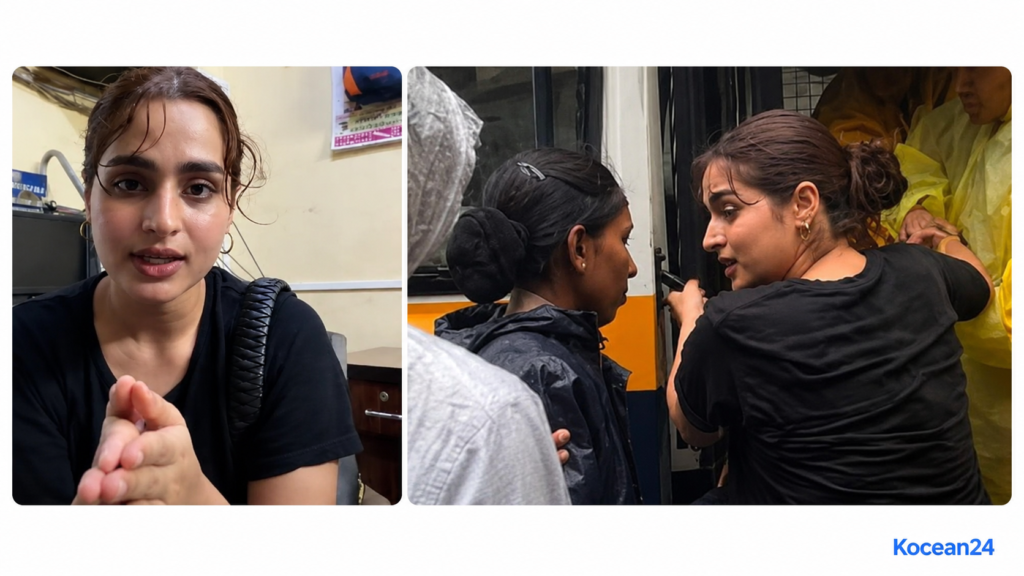
‘Dhurandhar’ famous Ayesha Khan became one of the most visible celebrity participants when Mumbai Police detained her during a solidarity protest on July 22. She later shared footage from inside a police vehicle and said she had been detained while standing on the road.
Her detention gave the Student Protest another powerful media moment. The story shifted from stars merely endorsing the movement to a public figure directly experiencing police action during a demonstration.
Ayesha also questioned why society becomes consumed by glamour while avoiding difficult conversations about accountability. (The Times of India, July 23, 2026, ‘Dhurandhar’ actress Ayesha Khan DETAINED during Mumbai student protest; shares video saying ‘I was just standing on the road’) (https://timesofindia.indiatimes.com/entertainment/hindi/bollywood/news/dhurandhar-actress-ayesha-khan-detained-during-mumbai-student-protest-shares-video-saying-i-was-just-standing-on-the-road/articleshow/132570173.cms)
Salman Khan Took a Different Position after Modi’s Response
Salman Khan initially acknowledged the students’ concerns. However, after Prime Minister Narendra Modi announced fast track courts and stringent punishment for people involved in paper leaks, Salman urged the protesters to return home and asked Sonam Wangchuk to end his fast.
His reaction showed that celebrity involvement was not completely uniform. Some public figures continued demanding broader reform, while others viewed Modi’s announcement as sufficient reason to suspend the agitation.
Naseeruddin Shah Backed the Movement Through a Video Message
Naseeruddin Shah did support the Student Protest with a video address. He praised the students’ courage, condemned the police action during the Chalo Sansad march and said he was “boiling with anger” over the treatment of young protesters. Shah encouraged students to remain resilient and told them that many people stood behind their struggle. A viral image claiming that Shah was physically present at Jantar Mantar was unrelated to the demonstration.
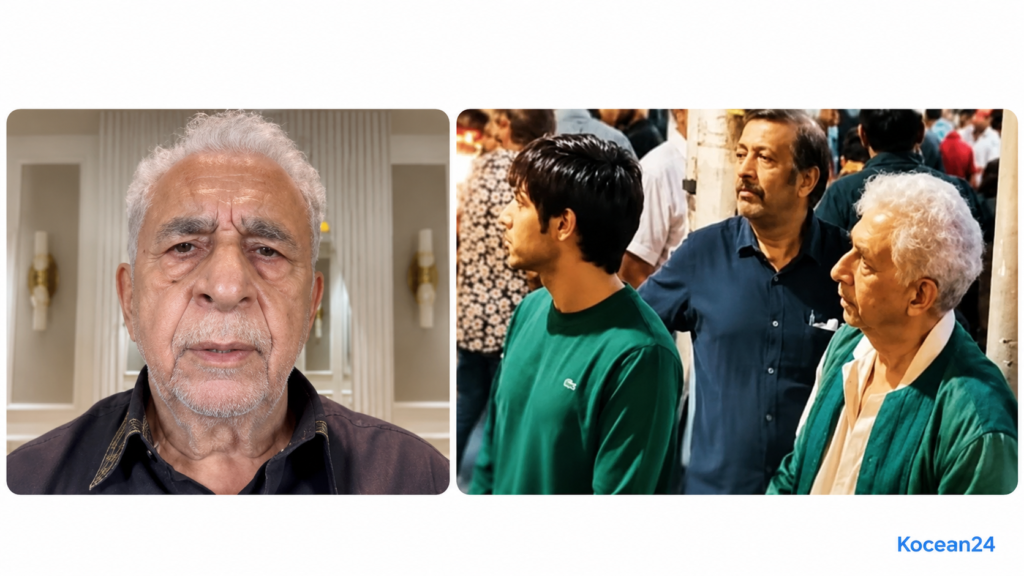
Celebrity Attention Turned a Student Issue into a Wider Conversation
The involvement of actors such as Huma Qureshi, Imran Khan, Ayesha Khan, Twinkle Khanna, Kareena Kapoor Khan, Varun Dhawan and Sara Ali Khan pushed the movement into entertainment media and mainstream cultural discussion.
Their participation did not prove every allegation raised by protesters. It did something equally important for the movement: it kept the students visible.
As celebrity statements, protest appearances and detentions generated repeated news coverage, the examination controversy reached more households across India and attracted attention beyond the country.
The Role of Ordinary People
The movement was sustained not only by famous names but also by students, parents, volunteers and supporters who provided food and practical help.
Kocean24 has previously examined how public movements gain strength when ordinary people turn frustration into coordinated action. Its report on May Day protests in the United States explained how participation can extend beyond attending a rally and enter daily decisions involving work, school and spending. (Kocean24, Alex Hamilton, May 1, 2026, May Day Protests in USA Trigger Economic Blackout Movement) (https://kocean24.com/may-day-protests-in-usa-economic-blackout/)
India’s Student Protest reflects the same principle. Its power comes from many small actions becoming visible at the same time.
Narendra Modi Breaks His Silence
Prime Minister Narendra Modi eventually responded as pressure grew across the country.
He declared, “Nothing is more important than the welfare and future of our youth!” Modi announced that the government would establish fast track courts to handle paper leak cases and promised swift trials and stringent punishment.
His statement marked a major shift. The government was no longer responding only through ministers, police or examination authorities. The Prime Minister had personally acknowledged the issue.
Modi also warned that people who harmed the future of young Indians would not be spared.
For supporters of the government, the announcement showed that the Student Protest had produced action at the highest level. For protesters, it was an important response but not a complete solution.
Why Fast Track Courts Did Not End the Protest
Fast track courts addressed punishment, but many students believed the deeper problems in India’s examination system remained unresolved, keeping the Student Protest alive. The bigger demands which may linger the movements:
a. Prevent Future Paper Leaks
Students want stronger safeguards to stop paper leaks before examinations take place, rather than relying only on punishment after the damage has been done.
b. Systemic Education Reforms
Protesters are calling for transparent investigations, secure examination processes, better accountability and long term reforms to restore trust in competitive exams.
c. Political Accountability
Many demonstrators continue to demand the resignation of Union Education Minister Dharmendra Pradhan, arguing that responsibility should extend beyond those directly involved in the leaks.
d. Why the Movement Continues
While the Modi government has focused on fast track courts and strict legal action, many students believe the Student Protest will continue until broader institutional reforms and political accountability are achieved.
The Latest Position of the Movement
Thousands of protesters continued gathering in New Delhi despite restrictions, roadblocks and disruptions to metro services. Demonstrators returned to Jantar Mantar after confrontations with police and repeated their demand for the education minister’s resignation.
The Associated Press reported that protesters remained on the streets after Modi announced fast track courts, saying the response had not fully addressed their demands for accountability and examination reform. (Associated Press, Sheikh Saaliq and Shonal Ganguly, July 23, 2026, India’s ‘Cockroach’ protests press on despite police crackdown) (https://apnews.com/article/india-cockroach-party-youth-movement-protest-modi-d226d142657cd297c3d4232716a8a626)
The Student Protest has therefore reached a decisive stage. It has secured national attention and a direct response from the Prime Minister, but its main political demand remains unresolved.
What the Movement has Already Achieved
The movement has not secured every demand, but it has already reshaped the national conversation around exam fairness, youth rights and political accountability.
Its measurable achievements include:
National Attention
The Student Protest turned a paper leak controversy into a nationwide debate involving students, families, media outlets and public institutions.
Political Pressure
Opposition parties raised the issue inside and outside Parliament, increasing pressure on the government to respond.
Wider Public Support
Activists, parents and celebrities amplified the movement, helping its message reach audiences beyond student communities.
Government Action
Prime Minister Narendra Modi announced fast track courts and promised strict punishment for those involved in paper leaks.
Youth Participation
Most importantly, students moved from being affected candidates to active political participants who organized, set demands and made the country listen.
Conclusion
India’s Student Protest began with a basic demand for fairness. Students wanted examinations in which preparation mattered more than access to leaked papers. As the issue grew, that demand expanded into a wider call for institutional accountability, political responsibility and respect for youth voices.
The movement has already traveled a remarkable distance from online satire to city streets and Parliament. Political leaders have joined it. Celebrities have amplified the movement. Modi has responded with a promise of fast track justice.
Yet the final outcome is still being written. The real test will be whether India creates a safer and more transparent examination system, not simply whether the crowds eventually leave the streets.
For now, the movement’s clearest achievement is impossible to ignore. India’s students made their future a national question, and they forced the country’s most powerful institutions to answer.





[…] Kocean24 reported that his involvement gave the student movement additional moral weight and helped turn attention toward broader questions about accountability and youth welfare. (Kocean24, Ava Grace, July 24, 2026, Student Protest in India: Untold Story from Paper Leaks to Parliament) (https://kocean24.com/student-protest-india-paper-leaks-parliament/) […]