

Sonam Wangchuk never chased power, yet millions now listen when he speaks. He started by helping forgotten students in Ladakh and grew into one of India’s most respected voices for education, innovation, and peaceful change. While many complain about broken systems, he has spent decades building practical solutions that people can actually use. His recent role in India’s education movement has once again placed him at the center of a national conversation. But his story goes far beyond a single protest or headline. This article explores how Sonam Wangchuk transformed local ideas into national influence, why his work matters today, and what role he could play in shaping India’s future.
Table of Contents
Who is Sonam Wangchuk?
Sonam Wangchuk is an Indian engineer, education reformer, innovator and environmental activist from Ladakh. He became widely known for challenging an education system that often failed to reflect the language, culture and practical realities of Himalayan communities.
His relationship with education was personal before it became professional. As a young student, he experienced the confusion and isolation that can arise when children enter classrooms built around unfamiliar languages and teaching methods. Those experiences helped shape his belief that students should not automatically be blamed when an education system fails to engage them.
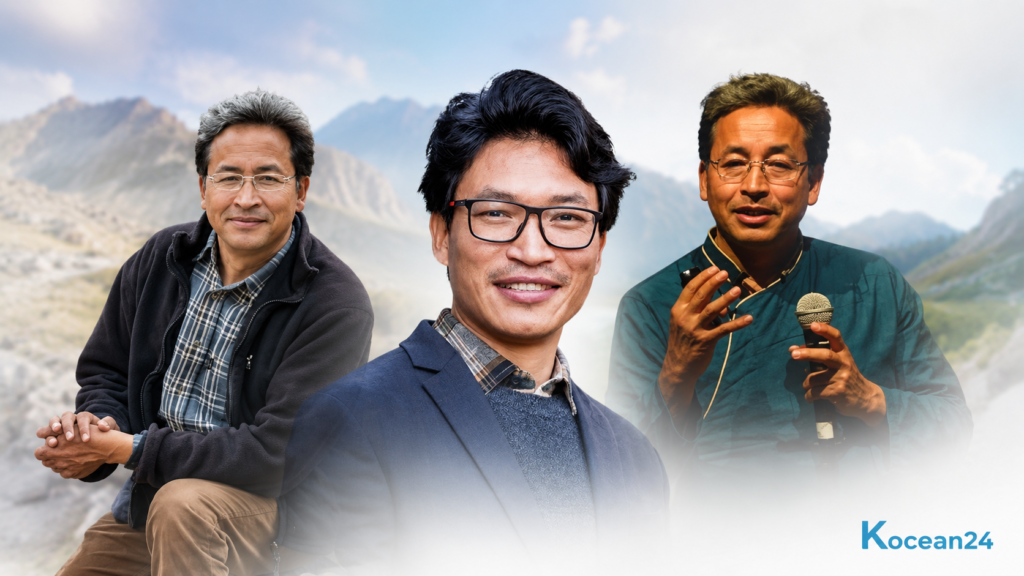
After completing his engineering education, Sonam Wangchuk chose not to follow a conventional career path. He returned to Ladakh and focused on the students who were being described as failures.
That decision became the foundation of his public life.
Building an Education Model Around Students
The Beginning of SECMOL
In 1988, Sonam Wangchuk helped establish the Students’ Educational and Cultural Movement of Ladakh, commonly known as SECMOL. The initiative worked with young Ladakhis who struggled within the conventional school system.
SECMOL did not simply prepare students to repeat textbook answers. It encouraged them to manage responsibilities, understand technology, communicate confidently and apply knowledge to daily life.
The organization later became associated with Operation New Hope, an education reform initiative that involved government institutions, village communities and civil society. The goal was not to create one successful private campus while ignoring the wider system. It was to improve how education worked across Ladakh.
Mint reported that Operation New Hope sought to reform government schools through cooperation among the government, communities and civil society organizations. The publication also reported a major improvement in Ladakh’s examination pass rate during that period. (Mint, Nikita Doval, November 25, 2016, A Ladakhi Dream Fuelled by a Swiss Award) (https://www.livemint.com/Consumer/AUgmDNspGwS9SZGU68P5LK/A-Ladakhi-dream-fuelled-by-a-Swiss-award.html)
Why His Method Connected with Students
Sonam Wangchuk challenged the idea that examination performance alone reveals a student’s intelligence. His approach treated practical skills, responsibility, creativity and local knowledge as essential parts of education.
At the SECMOL campus, students could learn by maintaining facilities, managing resources, working with renewable energy and participating in community life. This made education active rather than distant.
The method carried a direct message for teachers and policymakers. When large numbers of students fail, the first question should not always be what is wrong with the children. Leaders must also ask whether the language, curriculum and teaching system are serving them properly.
This thinking made Sonam Wangchuk important far beyond Ladakh. He offered a model that viewed young people as capable participants rather than passive recipients of instructions.
Turning Ice into a Water Solution
Why Ladakh Needed a Different Approach
Ladakh is a cold desert where farming communities depend heavily on water from snow and glaciers. Water may be present during winter, when agricultural demand is low, but scarce during spring, when farmers need it for crops.
Sonam Wangchuk and his collaborators responded with the Ice Stupa, a vertical artificial glacier designed to store winter water as ice. As temperatures rise, the structure melts gradually and releases water closer to the planting season.
The concept became powerful because it was understandable. It connected engineering with local geography and community needs.
Instead of treating climate change as a distant scientific discussion, Sonam Wangchuk demonstrated how environmental innovation can support farmers, villages and local livelihoods.
More Than an Invention
The Ice Stupa is often presented as the achievement that made him internationally famous. However, its greater value comes from the philosophy behind it.
He did not arrive with a product disconnected from the community. The solution responded to an existing seasonal problem and built upon Ladakh’s knowledge of ice, water and mountain conditions.
The project also showed that innovation does not need to begin in a major laboratory or technology company. It can begin in a village when people observe a problem carefully and test a useful solution.
This combination of modern engineering and local wisdom is central to Sonam Wangchuk’s work. He consistently argues through action that development should fit the place where it is introduced.
Recognition That Strengthened His Influence
Sonam Wangchuk received the Ramon Magsaysay Award in 2018. The recognition highlighted his collaborative reform of learning systems and his use of science and culture to expand opportunities for Ladakhi youth.
The award citation recognized his systematic and community centered work in education and local development. (NDTV, Press Trust of India, September 1, 2018, Two Indians, Bharat Vatwani and Sonam Wangchuk, Receive Magsaysay Award) (https://www.ndtv.com/india-news/two-indians-bharat-vatwani-and-sonam-wangchuk-receive-this-years-ramon-magsaysay-award-1909529)
Awards increased his visibility, but they did not create his importance. His reputation had already grown through years of educational experimentation, environmental work and community engagement.
Recognition gave him a larger platform. He used that platform to discuss education reform, climate responsibility, sustainable mountain development and the future of Ladakh.
Sonam Wangchuk and the Phunsukh Wangdu Connection
For years, millions of viewers have associated Sonam Wangchuk with Phunsukh Wangdu, the inventive educator played by Aamir Khan in 3 Idiots. The comparison feels natural because both figures challenge rote learning and believe education should solve real problems. However, Aamir Khan has clarified that the fictional character was not based on Wangchuk. Sonam Wangchuk has also distanced himself from the label of the “real Phunsukh Wangdu.” Still, the public connection introduced many young people to his real work in Ladakh. They discovered an educator whose schools, environmental ideas, and practical innovations carried the same spirit they had admired on screen. (The Economic Times, July 22, 2026, Aamir Khan: ‘3 Idiots’ Not Based on Sonam Wangchuk) (https://economictimes.indiatimes.com/news/politics-and-nation/aamir-khan-3-idiots-not-based-on-sonam-wangchuk/articleshow/132453619.cms#google_vignette)

Why Sonam Wangchuk Matters to India
He Connects Education with Real Life
Many education debates focus on marks, rankings, admissions and examinations. Sonam Wangchuk pushes the conversation further.
He asks whether students can use their education to understand their surroundings, protect natural resources, create livelihoods and strengthen their communities.
This is especially relevant in regions where one standardized model may ignore differences in language, geography, culture and economic opportunity.
His work shows that education becomes stronger when students can connect lessons with visible responsibilities and useful outcomes.
He Makes Climate Action Practical
Climate awareness often remains trapped in conferences, reports and speeches. The Ice Stupa turned a climate related problem into something communities could see, build and use.
Sonam Wangchuk communicates environmental ideas through practical examples. Water conservation, solar energy, natural building materials and responsible tourism become parts of daily development rather than separate environmental topics.
This approach helps people understand that climate action is also about agriculture, housing, energy costs, employment and survival.
He Holds Influence without Holding Office
Sonam Wangchuk has built public trust without depending on an elected position. His influence comes from the work associated with his name and the consistency of the causes he supports.
That gives Sonam Wangchuk a rare kind of credibility in public life. His views on education come from years spent guiding students, not from theory alone. His climate advocacy carries weight because he has built practical solutions for fragile Himalayan communities. When he joins a public movement, people also know that he has consistently favored peaceful pressure over confrontation.
People may disagree with some of his political demands or methods. However, dismissing his influence is difficult because his public record extends beyond speeches.
Sonam Wangchuk and the 2026 Student Movement
From Examination Anger to National Pressure
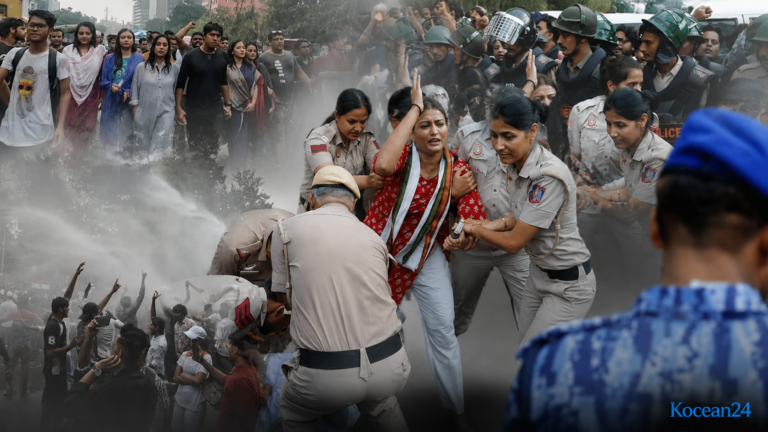
The 2026 student movement grew from anger over alleged examination irregularities, paper leaks and concerns about accountability. What began among affected students expanded into a wider debate about fairness, recruitment and trust in public institutions.
Sonam Wangchuk joined the movement and began a hunger strike at Jantar Mantar on June 28. His presence connected the immediate examination controversy with his longer campaign for education reform.
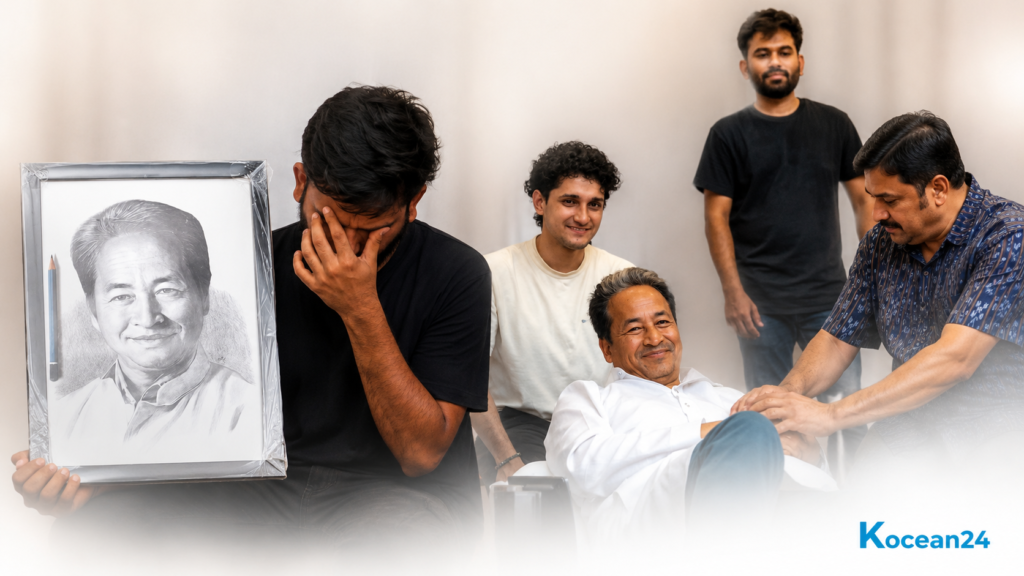
Kocean24 reported that his involvement gave the student movement additional moral weight and helped turn attention toward broader questions about accountability and youth welfare. (Kocean24, Ava Grace, July 24, 2026, Student Protest in India: Untold Story from Paper Leaks to Parliament) (https://kocean24.com/student-protest-india-paper-leaks-parliament/)
The said movement belonged to the young people whose studies, careers and confidence had been affected. Sonam Wangchuk used his public standing to increase attention without presenting himself as the sole owner of their struggle.
A Fast That Became a National Story
His hunger strike lasted 26 days and became one of the most closely watched parts of the protest. Concerns about his health increased as the campaign continued.
He eventually ended the fast after receiving assurances connected with the protesters and the education debate. The movement continued pressing for accountability.
The resignation of Education Minister Dharmendra Pradhan on July 25, 2026, marked a major political outcome following sustained youth protests demanding his departure. (Reuters, July 25, 2026, India’s Education Minister Resigns After Youth Protests) (https://www.reuters.com/world/india/indias-education-minister-resigns-after-youth-protests-2026-07-25/)
His Reaction Focused on Reform
Sonam Wangchuk welcomed the resignation as a democratic victory but did not treat it as the end of the issue.
He said, “It’s a victory of democracy,” while shifting attention from accountability toward reforms. (NDTV, July 25, 2026, “Thank You All”: Sonam Wangchuk’s 1st Reaction on Dharmendra Pradhan’s Resignation) (https://www.ndtv.com/india-news/sonam-wangchuks-first-reaction-on-dharmendra-pradhans-resignation-as-education-minister-thank-you-all-citizens-for-shedding-fear-11820391)
The response reflects the strongest part of his public message. Removing one official may answer a demand for political responsibility, but it cannot repair examination security, improve institutions or protect future students by itself.
The next stage requires policy, implementation and public scrutiny.
What Sonam Wangchuk Can Do Next
Build a National Network of Practical Schools
Sonam Wangchuk could help create a network of demonstration schools that adapt his practical learning principles to different Indian regions.
A school in Ladakh should not be copied without change in Kerala, Assam or Rajasthan. However, the core principle can travel. Students should learn through local problems, available resources and community participation.
Such schools could test methods before governments consider wider adoption.
Create Independent Education Reform Forums
He could bring students, teachers, examination experts, parents and policymakers into structured public forums.
These discussions should move beyond anger and produce clear proposals on examination security, digital safeguards, grievance systems, teacher preparation and institutional responsibility.
His role would not need to be political. He could act as a bridge between young citizens and decision makers.
Train Young Climate Innovators
India needs more local innovators who understand both science and their communities.
Sonam Wangchuk could expand programs that help young people work on water conservation, clean energy, sustainable housing, agriculture and climate resilient livelihoods.
The goal should not be to create followers who repeat his ideas. It should be to create problem solvers who develop better ideas for their own regions.
Protect His Independence
His influence depends greatly on public trust. Entering party politics could provide formal authority, but it could also divide the audience that currently listens to him across political lines.
He may achieve more by remaining an independent educator, institution builder and public advocate.
Independence allows him to support a good policy, challenge a harmful decision and work with different governments without being permanently defined by one party.
Turn Protest Demands Into Measurable Reform
The strongest future contribution would be to help convert the energy of the student movement into specific, measurable proposals.
These could include transparent investigations into examination failures, clear timelines for complaints, stronger protection for candidates, independent technical audits and public reporting on corrective actions.
Movements create pressure. Institutions create lasting change. Sonam Wangchuk can help connect theMovements create pressure. Institutions create lasting change. Sonam Wangchuk can help connect the two.
Conclusion
Sonam Wangchuk has shown that lasting change begins with ideas backed by action rather than words alone. His work in education, environmental innovation, and peaceful public engagement has inspired people across India to think differently about learning and leadership. As the country continues to debate reforms, his journey reminds us that meaningful progress grows through vision, persistence, and service to society. The chapters ahead may shape his legacy even further, but his impact has already reached far beyond Ladakh.