
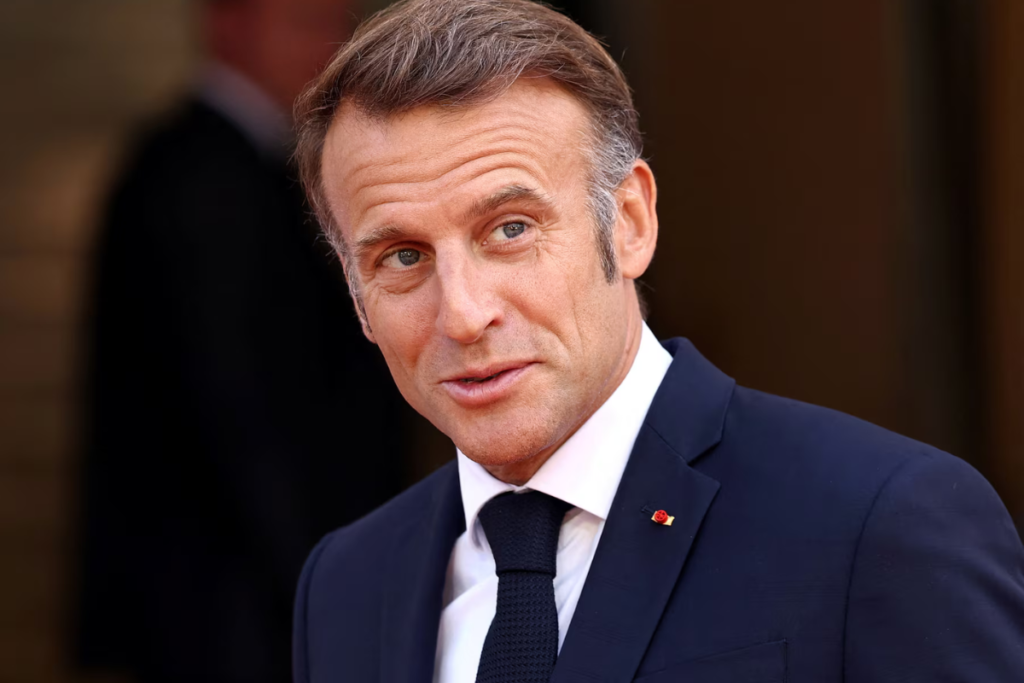
Can the Massive France Protests Force a Macron Resignation?
The possibility of a Macron resignation has become a pressing political question as France confronts nationwide protests, violent unrest, and mounting public frustration over rising living costs and deteriorating public services. President Emmanuel Macron is facing one of the most difficult periods of his presidency, but his latest decisions suggest he has no intention of stepping down before his term ends in 2027.
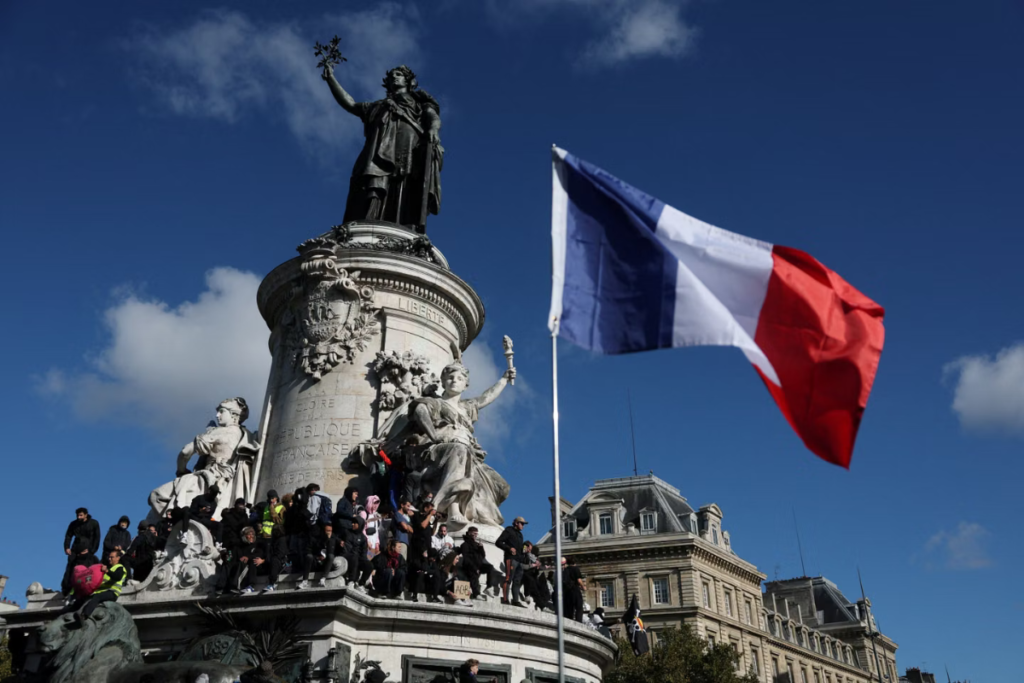
On October 17, approximately 550,000 people participated in demonstrations across France, according to the Interior Ministry. What began as student protests over poor educational conditions expanded into a broader movement against economic hardship and government policies. Although most demonstrations remained peaceful, violence erupted in several cities, leaving businesses vandalized, shops looted, and public buildings damaged.
The unrest spread through Paris, Marseille, Lyon, and other cities. In Limoges, rioters set fire to the historic town hall, creating one of the most disturbing images of the crisis.
France deployed approximately 60,000 police officers and security personnel on October 17, but authorities still struggled to prevent violence in several locations.
The resulting political fallout has intensified speculation about a Macron resignation. Yet the president’s response tells a different story.
On October 19, Macron rejected Interior Minister Laurent Nuñez’s offer to resign following criticism of the security failures. Instead of allowing the minister to leave, he ordered him to restore public order and address weaknesses in intelligence gathering.
Our assessment is clear: Macron will not voluntarily resign because of the October 2026 protests. He is far more likely to complete his presidential term, even if public dissatisfaction continues to grow.
However, remaining in office does not mean his government has regained control of the political situation. The protests have exposed problems that could shape France’s 2027 presidential election and seriously damage Macron’s political legacy.
If you are invested in such geopolitical matters, do consider checking out our category on the same.
Now, let us look at why a Macron Resignation is unlikely to happen.
Table of Contents
Why Are People Protesting in France in October 2026?
The protests are not simply a spontaneous reaction to one unpopular government decision. They reflect several years of accumulated dissatisfaction with France’s economic conditions, public services, and political leadership.
The latest demonstrations began gaining momentum in September 2026 when students protested teacher shortages and inadequate conditions in schools.
The movement gradually expanded as trade unions, workers, and other groups joined demonstrations against the rising cost of living.
By October 17, the protests had developed into a nationwide expression of frustration with the Macron administration.
According to Reuters, the demonstrations were driven by concerns about weakening public services, household expenses, and broader economic uncertainty.
Understanding these grievances is essential to assessing whether demands for a Macron resignation could become a serious threat to the presidency.
1. Rising Living Costs and Economic Insecurity
The cost of living has become one of the most important sources of public anger in France.
Households are facing pressure from higher fuel prices and essential expenses, while uncertainty about the economy has made financial planning increasingly difficult.
Energy prices have become especially sensitive amid geopolitical tensions affecting global fuel supplies.
For lower-income families, rising prices can force difficult decisions between transport, food, housing, and other necessities.
Middle-income households are also affected when wages fail to keep pace with everyday expenses.
The issue is not merely inflation itself. It is the perception that the government has failed to protect citizens from economic hardship.
Macron’s administration has promoted reforms intended to strengthen the French economy, but many protesters argue that the benefits have not been distributed fairly.
When people believe economic policies favor wealthier citizens or businesses, public dissatisfaction can evolve into opposition to the political system itself.
That explains why demands for a Macron resignation are connected to broader questions about inequality, representation, and economic security.

2. Teacher Shortages and Deteriorating School Conditions
The latest wave of demonstrations began with concerns about France’s education system.
Students protested inadequate facilities, staffing shortages, and conditions they believed were undermining their education.
Their complaints gained wider attention because education occupies an important place in France’s public-service system.
French families expect the state to provide accessible and reliable schooling, regardless of household income.
When schools struggle with staffing or infrastructure, dissatisfaction can spread beyond students to parents, teachers, and local communities.
The protests eventually became a rallying point for people concerned about the broader deterioration of public services.
This development is politically significant.
A government can sometimes contain protests against a specific reform by modifying or withdrawing the measure. It becomes much harder to restore confidence when dissatisfaction concerns the quality of essential institutions.
3. Government Spending Cuts and Public Debt
France’s public finances have become another source of political tension.
The government faces pressure to control borrowing and manage its substantial debt while maintaining public services and social protections.
These objectives can conflict.
Reducing expenditure may improve the fiscal outlook, but cuts affecting education, healthcare, or public employment can provoke opposition.
Increasing spending without a sustainable financing strategy may create additional pressure on government borrowing costs.
Macron’s administration has struggled to reconcile these competing demands.
The protests demonstrate the political consequences of that failure.
Many citizens want better public services and stronger economic protection, while financial markets expect credible measures to stabilize France’s finances.
The government cannot resolve this contradiction through policing or political messaging alone.
It requires an economic strategy that citizens regard as both effective and fair.
France Protests 2026: How Serious Is the Crisis?
The October 17 demonstrations were among the most significant episodes of civil unrest France has experienced in recent years. The scale of participation is important, but the violence surrounding the demonstrations has become a separate national crisis.
Shops were ransacked, vehicles burned, and buildings vandalized. Police confronted violent groups in several cities, while residents and business owners faced substantial disruption.
The destruction of Limoges town hall became particularly symbolic because municipal buildings represent local democracy and public administration.
In his October 18 address, Macron condemned the violence and said:
“Nothing justifies it, nothing explains it, nothing excuses it.”
The remarks were reported by Reuters.
Macron’s condemnation of looting and destruction was justified. Peaceful protest is a democratic right, but attacking businesses, destroying public property, and injuring people are not legitimate expressions of political disagreement.
However, it would be equally wrong to portray the entire protest movement as violent.
Most participants demonstrated peacefully, and their concerns about education, affordability, and public services deserve political attention.
The government’s challenge is therefore twofold: restore public order while addressing the grievances that brought hundreds of thousands of citizens into the streets.
Failure on either front could deepen the political crisis and intensify calls for a Macron resignation.
Macron Resignation: Why the President Refused to Accept His Interior Minister’s Departure
One of the most revealing developments occurred on October 19.
Interior Minister Laurent Nuñez offered to resign after acknowledging shortcomings in the government’s handling of the weekend’s unrest.
The scale of the violence raised serious questions about whether security services had adequately anticipated the risks.
Nuñez admitted that the deployment of approximately 60,000 security personnel had been insufficient in certain cities.
Macron rejected his resignation.
According to Reuters’ October 19 report, the president instructed Nuñez to remain in office, preserve continuity within the security services, and develop improved measures to prevent further looting.
The Élysée Palace also called for transparency concerning intelligence and preparedness failures.
This decision provides a strong indication of Macron’s political intentions.
A president preparing to leave office under public pressure would have little incentive to personally direct a longer-term restructuring of the security response.
Macron is doing the opposite.
He is maintaining his administration, demanding corrective measures, and attempting to demonstrate that the state remains capable of responding to the emergency.
The decision also reflects a political calculation.
Accepting the interior minister’s resignation could have been interpreted as an acknowledgment that the government’s handling of the crisis had failed badly enough to require a senior departure.
Macron instead chose continuity.
That does not eliminate the possibility of further ministerial changes, but it makes an immediate Macron resignation considerably less credible.
The president is acting to preserve his authority, not prepare his departure.
Will Macron Resign? Why a Macron Resignation Is Unlikely
There are four compelling reasons to conclude that Macron will remain president despite the unrest.
1. Macron Has Repeatedly Rejected Calls to Resign
Macron has faced demands to leave office during several previous political crises.
In October 2025, following government instability and repeated parliamentary confrontations, he explicitly rejected resignation demands.
Speaking during that crisis, Macron emphasized his responsibility to maintain continuity and stability.
Reuters reported that he had no intention of leaving office before the conclusion of his second term in 2027.
That statement is particularly relevant because the current demonstrations are not the first major challenge to his presidency.
His political behavior has consistently favored remaining in office and managing crises through government changes, negotiations, and institutional measures.
A Macron resignation would therefore represent a major departure from his established approach.
Source: Reuters — Macron rejects resignation calls, October 13, 2025.
2. France’s Constitution Protects the Presidential Mandate
The French president is elected for a five-year term.
Macron won reelection in 2022, meaning his current term is scheduled to end in 2027.
Unlike a prime minister, the president does not automatically lose office when the government loses parliamentary confidence.
This distinction is fundamental to France’s political system.
The National Assembly can remove a government through a motion of no confidence, but the president remains in office.
A Macron resignation would therefore require a voluntary decision or another constitutionally recognized process leading to a vacancy.
Public demonstrations alone cannot legally terminate his presidency.
3. Macron Has Little Political Incentive to Resign
Resigning shortly before the end of his second term would likely be interpreted as a political defeat.
It would suggest that public pressure had forced him to abandon the mandate voters granted in 2022.
Such an outcome could weaken his political legacy and damage the credibility of his allies ahead of the presidential election.
Remaining in office allows Macron to argue that he fulfilled his constitutional responsibilities despite extraordinary political challenges.
Even if his popularity continues to decline, completing his term offers a more defensible conclusion to his presidency than leaving during nationwide unrest.
4. His Latest Decisions Show Determination to Stay
Macron has rejected Nuñez’s resignation, demanded improvements in security preparedness, and instructed Prime Minister Sébastien Lecornu to engage political and social representatives.
According to Le Monde, the president has sought to defend state authority while delegating negotiations aimed at reducing tensions.
These actions are consistent with a president attempting to govern through a crisis.
They are not consistent with an imminent voluntary departure.
Taken together, the constitutional framework, political incentives, previous statements, and latest decisions strongly support one conclusion.
A Macron resignation before the 2027 election is unlikely.

Can France’s Constitution Prevent a Macron Resignation?
France’s Constitution does not prohibit Macron from resigning voluntarily. However, it provides important protections for the presidency and clearly distinguishes the president’s position from that of the government.
Under Article 6 of the French Constitution, the president serves a five-year term and cannot hold more than two consecutive terms.
Macron was elected in 2017 and reelected in 2022. His second consecutive term is scheduled to expire on May 14, 2027.
A parliamentary vote of no confidence can force the prime minister and government to resign, but it does not automatically remove the president.
The Constitution provides a separate mechanism for presidential removal under Article 68, involving a serious breach of presidential duties and approval through a demanding parliamentary procedure.
Consequently, the October protests cannot directly force Macron out of office, regardless of how many people participate.
What Would Happen if Macron Resigned?
A Macron resignation would trigger a constitutional succession process rather than automatically transferring the presidency to Prime Minister Sébastien Lecornu.
Under Article 7, the president of the Senate would temporarily exercise presidential duties, subject to constitutional restrictions.
A new presidential election would ordinarily have to be held within 20 to 35 days of the vacancy.
This would create a compressed election timetable during an already volatile political period.
It could also introduce further uncertainty into France’s fiscal negotiations and government operations.
A presidential resignation is therefore not a simple mechanism for resolving political dissatisfaction.
It would replace the current leadership crisis with an accelerated national election and a potentially contentious political transition.
The Constitution makes such a transition possible, but Macron has shown no willingness to initiate it.
Source: Élysée Palace — Constitution of the Fifth Republic.
Macron Has Survived Major Protests Before
The latest unrest is not the first time Macron has faced intense opposition.
His presidency has been marked by repeated confrontations over economic reforms, social policy, and the exercise of executive power.
These earlier crises provide important context for understanding the current Macron resignation debate.
The Yellow Vest Protests of 2018
The Yellow Vest movement began in November 2018 amid opposition to fuel-tax increases.
It rapidly expanded into a broader movement against economic inequality, declining purchasing power, and the government’s perceived detachment from ordinary citizens.
Demonstrators occupied roads, blocked transport routes, and organized repeated protests across France.
Some demonstrations were accompanied by serious violence, particularly in Paris.
Macron eventually announced concessions, including measures intended to ease financial pressure on households.
However, he remained president.
The experience established a pattern that continues to influence his political strategy: Macron may make concessions under pressure, but he does not readily surrender executive authority.
The Pension Reform Protests of 2023
In 2023, Macron’s government faced widespread opposition to pension reforms raising the statutory retirement age from 62 to 64.
Trade unions organized large demonstrations and strikes, disrupting transport and other public services.
The government’s use of constitutional procedures to advance the legislation without a final National Assembly vote intensified public anger.
Nevertheless, Macron defended the reform and refused to abandon his presidency.
The pension crisis demonstrated that even sustained nationwide opposition was insufficient to force his resignation.
The Government Crisis of 2025
Political instability deepened in October 2025 when Prime Minister Sébastien Lecornu resigned shortly after announcing his cabinet.
The departure exposed the difficulties of governing with a fragmented parliament.
Opposition figures renewed demands for Macron to resign or call an early presidential election.
Macron refused.
According to Reuters, he instead pursued negotiations intended to establish a workable government arrangement.
The following week, he publicly reaffirmed his intention to complete his presidential mandate.
That history makes the prospect of a Macron resignation following the October 2026 demonstrations even less convincing.
The president has repeatedly shown that he considers political instability a challenge to be managed rather than a reason to abandon office.
The Economic Consequences of France’s Political Crisis
Although Macron is unlikely to resign, the unrest could have serious consequences for France’s economy.
Political instability affects more than the government’s public image.
It can influence investor confidence, borrowing costs, consumer spending, and business decisions.
France is particularly vulnerable because it faces significant public debt and difficult budgetary choices.
Rising Government Borrowing Costs
Investors assess political stability when deciding how much return they require to lend money to governments.
When uncertainty increases, government bond yields may rise.
Higher yields make new borrowing more expensive and can increase the cost of refinancing existing debt.
The October protests have contributed to concerns about France’s ability to manage its finances while maintaining political stability.
Reuters reported that French financial markets weakened following the weekend’s unrest, with government bond yields rising and banking shares coming under pressure.
This matters because the government must negotiate fiscal measures at a time when public opposition to spending restraint is already intense.
If borrowing costs rise further, the administration could face even greater pressure to reduce expenditure.
That, in turn, could provoke additional protests.
Businesses Are Paying a Heavy Price
The immediate economic damage is also substantial.
Shops damaged during riots may face repair costs, lost inventory, interrupted operations, and higher security expenses.
Small businesses can be particularly vulnerable because they often lack the financial resources available to large corporations.
For business owners already struggling with rising operating costs, a prolonged period of unrest could threaten their survival.
Tourism, hospitality, and retail activity may also suffer if visitors become concerned about disruptions or personal safety.
France depends heavily on these industries for employment and economic activity.
A government that cannot provide reliable public safety risks damaging confidence among both domestic businesses and international visitors.
Political Uncertainty Complicates Investment
Businesses making long-term investment decisions need confidence in taxation, regulation, public infrastructure, and economic policy.
Repeated government crises can make that planning more difficult.
Companies may postpone expansion or recruitment while waiting for greater political clarity.
The threat of a Macron resignation could add to uncertainty, although the president’s determination to remain in office reduces the likelihood of an immediate constitutional transition.
The greater danger is prolonged political paralysis.
If France’s government struggles to pass budgets or implement reforms, the resulting uncertainty could extend well beyond the current protests.
Why Macron’s Response Has Not Solved the Crisis
Macron has condemned violence and acknowledged failures in security preparedness.
Those responses were necessary, but they have not resolved the grievances that brought hundreds of thousands of people into the streets.
In his October 18 address, the president focused heavily on restoring public order and holding violent offenders accountable.
He also called for dialogue involving students, teachers, trade unions, political representatives, and other stakeholders.
However, as Le Monde reported on October 19, the address did not provide concrete solutions to the central economic and social complaints raised by demonstrators.
This is the administration’s greatest weakness.
Macron has identified the immediate security problem, but the underlying crisis concerns public trust.
People protesting teacher shortages want functioning schools.
Workers concerned about living costs want greater economic security.
Citizens frustrated by declining public services want evidence that the government can deliver improvements.
Arresting rioters may prevent further destruction, but it cannot resolve these concerns.
The government must therefore distinguish between restoring order and restoring confidence.
Both are essential, but they require different policies.
Macron’s response has been stronger on defending state authority than on explaining how his administration will address the public-service and affordability problems behind the protests.
That imbalance risks prolonging dissatisfaction even after the immediate violence subsides.
It also ensures that the Macron resignation debate will remain part of France’s political conversation.
Could a Macron Resignation Change the 2027 Presidential Election?
The political consequences of the October protests may become most visible during the 2027 presidential election.
France has scheduled the first round for April 18, 2027, with a second round on May 2 if no candidate wins an outright majority.
Macron’s current term is scheduled to end on May 14, 2027.
Because he has already served two consecutive terms, he cannot seek a third consecutive mandate.
The next election will therefore determine who succeeds him.
Source: Le Monde — French presidential election dates for 2027.
The National Rally Could Benefit From Public Anger
The National Rally has consistently challenged Macron’s economic policies, immigration approach, and political leadership.
The party may seek to capitalize on public frustration over living costs, government instability, and security concerns.
However, electoral success will depend on its candidate, campaign strategy, legal developments, and ability to attract voters beyond its established support base.
The protests do not guarantee a National Rally victory.
They do, however, create an environment in which opposition parties can argue that France needs a decisive break from Macron’s political agenda.
The French Left Could Mobilize Disaffected Voters
Left-wing parties may also benefit from the issues driving the demonstrations.
Concerns about education, public spending, inequality, and social protections closely align with longstanding priorities of the French left.
Jean-Luc Mélenchon and other opposition figures could use these grievances to challenge the government’s record.
However, disagreements among left-wing parties may complicate efforts to build a unified electoral movement.
Public anger alone does not produce electoral victory.
Opposition groups must convert dissatisfaction into credible political alternatives.
Macron’s Political Legacy Is at Risk
Macron’s immediate political objective is to complete his term.
But the long-term judgment of his presidency will depend on more than whether he remains in office.
If France enters the 2027 election facing economic uncertainty, public dissatisfaction, and continued institutional instability, his political legacy could suffer significantly.
A successor elected on a platform of reversing Macron’s policies would represent a substantial rejection of his approach to governing.
This is why the October protests may prove politically consequential even without a Macron resignation.
They could help determine the direction of French politics after he leaves office.
What Should Macron Do Instead of Resigning?
Macron should remain in office and use the remainder of his presidency to address the failures exposed by the protests.
Resigning would not automatically solve France’s economic problems or improve its public services.
A more responsible approach would involve three immediate priorities.
Restore Security Without Restricting Peaceful Protest
The government must prevent looting, arson, and attacks on people while protecting citizens’ right to demonstrate peacefully.
Authorities should investigate failures in intelligence gathering and crowd management.
Police operations must remain proportionate and accountable.
The government should also support businesses and communities affected by the violence.
Public safety is a fundamental responsibility of the state, but security measures must not become a substitute for political engagement.
Develop a Credible Economic Response
The administration should identify practical measures to reduce pressure on households struggling with essential expenses.
Any assistance must be carefully targeted to avoid creating further fiscal instability.
France also needs a transparent strategy for controlling public debt without unnecessarily weakening essential services.
Citizens deserve a clear explanation of the government’s priorities, expected costs, and measurable outcomes.
Address the Problems in Education and Public Services
Because the protests began with educational grievances, school conditions deserve particular attention.
The government should publish clear assessments of staffing shortages, infrastructure problems, and resource allocation.
It should then establish realistic timelines for improvements.
Consultations with teachers, students, parents, and local authorities would help ensure that reforms respond to actual needs.
These measures would not eliminate every disagreement with the government.
They would, however, demonstrate that the administration understands the difference between suppressing unrest and resolving its causes.
What Happens Next if Macron Refuses to Resign?
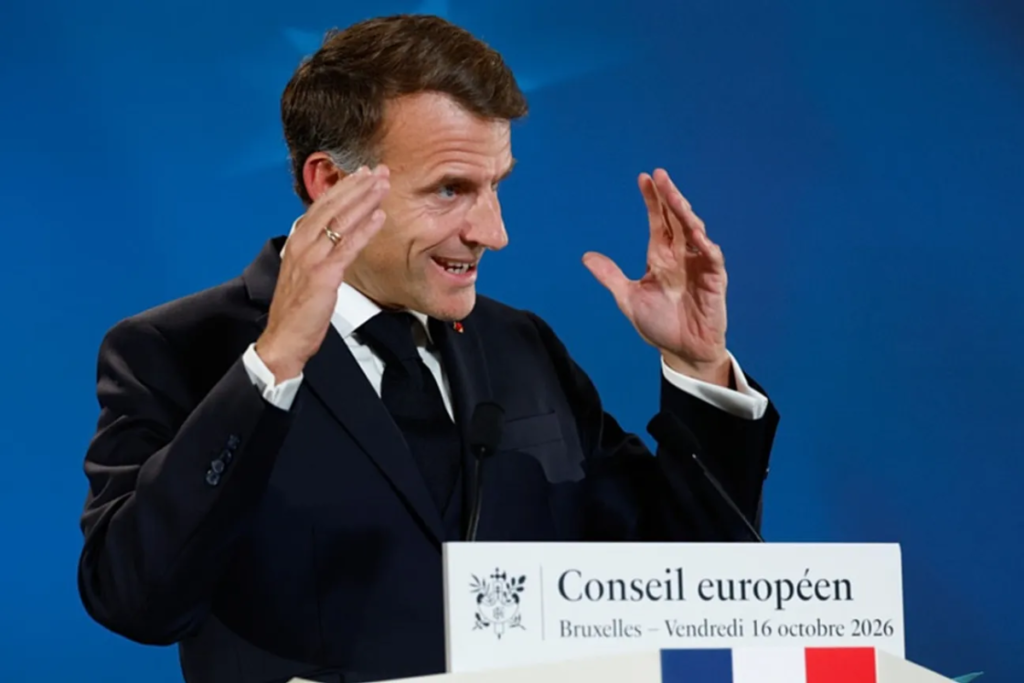
The most likely outcome is that Macron continues as president while Prime Minister Lecornu and other government officials attempt to negotiate solutions.
Further protests remain possible, particularly if discussions fail to produce meaningful commitments.
France could also face additional parliamentary disagreements over spending, taxation, and the national budget.
A successful motion of no confidence could bring down the government without removing Macron.
Such an outcome would create another political challenge, but it would not automatically trigger a presidential election.
The president would remain responsible for navigating the constitutional consequences.
The greatest risk is that France enters the final months of Macron’s presidency with a government unable to command sufficient parliamentary support for important legislation.
This would weaken the administration’s ability to respond to economic and social problems.
Nevertheless, a Macron resignation remains less likely than continued attempts to manage the crisis through negotiations, security measures, and government adjustments.
Macron’s political history strongly supports that conclusion.
Final Verdict: Macron Resignation Is Unlikely, but His Political Legacy Faces a Serious Threat
The October 2026 protests have exposed deep dissatisfaction with Emmanuel Macron’s administration.
Hundreds of thousands of citizens have demonstrated over education, living costs, and the quality of public services.
The violence accompanying some demonstrations has also revealed serious weaknesses in the government’s security preparations.
Macron now faces criticism over both the underlying economic grievances and the state’s failure to prevent widespread destruction.
Yet the evidence does not support the expectation of an imminent Macron resignation.
The president has rejected his interior minister’s offer to leave office, demanded improvements in security operations, and instructed his government to pursue political dialogue.
His previous handling of the Yellow Vest movement, pension reform protests, and parliamentary crises demonstrates a consistent determination to preserve his mandate.
France’s constitutional system also allows him to remain president despite public demonstrations and government instability.
Our verdict is unequivocal: Macron will not resign because of the October 2026 protests. He is likely to remain president until his term ends in May 2027. But that does not mean his administration has succeeded.
The government has struggled to address the economic and institutional grievances that brought people into the streets.
Unless Macron delivers meaningful improvements, the political consequences could extend into the 2027 election and shape how his presidency is remembered.
A Macron resignation may not happen, but the protests have already revealed the limits of his political authority.
Macron is likely to finish his presidency. Whether he can restore public confidence before leaving office is a far more difficult question.

Pingback: How Long Will the Massive France Protests 2026 Likely Continue? - Kocean24