
How Long Will the Massive France Protests 2026 Likely Continue?
France is facing one of its most serious waves of civil unrest in years. What began as student demonstrations against deteriorating school conditions has developed into a nationwide confrontation over living costs, public spending, economic inequality, and President Emmanuel Macron’s leadership.
The France protests 2026 have already brought hundreds of thousands of demonstrators onto the streets, disrupted schools, triggered violent clashes with police, and exposed the political vulnerability of a president approaching the end of his second term. The question now is no longer whether the demonstrations represent a serious challenge to Macron’s government. They clearly do. The more pressing question is how long France can remain trapped in this confrontation. If you want to know whether the France Protests might result in a Macron resignation, read this article.
In the present perspective, the most likely outcome is that the France protests will continue, in recurring waves, for at least another two to three months, with a substantial risk of unrest lasting into the 2027 presidential election campaign. That does not mean France will experience continuous nationwide riots for months. The most violent confrontations could subside much sooner. However, the broader protest movement is unlikely to disappear simply because police restore order in major cities.
The underlying problems are too serious, the demands are too extensive, and Macron’s political authority is too weakened for a quick resolution.
Table of Contents
France Protests 2026: How Did the Country Reach This Breaking Point?
The current unrest began in September 2026, when students in disadvantaged suburbs of Paris protested against teacher shortages, overcrowded classrooms, deteriorating school buildings, and inadequate educational resources.
Initially, the demonstrations centered on a straightforward demand: better schools.
However, as protests spread across France, they began attracting teachers, parents, public-sector workers, trade unions, and activists associated with the Yellow Vest movement.
The transformation was significant. A dispute about education became a national confrontation over the government’s economic priorities.
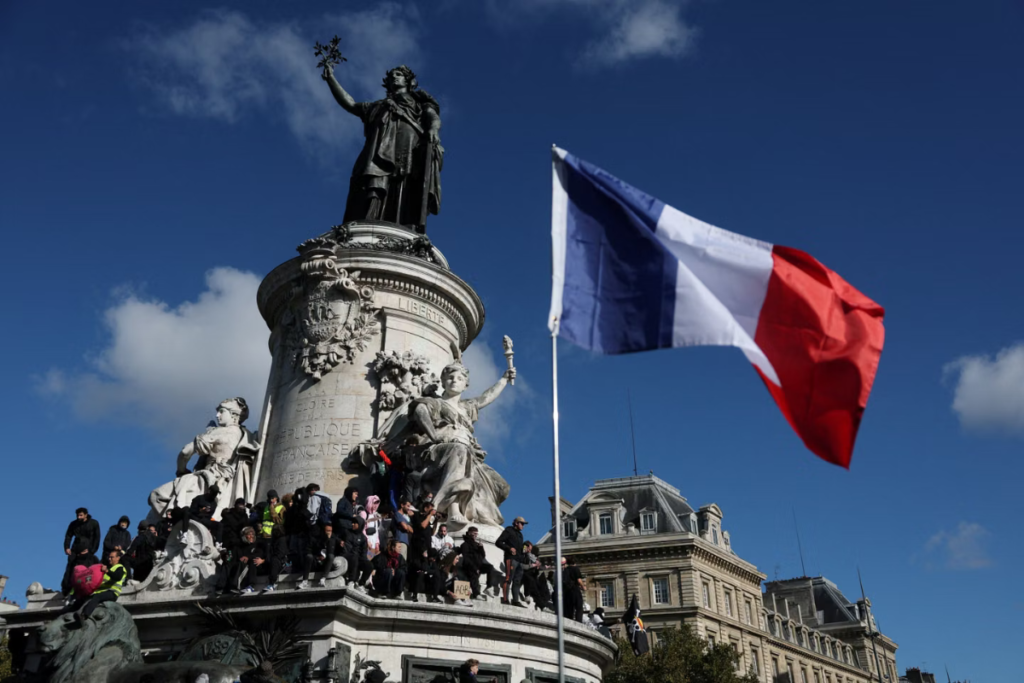
By October 17, France had witnessed one of its largest days of demonstrations in recent years.
According to Associated Press, estimates suggested between 550,000 and 800,000 people participated in approximately 110 demonstrations nationwide.
Major protests took place in Paris, Lyon, Marseille, Bordeaux, and other cities.
Although most demonstrators marched peacefully, violence erupted in several locations. Rioters attacked public buildings, looted businesses, set fires, and clashed with security forces.
The unrest intensified over the weekend, prompting thousands of arrests and raising serious questions about the government’s ability to maintain public order.
By October 19, Reuters reported that approximately 2,400 people had been arrested, nearly 1,000 police officers had been injured, and almost 3,000 shops had been affected by the violence.
Those figures illustrate the severity of the crisis, but they do not explain why it is proving so difficult to contain.
The central problem is that France is confronting several interconnected grievances simultaneously. Resolving one will not automatically resolve the others.
Why the France Protests 2026 Are Unlikely to End Anytime Soon
There are five major reasons why the current demonstrations are likely to outlast the immediate security crisis.
1. The Cost-of-Living Crisis Cannot Be Resolved Overnight
Rising living expenses have become one of the strongest forces driving public anger.
French households are struggling with expensive fuel, pressure on purchasing power, and uncertainty about their financial futures.
For lower-income families, even modest increases in essential expenses can have serious consequences.
Fuel prices are particularly sensitive in France because many workers, especially those outside major urban centers, depend on cars for commuting.
This economic pressure has revived memories of the Yellow Vest uprising that began in 2018.
That movement initially opposed higher fuel taxes but quickly developed into a broader protest against economic inequality and the perceived distance between political elites and ordinary citizens.
The similarities are difficult to ignore.
According to Reuters’ October 17 report, Yellow Vest activists have joined students and trade unionists in opposing high prices and the deterioration of public services.
The current movement therefore has a much wider economic foundation than the original school demonstrations.
Even if the government announces temporary fuel relief or additional subsidies, those measures will not necessarily restore purchasing power or reverse years of accumulated dissatisfaction.
As long as ordinary households believe their living standards are deteriorating, the motivation to protest will remain.
2. France’s Proposed 2027 Budget Could Fuel Months of Demonstrations
The government’s fiscal plans are another major obstacle to a quick resolution.
France faces mounting pressure to reduce its public deficit and control its national debt.
However, the measures proposed to stabilize public finances are deeply unpopular among sections of the population already concerned about wages and deteriorating services.
According to Al Jazeera’s analysis of the crisis, the proposed 2027 budget contains approximately €54 billion in spending reductions and tax measures.
The proposals include another freeze on the pay scale used to calculate civil servants’ basic salaries.
For public-sector employees, this creates a direct conflict between the government’s fiscal objectives and their demands for better compensation.
For students and parents, the prospect of spending restraint raises fears that schools will remain underfunded.
For trade unions, the budget provides a clear political target around which to organize strikes.
This matters because budget negotiations can continue for weeks or months.
Each parliamentary debate, spending announcement, or disputed amendment could become another opportunity for demonstrations.
The government cannot easily abandon fiscal discipline without risking further damage to France’s financial credibility.
Yet pursuing unpopular austerity measures while public anger remains high could deepen the unrest.
This contradiction makes the France protests 2026 particularly difficult to resolve.
3. The Student Movement Has Already Demonstrated Its Staying Power
Student protests can sometimes disappear after a government announces limited concessions.
France’s current movement has shown signs of greater resilience.
The demonstrations began in September and continued through October despite arrests, school closures, and repeated confrontations with police.
On October 9, Reuters reported that student unions intended to continue protesting even after securing initial concessions from the government.
At that point, 141 schools remained closed.
The government has promised measures to address teacher shortages and educational conditions, but student organizations have argued that the response does not go far enough.
This is important because the movement’s demands concern structural problems.
Recruiting additional teachers, repairing deteriorating buildings, reducing classroom overcrowding, and improving educational opportunities all require sustained investment and implementation.
These changes cannot be completed in a matter of days.
The protests have also become increasingly political.
Students are no longer merely asking for better classrooms. Many are challenging the government’s priorities and the way authorities have responded to their demonstrations.
Allegations of excessive police force have added another layer of resentment.
As a result, even meaningful educational concessions may not immediately end the movement.
4. Macron Has Limited Political Authority and Even Less Financial Flexibility
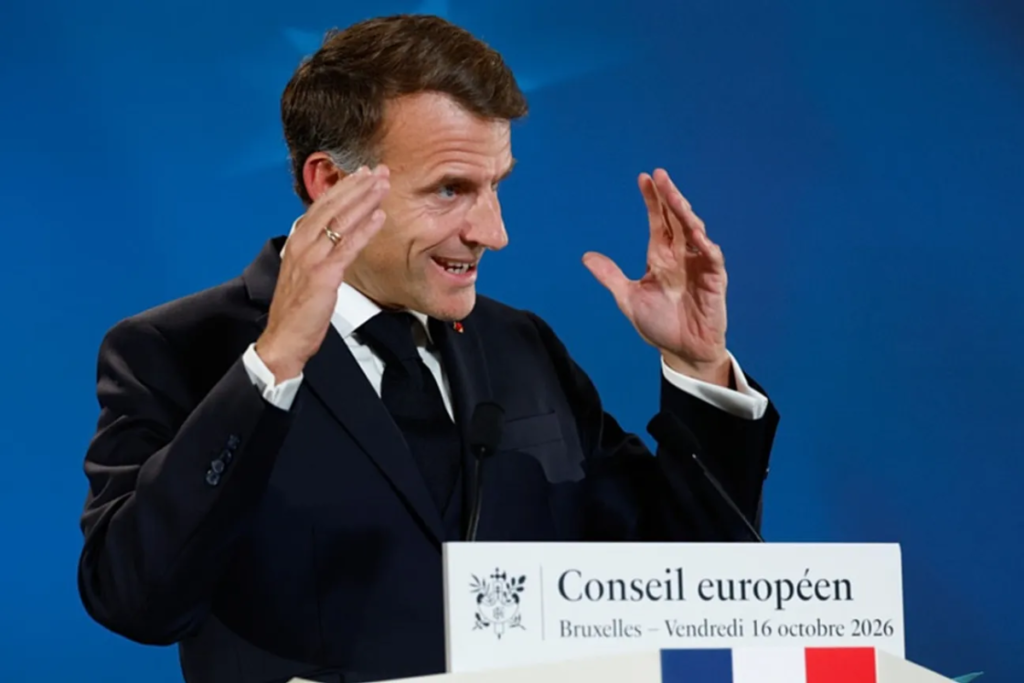
President Emmanuel Macron faces a particularly difficult political situation.
His second presidential term is approaching its conclusion, and he cannot seek a third consecutive term in 2027.
Meanwhile, the fragmented National Assembly has made governing increasingly difficult.
Macron’s decision to dissolve parliament in 2024 weakened his political position and contributed to a prolonged period of instability.
The latest protests have exposed those weaknesses more dramatically.
In an October 19 Reuters analysis, the president was described as having little political capital, limited financial resources, and diminishing influence over events.
The contrast with the Yellow Vest crisis is revealing.
During the earlier uprising, Macron’s government was able to offer substantial financial concessions.
Today, France’s strained public finances make a similar response considerably harder.
The president is therefore caught between two competing pressures.
Financial markets expect France to demonstrate fiscal restraint, while protesters demand increased public investment and economic relief.
Macron cannot fully satisfy both.
His administration may restore public order through stronger security measures, but that would address the immediate symptoms rather than the underlying political and economic causes.
That is why a rapid and lasting end to the demonstrations appears improbable.
5. The Approaching 2027 Presidential Election Will Keep Political Tensions High
France’s next presidential election is expected in April and May 2027.
That election is likely to become a major factor in determining how long the protests continue.
With Macron approaching the end of his presidency, opposition parties have strong incentives to challenge his government’s record.
The protests offer an opportunity to highlight dissatisfaction over living standards, public services, and political leadership.
Both the far right and the far left have criticized the government’s handling of the crisis, although they disagree sharply over its causes and solutions.
The demonstrations also provide trade unions and civic organizations with an opportunity to influence the political agenda ahead of the election.
This creates a significant risk for the government.
Even if nationwide demonstrations become less frequent during November or December, the grievances behind them could reappear during the presidential campaign.
The election may ultimately become the point at which France’s broader political dissatisfaction finds a new outlet.
However, an election alone will not resolve the underlying economic and social problems.
How Long Will the France Protests 2026 Actually Continue? A Realistic Timeline
The most credible forecast is that France will experience another eight to twelve weeks of significant protest activity, followed by the possibility of renewed mobilization during the 2027 presidential election campaign.
The intensity will almost certainly fluctuate. Some weeks may bring major nationwide demonstrations, while others may see smaller marches, localized clashes, school blockades, and industrial action.
The following timeline represents an assessment based on the movement’s current trajectory, not an officially announced protest schedule.
Late October 2026
High risk
The immediate aftermath of the October 17 unrest is likely to bring further demonstrations, confrontations over policing, and pressure on the government to make concessions. Student organizations have already signaled their determination to continue.
November 2026
High risk
Budget disputes, public-sector grievances, and trade-union mobilization could sustain protests. Nationwide participation may fluctuate, but the movement’s underlying grievances are unlikely to disappear.
December 2026 – January 2027
Moderate to high risk
Large demonstrations may become less frequent, particularly around holidays, but unresolved fiscal and educational disputes could trigger further strikes and marches.
February – May 2027
Renewed mobilization possible
The approaching presidential election could revive protest activity as political groups seek to influence the national debate and challenge the outgoing administration.
The distinction between protest activity and violent rioting is essential.
The widespread destruction witnessed during the October demonstrations does not necessarily mean France will experience months of uninterrupted violence.
Police deployments, arrests, and localized restrictions could reduce serious disorder relatively quickly.
However, ending riots is not the same as ending protests.
The government could regain control of the streets while remaining unable to resolve the political crisis.
The strongest forecast is therefore not continuous chaos, but prolonged instability marked by repeated waves of demonstrations.
Could the France Protests 2026 Become Another Yellow Vest Movement?
The possibility of a prolonged movement resembling the Yellow Vest uprising deserves serious consideration.
The original Yellow Vest protests began in November 2018 and continued, in various forms, well beyond their initial peak.
Their persistence demonstrated that a protest movement built around economic frustration can survive even when participation declines.
France’s current demonstrations share several important characteristics with that uprising.
Both movements emerged amid dissatisfaction with living standards. Both attracted people who believed the government was ignoring their economic difficulties. Both developed into wider challenges to Macron’s political leadership.
There is, however, an important difference.
The Yellow Vest movement began primarily with motorists and citizens angered by fuel taxation.
The current demonstrations emerged from schools before expanding to include workers, unions, parents, and other dissatisfied groups.
That gives the present movement multiple sources of mobilization.
If student demonstrations decline, trade unions may continue organizing strikes. If industrial action subsides, another increase in fuel prices or a controversial budget decision could revive street protests.
This does not guarantee that the movement will become as enduring as the Yellow Vests.
But it makes a quick collapse much less likely.
The participation of different social groups also creates a problem for the government: there is no single concession capable of satisfying everyone.
A temporary fuel subsidy will not repair neglected schools. Additional education funding will not automatically resolve disputes over public-sector salaries.
The government must address several grievances at once, with limited resources.
That is precisely why the current crisis could become one of the defining political confrontations of Macron’s final months in office.

Can Macron End the Protests Before the End of 2026?
Macron could significantly reduce the demonstrations before the end of the year, but achieving a lasting resolution is a much harder task.
On October 19, the president rejected Interior Minister Laurent Nuñez’s offer to resign following criticism of the authorities’ preparedness for the unrest.
According to Le Monde, Macron also tasked Prime Minister Sébastien Lecornu with engaging political parties, unions, and local officials to find a way out of the crisis.
This indicates that the administration recognizes the need for a broader political response.
However, meetings and consultations alone are unlikely to persuade demonstrators to abandon their demands.
To substantially weaken the protest movement, the government would need to produce measurable results in several areas:
- Education: A credible, funded plan to address teacher shortages, deteriorating school buildings, and overcrowded classrooms.
- Living costs: Tangible relief for households facing high fuel prices and financial pressure.
- Public-sector employment: Meaningful negotiations over wages, working conditions, and proposed spending restrictions.
- Policing: Transparent investigations into allegations of excessive force and a strategy that protects peaceful demonstrations while preventing violence.
- Political credibility: A convincing explanation of how the government intends to reconcile its budget objectives with demands for better public services.
The difficulty is not identifying these solutions. It is financing and implementing them while navigating a divided parliament.
Macron also faces a credibility problem.
After years of disputes over pensions, economic reforms, and public spending, many demonstrators may view fresh promises with skepticism.
His government will be judged less by what it announces than by what people experience in their daily lives.
Consequently, the administration’s chances of permanently ending the France protests 2026 before December appear limited.
Will Violent Clashes Continue Across Paris and Other French Cities?
The most intense violence could subside considerably sooner than the wider protest movement.
Following the October 17 unrest, French authorities increased security measures and encouraged localized curfews in areas facing serious disorder.
The government has also faced criticism over intelligence failures and its inability to anticipate the scale of the disturbances.
Reuters reported on October 19 that approximately 60,000 officers had been deployed during the crisis, yet security forces were overwhelmed in some locations.
The scale of the police response demonstrates how seriously the government views the situation.
Nevertheless, it would be misleading to portray every demonstrator as a rioter.
Most participants in the major October demonstrations protested peacefully. The destruction was associated with a smaller proportion of those involved, including groups accused of organized violence and opportunistic looting.
This distinction matters because an overly aggressive response to peaceful demonstrations could deepen public resentment.
Reports of injuries and allegations of excessive police force have already become an important part of the controversy.
A strategy based entirely on arrests and security restrictions could temporarily reduce violence while strengthening the political grievances that brought demonstrators onto the streets.
France therefore faces two different challenges: preventing criminal violence and restoring public confidence.
The first may be achievable within weeks. The second could take considerably longer.
Could Macron’s Resignation Bring the France Protests to an End?
Calls for Macron to leave office before the scheduled end of his term have become part of the political debate.
Some opponents argue that his departure would help France escape its current paralysis.
According to Reuters, even some former political allies have begun discussing whether an early departure might be necessary to break the deadlock.
However, Macron’s resignation is unlikely to be the event that ends the protests, and his departure before 2027 remains an unlikely outcome.
The president has shown no indication that he intends to surrender his office in response to street pressure.
More importantly, the central grievances would remain even if he resigned.
France would still face its fiscal deficit, mounting debt, disputes over education funding, pressure on household finances, and deep political divisions.
A change in leadership could alter public expectations and create space for negotiations, but it would not immediately provide the financial resources needed to satisfy protesters.
Macron’s departure could also introduce another period of political uncertainty.
The constitutional process for replacing a president would not automatically produce a stable parliamentary majority or resolve disagreements over the national budget.
The protests may weaken Macron further, but expecting his resignation to provide an instant solution misunderstands the scale of France’s problems.
The more likely outcome is that Macron remains in office while his government attempts to contain the crisis through a combination of negotiations, limited concessions, and security measures.
What Could Make the France Protests 2026 Last Even Longer?
Several developments could extend the demonstrations beyond the beginning of 2027.
The most important would be a failure to reach agreement over the government’s budget.
If unions conclude that the administration intends to impose spending restrictions without meaningful negotiations, further industrial action could become inevitable.
Another potential trigger would be a renewed surge in fuel prices.
Fuel costs played a central role in the Yellow Vest uprising and remain politically sensitive.
Additional allegations of police misconduct could also revive student mobilization, particularly if investigations are perceived as inadequate.
A further risk comes from political instability.
France’s fragmented parliament leaves the government vulnerable to legislative confrontations and challenges to its authority.
Any major parliamentary crisis could become another rallying point for demonstrators.
Finally, the approaching presidential election could encourage political organizations to maintain pressure rather than compromise.
These factors reinforce the argument that the present unrest is unlikely to disappear quickly.
The most significant danger is not that every demonstration becomes violent. It is that France enters a prolonged cycle in which temporary periods of calm are repeatedly interrupted by strikes, protests, and political confrontations.
What Could Finally End the Protests?
The most effective route to ending the demonstrations would be a credible political settlement supported by concrete economic measures.
That settlement would need to address the concerns of students and workers while demonstrating that France can maintain financial stability.
A successful agreement could involve phased investment in education, targeted cost-of-living relief, negotiated public-sector reforms, and transparent oversight of policing.
However, such an agreement would require political cooperation that has been increasingly difficult to achieve.
The government would also need to convince protesters that its commitments will survive beyond Macron’s presidency.
This is a particularly challenging requirement because the 2027 election creates uncertainty over the direction of future policy.
Even if Lecornu’s government reaches agreements with some unions, other organizations may reject them.
Student groups may also continue demonstrating independently of organized labor.
For these reasons, France is more likely to experience a gradual reduction in protest intensity than a sudden, decisive end.
The demonstrations may become smaller, less frequent, and more localized before the underlying movement finally loses momentum.
That process could extend well into 2027.
How Will the Continuing Protests Affect France’s Economy?
Prolonged unrest threatens to create additional economic problems for a country already facing significant fiscal pressures.
The immediate effects are visible in damaged businesses, disrupted transportation, interrupted education, and increased security costs.
Retailers in affected cities face losses from vandalism, looting, temporary closures, and reduced customer activity.
Businesses dependent on tourism may also suffer if international visitors postpone travel because of concerns about disruption.
France remains one of the world’s leading tourist destinations, making perceptions of safety and stability economically important.
Industrial action presents another risk.
Repeated transport strikes or public-sector stoppages could interrupt economic activity and complicate the government’s efforts to restore confidence.
Financial markets are also paying attention.
Reuters reported on October 19 that the violence had increased perceptions of political risk at a time when investors were already concerned about France’s debt and deficit.
That creates a potentially damaging cycle.
Political unrest can weaken confidence in the government’s ability to implement fiscal reforms. Greater financial pressure can then limit its capacity to offer concessions, increasing the likelihood of further protests.
The longer this cycle continues, the harder it becomes for the administration to deliver a convincing economic recovery.
France’s crisis is therefore not merely a matter of public demonstrations. It has the potential to affect fiscal policy, business confidence, and the country’s broader political stability.
Final Verdict: France’s Protests Will Likely Continue Into 2027
The France protests 2026 are unlikely to end within the next few weeks.
The movement has already evolved beyond its original student-led demands into a broader confrontation over living standards, government spending, public services, and political accountability.
Its strength comes from the convergence of grievances that cannot be resolved through a single policy announcement.
Macron’s government faces a particularly unfavorable combination of circumstances: limited financial flexibility, a fragmented parliament, declining political authority, and an approaching presidential election.
These conditions make a swift settlement improbable.
The most likely scenario is another two to three months of recurring demonstrations, with renewed protest activity remaining a serious possibility through the spring 2027 presidential election.
The most destructive rioting may subside sooner as security measures take effect. But that should not be mistaken for the end of the crisis.
France’s deeper confrontation is between citizens demanding stronger public services and greater economic security, and a government struggling to finance those expectations.
Macron may succeed in containing the violence. He may even negotiate temporary agreements that reduce the number of people taking to the streets.
But the evidence points toward a much longer struggle over France’s economic priorities and political future.
The protests are likely to outlast the immediate security emergency and become a defining issue of Macron’s final months in power.
France’s streets may grow quieter before the 2027 election. Its political crisis is unlikely to be over.
