Physical Address
304 North Cardinal St.
Dorchester Center, MA 02124
Physical Address
304 North Cardinal St.
Dorchester Center, MA 02124
Intelligence Insider cases expose a brutal truth about national security. The most dangerous breach does not always come through a border, a missile system or a foreign battlefield. Sometimes it starts inside a trusted office, behind a security clearance, inside a person who already knows the names, programs and weak points of a system. That is why these stories carry a deeper fear than ordinary crime. They show how one person with access can change diplomacy, endanger people and reshape the way governments defend themselves.
The latest case returned to public attention after the FBI announced a major reward connected to Monica Elfriede Witt. Witt was a former U.S. Air Force intelligence specialist and special agent for the Air Force Office of Special Investigations. The FBI said she served from 1997 to 2008 and later worked as a government contractor until 2010. Her work gave her access to SECRET and TOP SECRET information involving foreign intelligence and counterintelligence. (FBI, May 14, 2026, FBI Washington Field Office Announces $200,000 Reward for Information Leading to Apprehension of Former U.S. Counterintelligence Agent Charged with Espionage for Iran) (https://www.fbi.gov/contact-us/field-offices/washingtondc/news/fbi-washington-field-office-announces-200000-reward-for-information-leading-to-apprehension-of-former-us-counterintelligence-agent-charged-with-espionage-for-iran)

That detail matters because spy cases are not only about stolen files. It depends on the context of situation. A trained insider understands which names matter, which programs matter and which weaknesses can hurt the most. In Witt’s case, the FBI says she defected to Iran in 2013 and later faced espionage charges tied to transmitting national defense information to the Iranian government.
A public reward is never just a poster. It is a signal. When the FBI offers money for information, it tells the public that a case still matters and that investigators believe someone may know something useful. In the Witt case, the agency announced a $200,000 reward for information leading to apprehension and prosecution.
This is why Intelligence Insider cases create a different kind of urgency. The suspect is not an unknown outsider. He or she may understand investigative methods, intelligence culture and security habits. That can make location, capture and prosecution more complex. It can also create psychological pressure inside agencies because every similar case forces leaders to ask who else may be drifting toward betrayal.
Aldrich Ames became one of the clearest Cold War examples of how devastating internal betrayal can become. AP reported that Aldrich Ames was a 31 year CIA veteran who admitted being paid $2.5 million by Moscow for U.S. secrets from 1985 until his arrest in 1994. (Associated Press, January 6, 2026, CIA turncoat Aldrich Ames, who sold US secrets to the Soviets, dies in prison at 84) (https://apnews.com/article/aldrich-ames-spy-soviet-obit-2511e4b9d56dbcd825982e83d4c71f71)

The lesson is simple but heavy. Intelligence agencies build power through secrecy, trust and sources. When an insider sells those secrets, the loss is not limited to paper. Human networks collapse. Foreign governments change their behavior. As a result of that, years of work can disappear overnight.
Ames also shows why money can become a national security problem. Not every betrayal comes from ideology. Some start with greed, ego or personal pressure. That makes insider risk harder to predict because the motive may sit quietly behind normal office behavior.
Robert Hanssen made the fear even more personal for the FBI. The Justice Department announced on July 6, 2001, that former FBI Special Agent Robert Philip Hanssen had pleaded guilty to a 15 year conspiracy to commit espionage against the United States. (U.S. Department of Justice, July 6, 2001, HANSSEN PLEADS GUILTY TO ESPIONAGE) (https://www.justice.gov/archive/opa/pr/2001/July/305civ.htm)
That case hit hard because Hanssen worked inside the very institution responsible for catching spies. Another Intelligence Insider lesson emerged from his betrayal. Hanssen also showed how long damage can continue when warning signs are missed.
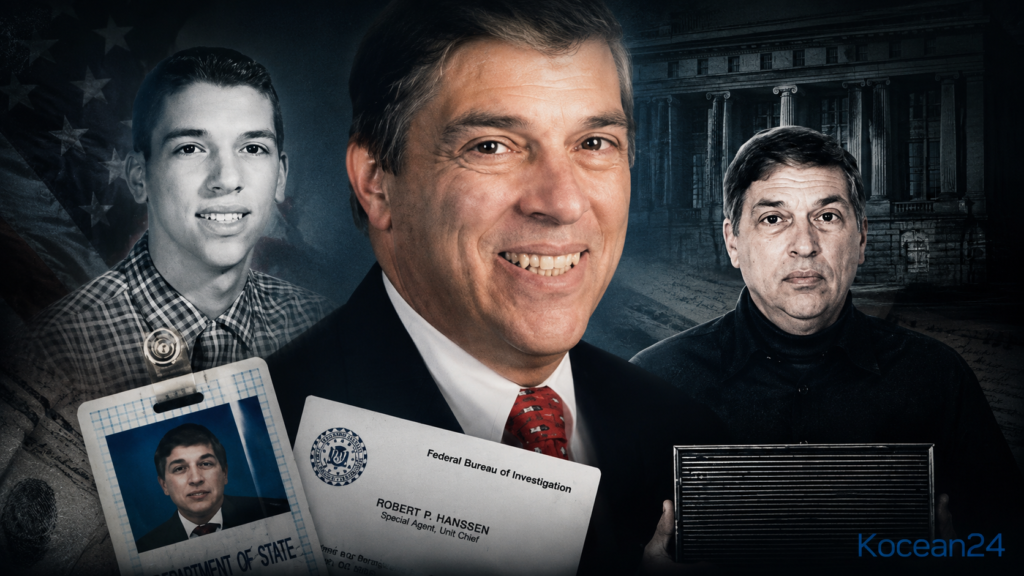
Counterintelligence is not only about catching a hostile state. It is also about building systems that notice strange patterns before damage becomes permanent.
Edward Snowden did not work as a traditional foreign spy. He was a contractor for the National Security Agency through Booz Allen Hamilton when he leaked thousands of classified documents in 2013 to journalists from The Guardian and The Washington Post. Those files exposed highly secret surveillance systems including PRISM, XKeyscore and bulk phone metadata collection programs tied to the NSA and its international intelligence partners.
The disclosures revealed that U.S. intelligence agencies had the technical ability to collect massive amounts of internet activity, phone records, email traffic and global communications data. The leaks triggered worldwide outrage because the surveillance extended far beyond suspected terrorists and touched ordinary citizens, foreign leaders, corporations and allied governments. (Reuters, September 3, 2020, Mass surveillance program exposed by Snowden was illegal) (https://www.reuters.com/business/media-telecom/us-court-mass-surveillance-program-exposed-by-snowden-was-illegal-2020-09-03/)

Snowden transformed the meaning of an Intelligence Insider because he proved that one person with digital access could expose an intelligence architecture affecting millions across the world. Earlier Cold War spies often passed physical documents to rival governments through secret meetings. Snowden used portable storage devices and encrypted communication to transfer enormous quantities of classified material within weeks. The scale and speed were unprecedented.
The controversy remains deeply divided. Supporters argue he exposed unconstitutional mass surveillance and forced democratic debate about privacy and state power. Critics argue he damaged intelligence operations, exposed sensitive methods and weakened national security during an era of rising cyber threats. Regardless of political position, the Snowden case permanently changed how governments view insider risk in the digital age. A single contractor with high level access and deep system visibility suddenly became capable of shaking the global intelligence structure itself.
The Monica Witt case also reflects a wider shift. Iran does not need to fight only through conventional military power. Intelligence networks, cyber operations and influence channels can create pressure without open battlefield movement.
Kocean24 has already covered how modern geopolitics now connects technology, AI, semiconductor control, military strategy and Middle East stability into one larger power contest. (Kocean24, Ava Grace, May 15, 2026, Inside the Trump Xi Summit’26 and How Taiwan Changed the Entire Tone) (https://kocean24.com/trump-xi-summit-taiwan-tensions-2026/)
That connection matters for Intelligence Insider cases. A person with classified knowledge can help a foreign power understand not only old operations but future patterns. They may reveal how agencies think, who they trust and where their systems remain exposed.
America’s security battlefield is not only overseas. It also exists inside institutions, databases, contractor systems and personal decisions. An Intelligence Insider case can start quietly, but the impact can reach embassies, cyber units, military planning and diplomatic negotiations.
The FBI reaction to these cases usually carries 3 goals. It seeks arrest, warns others and also sends a message to foreign intelligence services that old cases do not simply disappear. That is why the Witt reward matters. It tells Iran, former insiders and possible witnesses that the case remains active.
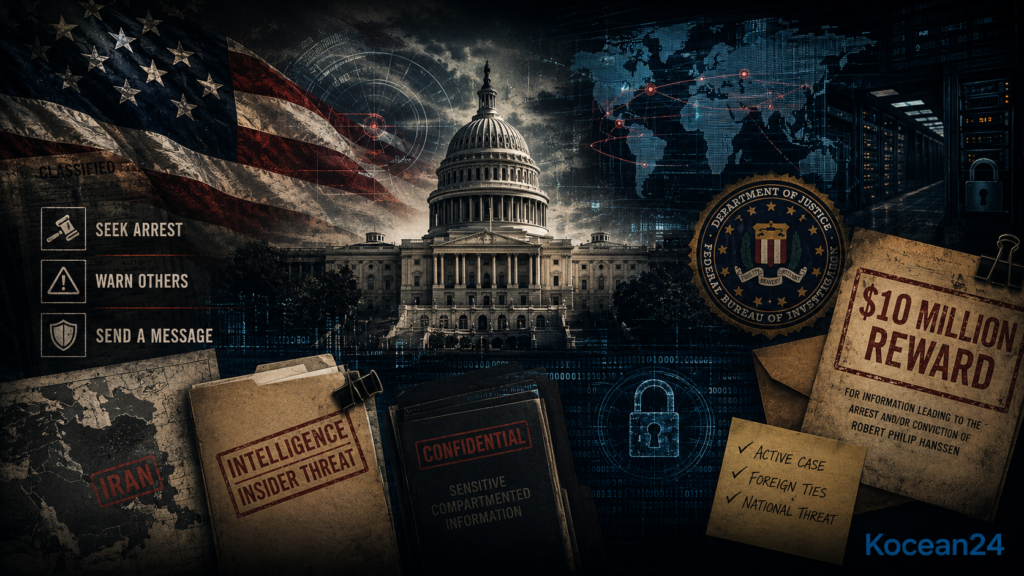
At the same time, the public must read such cases carefully. Charges are allegations until proven in court. But the historical pattern is real. Ames damaged human intelligence. Hanssen damaged FBI trust. Snowden changed the global surveillance debate. Witt now represents the fear that a former insider can move into the orbit of a hostile foreign government and stay beyond direct reach.
Intelligence Insider history proves that the deepest battlefield is often hidden from public view. It runs through trust, access, ideology, money and digital systems. Monica Witt brought that battlefield back into the news, but she is part of a much longer pattern. From Soviet moles to Iran defectors, the most dangerous threat often came from people who already knew the system from the inside. That is why Intelligence Insider cases still matter. They remind governments that national power depends not only on weapons and alliances but on the loyalty of the people trusted with secrets.