Physical Address
304 North Cardinal St.
Dorchester Center, MA 02124
Physical Address
304 North Cardinal St.
Dorchester Center, MA 02124

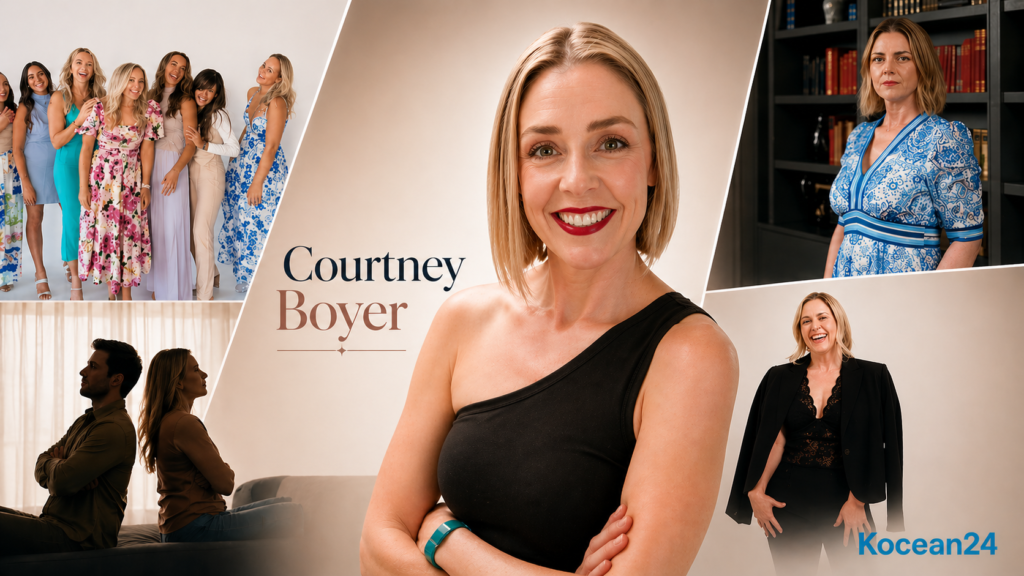
Open Marriage becomes a serious public debate when it moves from private choice to marriage survival. The story of Courtney Boyer, a relationship and sexuality expert, author, and speaker based in Germany, caught attention recently. The lifestyle she narrated was not framed as a casual lifestyle trend. It was framed as a response to long term unhappiness, emotional distance and a marriage that looked stable from the outside but felt strained inside. Her case does not prove that open marriage works for everyone. It shows why some couples reach for difficult solutions when silence stops working.
Courtney Boyer wrote that she had been unhappy in her marriage before she and her husband agreed to a non traditional arrangement. The Telegraph published her personal essay under the title “I was unhappy in my marriage – until we agreed I could sleep with other people.” (The Telegraph, Courtney Boyer, April 25, 2026, I was unhappy in my marriage – until we agreed I could sleep with other people) (https://www.telegraph.co.uk/health-fitness/wellbeing/sex/open-marriage-threesome-anniversary-dinner/)
That title explains why the story spread fast. It joins two things people usually separate. One is marriage pain. The other is permission to seek intimacy outside the marriage.
Boyer’s story is not useful because it shocks people. It is useful because it forces one uncomfortable question. When a marriage has been struggling for years, is the real danger openness, or is the real danger pretending nothing is broken?
That question also echoes a theme explored in Wuthering Heights Toxic Love Fantasies (https://kocean24.com/wuthering-heights-toxic-love-fantasies/), where romantic myths are contrasted with the emotional realities people face inside troubled relationships. The same tension appears here. Idealized love often hides the harder work real commitment demands.
Open marriage generally refers to a committed marriage in which both spouses agree that romantic or sexual connections outside the marriage may exist under mutually accepted boundaries. The defining distinction is consent. It is not secret betrayal. It is a negotiated arrangement, though the structure can vary widely.
Some couples define it around sexual openness while preserving emotional exclusivity. Others include broader relational freedom with explicit rules about honesty, limits and disclosure. That is why open marriage is not one fixed model. It is a category with very different forms.
As one Psychology Today discussion explains, consensual non monogamy can include several negotiated models built on “honor, integrity and transparency,” rather than deception. (Psychology Today, Susan Donaldson James, July 22, 2019, Consensual Non-Monogamy: What Is This New Label?) (https://www.psychologytoday.com/gb/blog/understanding-the-erotic-code/201907/consensual-non-monogamy-what-is-new-label)
Sociologist Elisabeth Sheff also argues consensually nonmonogamous relationships can be organized in very different ways, including structures centered around individuals rather than traditional couples, which shows how broad the category can be. (Psychology Today, Elisabeth A. Sheff, March 9, 2023, Consensual Nonmonogamies Focused on Individuals) (https://www.psychologytoday.com/us/blog/the-polyamorists-next-door/202303/consensual-nonmonogamies-focused-on-individuals)
That definition matters because debate often starts with misunderstanding. The question is not simply whether openness exists. The deeper question is whether trust, boundaries and emotional responsibility can survive inside it.
Boyer later discussed the same topic in a podcast episode titled “(ENG) COURTNEY BOYER: I asked my husband for an open marriage after 17 Years.” The episode description says the conversation covered purity culture, marrying young, a life that looked right from the outside and the fear, tension and growth that followed after she asked for a major change. (Apple Podcasts, April 15, 2026, (ENG) COURTNEY BOYER: I asked my husband for an open marriage after 17 Years.) (https://podcasts.apple.com/nz/podcast/eng-courtney-boyer-i-asked-my-husband-for-an-open/id1713139339?i=1000761506604)
That timeline changes the frame. This was not presented as boredom after a few months. It came after many years of marriage, family life and emotional pressure.
It matters a lot because long relationships often fail quietly before they fail publicly. People do not always leave when they are unhappy. Sometimes they stay and disconnect. They may also fight or become polite strangers. Boyer’s story sits inside that hard middle space.
Open marriage is not the same as secret betrayal. The key difference is consent. In a consensual non monogamous structure, partners know the agreement. They discuss limits and accept the risk together. This might turn into an honest and simple approach.
The strongest lesson from Boyer’s story is not that every couple should open a marriage. The stronger lesson is that hidden resentment can become more dangerous than a painful conversation. A marriage cannot repair what both people refuse to name.
This is why the word “open” should not only mean outside relationships. In a deeper sense, it also means open conversation, open fear, open boundaries and open responsibility.

This debate is not only about one couple. The Kinsey Institute reported in 2022 that 1 in 9 Americans had been involved in a polyamorous relationship and also referenced earlier research finding that about 1 in 5 respondents had experienced some form of consensual non monogamy in their lifetime. (Kinsey Institute, June 17, 2022, Polyamory and consensual non-monogamy in the US) (https://news.iu.edu/kinseyinstitute/live/news/44946-polyamory-and-consensual-non-monogamy-in-the-us)
That does not mean open marriage is mainstream for everyone. It means the conversation is no longer rare. People are questioning old relationship models more openly now. Some want traditional marriage, many want more freedom and others want commitment without the same rules their parents followed.
But the public debate often becomes too shallow. Supporters may present open marriage as freedom. Critics may call it a collapse of commitment. Real life is more complicated than both claims.
An open marriage without boundaries is not a relationship structure. It is confusion with a label. For any couple, the hard part is not only agreeing to openness, rather deciding what openness actually means. The key questions are:
a. Who can be involved?
b. What must be shared?
c. What remains private?
d. What happens if one partner feels hurt?
e. What happens if feelings grow?
Boyer’s story attracts attention because it suggests that rules and communication became central to the arrangement. That is the practical part readers should notice. The issue is not whether a couple sounds modern. The main thing is whether both people can handle honesty when jealousy, fear and insecurity show up.
If one partner agrees only to avoid divorce, the arrangement may create more pain. If both partners understand the emotional cost and still choose it freely, then the conversation becomes different.
Pew Research Center found that 55% of Americans said unhappy couples tend to stay in bad marriages too long, while 43% said unhappy couples tend to divorce too quickly. (Pew Research Center, September 14, 2023, Americans’ views of divorce and open marriages) (https://www.pewresearch.org/social-trends/2023/09/14/views-of-divorce-and-open-marriages/)
That split explains why Boyer’s story triggers strong reactions. People disagree not only about open marriage. They disagree about what marriage is supposed to endure.
Some readers will see her story as honesty. Others will see it as a warning. Both reactions come from the same place. Marriage is still one of the most emotionally loaded institutions in modern life.
Kocean24 often looks at personal choices through a wider social lens, because private pressure can reveal bigger cultural patterns. A related Kocean24 article on progress and mental pressure explains how hidden habits and inner strain can shape life outcomes. (Kocean24, February 16, 2026, Procrastination: 7 Brutal Truths Killing Progress) (https://kocean24.com/procrastination-7-brutal-truths-killing-progress/)

Courtney Boyer’s story pushes a deeper question than whether open marriage works. It asks what happens when people stay silent inside relationships for too long. A relationship may look stable from the outside yet feel emotionally hollow within. Hidden dissatisfaction does not disappear by being ignored. Honesty, even when delayed, can still open space for repair. Boundaries are not restrictions against love, but structures that protect trust. It shows no relationship model guarantees happiness on its own. What matters is the maturity, responsibility and emotional awareness of the people living inside it.
These five lessons stand out clearly:
• Unhappiness should never be normalized. A marriage can survive in form while weakening in spirit. Silence often hides problems until they deepen.
• Honest conversations can arrive late and still matter. Difficult truths may feel disruptive, but avoiding them can cause greater damage.
• Consent changes the moral frame. Openness built on mutual agreement differs fundamentally from betrayal built on deception.
• Boundaries protect emotional safety. Without clear limits, even well intended openness can create confusion, insecurity and pain.
• No relationship structure is automatically the answer. Traditional or open, every model depends on honesty, care and accountability.
In the end, the biggest lesson may be simple. Relationship success does not come from choosing a label. It comes from choosing truth, responsibility and courage again and again.
Open Marriage is not a universal cure for a failing relationship. Courtney Boyer’s story shows something more specific and more useful. A relationship may survive only when both people stop hiding from the truth. For some couples, that truth may lead to stricter commitment and for others, it may lead to a new structure. The real lesson is not that open marriage saves love, but silence rarely does.