Physical Address
304 North Cardinal St.
Dorchester Center, MA 02124
Physical Address
304 North Cardinal St.
Dorchester Center, MA 02124
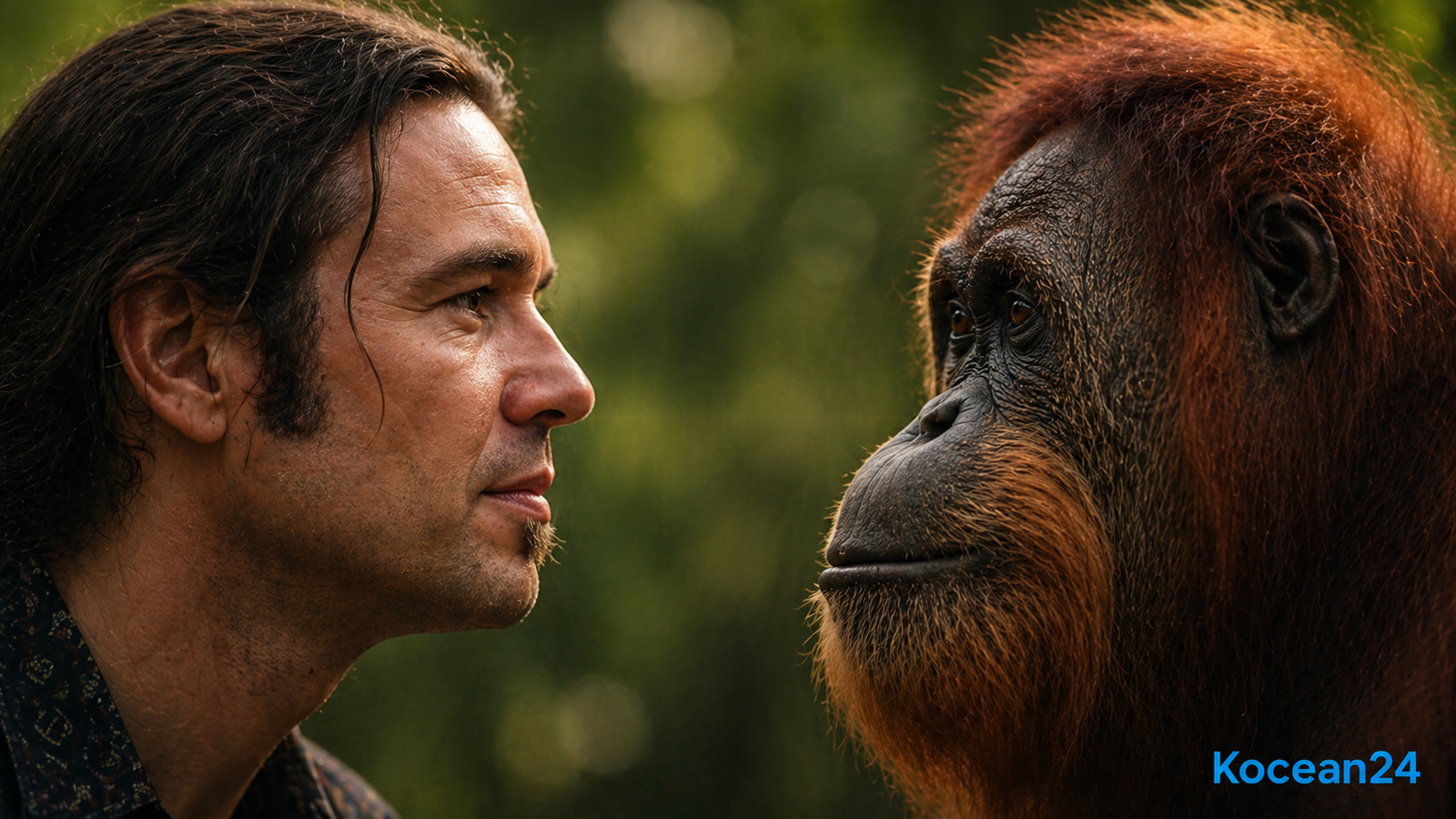
Orangutans Talk is a powerful question! You may be startled hearing it and be confused asking yourself whether it is fact or rumor. Science gives a careful answer here. Orangutans neither speak like humans nor build sentences or use grammar only. Still, research shows something very surprising and strange. Some orangutans can really control sounds in ways once considered impossible for great apes. This makes the story bigger than one viral claim. It opens a serious question about where human speech really began.
The strongest evidence comes from Rocky, an orangutan studied by Adriano R. Lameira and his research team. Rocky produced a new sound called “wookies” during a vocal imitation game with a human demonstrator. The study reported “real-time, dynamic and interactive vocal fold control in a great ape” during the experiment. (Scientific Reports, Adriano R. Lameira, Madeleine E. Hardus, Alexander Mielke, Serge A. Wich and Robert W. Shumaker, July 27, 2016, Vocal fold control beyond the species-specific repertoire in an orang-utan) (https://www.nature.com/articles/srep30315)
This matters because Rocky was not simply making random noise. He adjusted pitch upward or downward after hearing human sounds. That means the animal showed controlled vocal response, not just emotional calling. We have to remember, Rocky is the originator of the concept of orangutans talk!
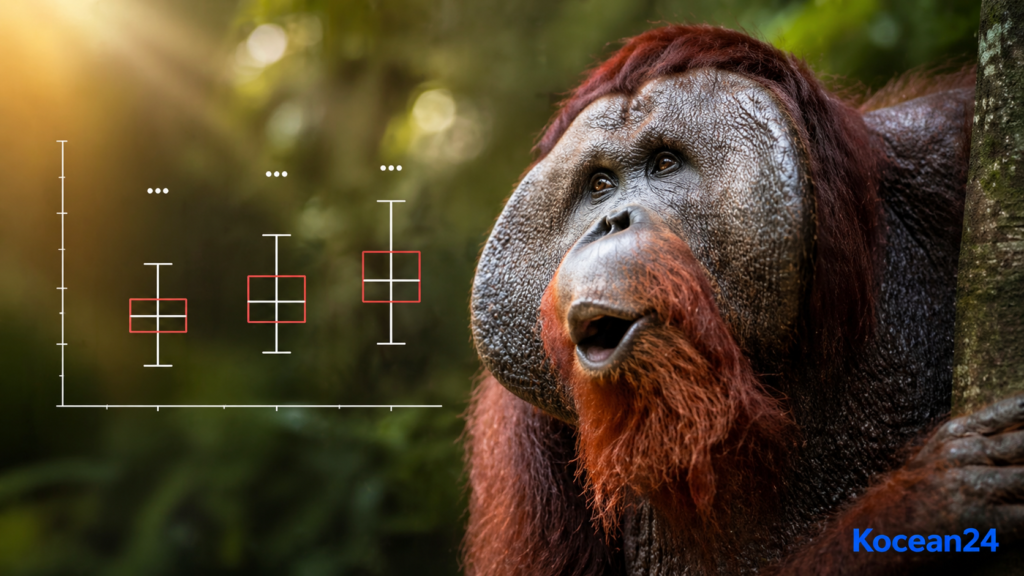
Rocky did not say words or hold a conversation. What he showed was vocal control. That is different from language. Human speech needs breath control, vocal fold movement, mouth movement, memory, meaning and grammar. Rocky showed one piece of this system.
This is why the claim ‘orangutans talk’ must be framed with precision. Rocky’s case does not prove language. It proves that a great ape can move beyond fixed natural calls and shape sound with unusual flexibility. The Scientist reported that Rocky’s sounds were compared with a large database of wild and captive orangutan calls, and researchers found he could “learn new sounds.” (The Scientist, Kerry Grens, July 27, 2016, Orangutan Imitates Human Speech) (https://www.the-scientist.com/orangutan-imitates-human-speech-33132)
That makes the evidence valuable without turning it into hype. ‘Orangutans Talk’ is not the final claim. The stronger point is that Rocky helps explain how spoken language may have started from controlled sound before it became full human communication.
Rocky was not the first orangutan to shake the old assumption. Another study focused on Tilda, a female orangutan at Cologne Zoo. Researchers found that Tilda produced calls called “clicks” and “faux-speech” at a speech like rhythm. The paper says those calls involved consonant like and vowel like features at a rhythm several times faster than normal orangutan chewing rates. (PLOS ONE, Adriano R. Lameira, Madeleine E. Hardus, Adrian M. Bartlett, Robert W. Shumaker, Serge A. Wich and Steph B. J. Menken, January 8, 2015, Speech-Like Rhythm in a Voiced and Voiceless Orangutan Call) (https://journals.plos.org/plosone/article?id=10.1371/journal.pone.0116136)
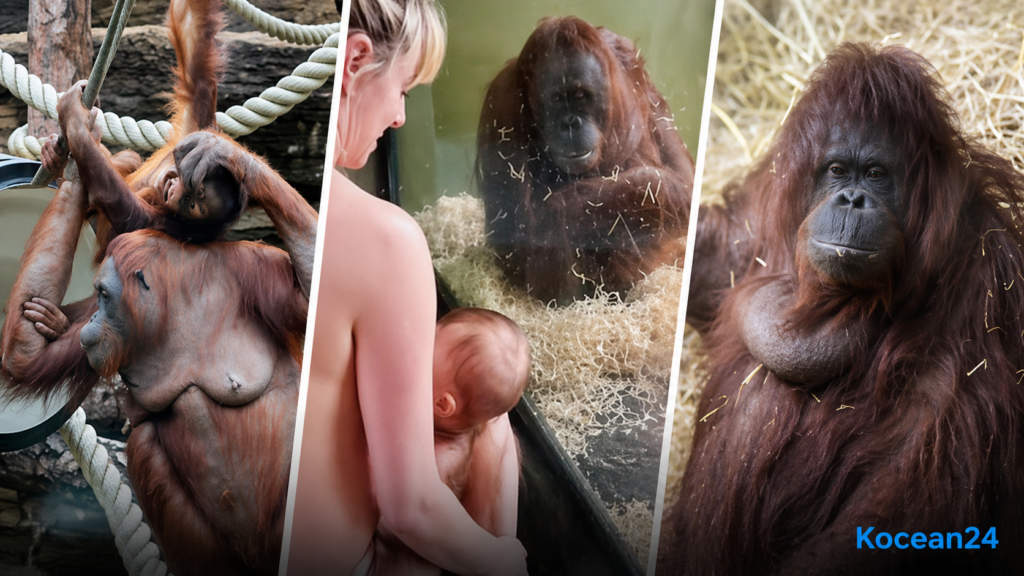
This is a second major clue. Speech is not only sound. It also depends on timing. Tilda’s behavior showed that great apes may have more control over vocal rhythm than scientists once believed.
That does not prove ‘Orangutans Talk’ in the human sense. It proves something more specific. Some orangutans can produce sounds with speech relevant timing.
Recent research has moved beyond single captive animals. A 2024 eLife paper studied wild orangutan long calls and found structured vocal patterns. eLife described the work as showing “compelling evidence for self-embedded and nested isochronic motifs” in orangutan vocalizations. (eLife, Adriano R. Lameira, Madeleine E. Hardus, Andrea Ravignani, Teresa Raimondi and Marco Gamba, January 22, 2024, Recursive self-embedded vocal motifs in wild orangutans) (https://elifesciences.org/articles/88348)
This does not mean wild orangutans use grammar. It means their calls may contain organized patterns. That matters because human language depends on structure.
The safe conclusion is simple. Orangutan vocal behavior is more complex than old models suggested.
The big lesson is not that orangutans secretly speak. The fact is that human speech may have deeper biological roots.
WIRED reported that Rocky copied the pitch and tone of vowel like sounds made by researchers and that those sounds were outside the usual orangutan call repertoire. (WIRED, Matt Reynolds, July 28, 2016, Meet Rocky, the orangutan who has learnt how to mimic human speech) (https://www.wired.com/story/orangutan-study-evolution-of-early-human-speech/)
This supports a gradual view of speech evolution. Human language did not appear from nothing. It likely grew from older abilities involving sound control, rhythm, imitation and social communication.
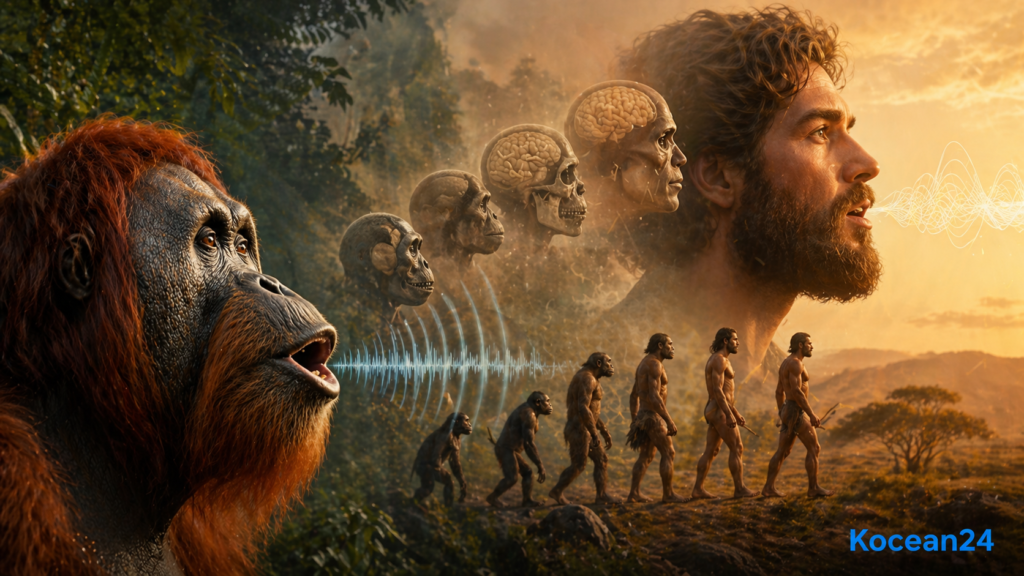
That is why this topic fits Kocean24’s wider knowledge mission, which presents science as part of a broader effort to explore every aspect of human understanding. (Kocean24, Home) (https://kocean24.com/)
Scientists are not claiming that orangutans possess human level language or communication. They do not argue that orangutans can debate ideas, explain concepts, or construct meaningful narratives. The research stays grounded in biological evidence, not exaggerated interpretation. What scientists are carefully showing is a set of specific vocal abilities that connect to early stages of speech development. This is why the phrase Orangutans Talk must be used with caution, because it can misrepresent what the evidence actually proves. These findings are important because they challenge older assumptions, but they do not replace the uniqueness of human language.
This leads to a clear scientific position:
Vocal Control
Rocky demonstrated real time control over vocal folds, which allowed adjustment of pitch and sound during interaction. This shows a foundational ability required for speech, not speech itself, and helps explain why Orangutans Talk is an oversimplified claim.
Speech Like Rhythm
Tilda produced sounds with timing patterns similar to human speech, including consonant like and vowel like elements. This highlights rhythm as a critical component in the evolution of spoken communication.
Structured Vocal Patterns
Recent studies of wild orangutans reveal organized call sequences with layered patterns. These patterns suggest early structural complexity, which is essential for understanding how language systems could emerge over time.
Orangutans Talk is not fully accurate if it means human speech. But the research behind the claim is still powerful. Rocky, Tilda and wild orangutan studies show that great apes may carry early building blocks of speech. The shocking truth is not that orangutans speak like humans. It is even deeper. Human speech may have evolved from abilities already present in our primate relatives.