Physical Address
304 North Cardinal St.
Dorchester Center, MA 02124
Physical Address
304 North Cardinal St.
Dorchester Center, MA 02124
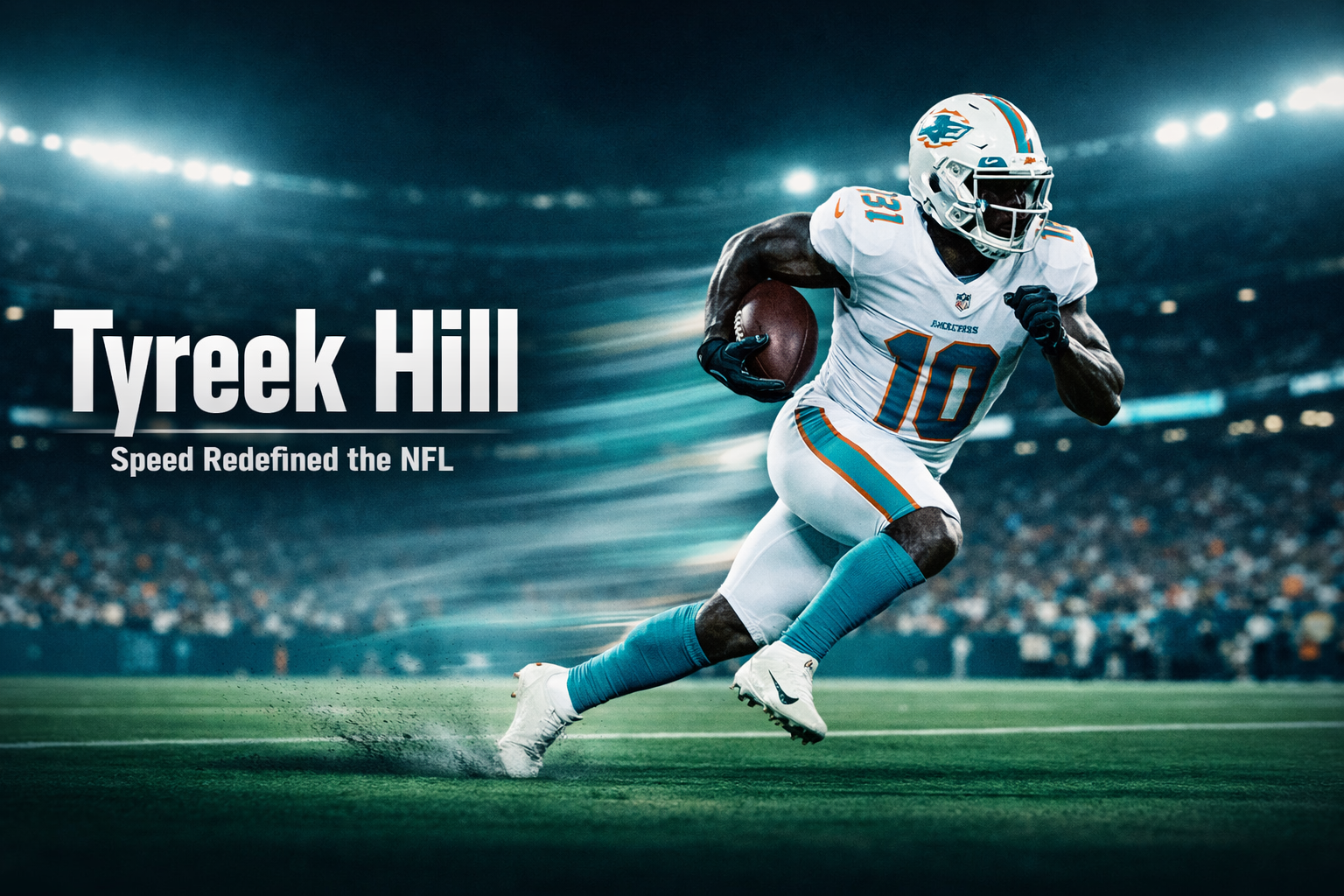
TTyreek Hill shocked Miami fans when his exit became official. Speed once ruled the field, yet cap pressure and injury changed everything overnight. Some franchises hold on. Others pivot fast. His release forces hard questions about value and future impact. This article breaks down exactly how Tyreek Hill’s Miami exit reshapes the NFL landscape.
Tyreek Hill entered the NFL in 2016 after being drafted by the Kansas City Chiefs. His rare acceleration quickly turned him into one of the league’s most feared wide receivers. He helped Kansas City win Super Bowl LIV in February 2020 and built a reputation as a game breaker who forced defenses to adjust coverage schemes.
In March 2022, the Miami Dolphins traded for Tyreek Hill and signed him to a major extension that reshaped the wide receiver market. He delivered immediate production and led the league in receiving yards during the 2023 season. In 2025, a serious knee injury that included a torn ACL altered the trajectory of his time in Miami. By February 2026, the Dolphins chose a cap reset and released Tyreek Hill, opening a new chapter in his NFL career.
Tyreek Hill’s release was rooted in financial timing, not emotion. Miami acted before additional 2026 guarantees strengthened his cap impact, choosing flexibility over future constraint. The move was part of a broader cost saving reset designed to create room ahead of the new league year and restructure roster priorities. (NFL.com, Bobby Kownack, February 16, 2026, Dolphins releasing five time All Pro WR Tyreek Hill in slew of cost saving moves) (https://www.nfl.com/news/dolphins-releasing-five-time-all-pro-wr-tyreek-hill)
This is the business layer of the NFL. Teams monitor cap projections years in advance. When a veteran contract aligns with injury recovery and escalating guarantees, executives evaluate risk against roster depth and long term planning. Production builds reputation. Cap structure shapes decisions.

Tyreek Hill’s 2025 season ended in Week 4 after a dislocated knee with multiple ligament damage that included a torn ACL, forcing immediate surgery. ESPN reported he suffered a dislocation with multiple ligament tears and was hospitalized overnight for further evaluation. (ESPN, Multiple Authors, September 29, 2025, Dolphins Tyreek Hill dislocates knee tears ACL) (https://www.espn.com/nfl/story/_/id/46427941/dolphins-tyreek-hill-carted-vs-jets-left-knee-injury)
That timing changed everything. A major knee reconstruction shifts contract leverage, recovery projections and roster planning. When rehab becomes the primary focus, financial risk becomes part of every negotiation.
A torn ACL is not only a medical setback. It is a timeline, a probability curve and a performance question.
Research focused on NFL wide receivers found the average return to play after ACL reconstruction was 10.9 months and a portion of players never returned to their previous level. (Arthrosc Sports Med Rehabil, Colin J Burgess, February 24, 2021, Decreased Performance and Return to Play Following Anterior Cruciate Ligament Reconstruction in National Football League Wide Receivers) (https://pubmed.ncbi.nlm.nih.gov/34027455/)
A broader league wide study reported only 55.8 percent of players returned to play after ACL reconstruction, and just 28.5 percent remained in the NFL three years later. (Orthop J Sports Med, Kush S Mody, March 7, 2022, Return to Play and Performance After Anterior Cruciate Ligament Reconstruction in National Football League Players) (https://pmc.ncbi.nlm.nih.gov/articles/PMC8905068/)
The math is clear. Recovery is possible, but long term certainty is not guaranteed. A franchise can value talent deeply and still hesitate when the calendar becomes the biggest variable.
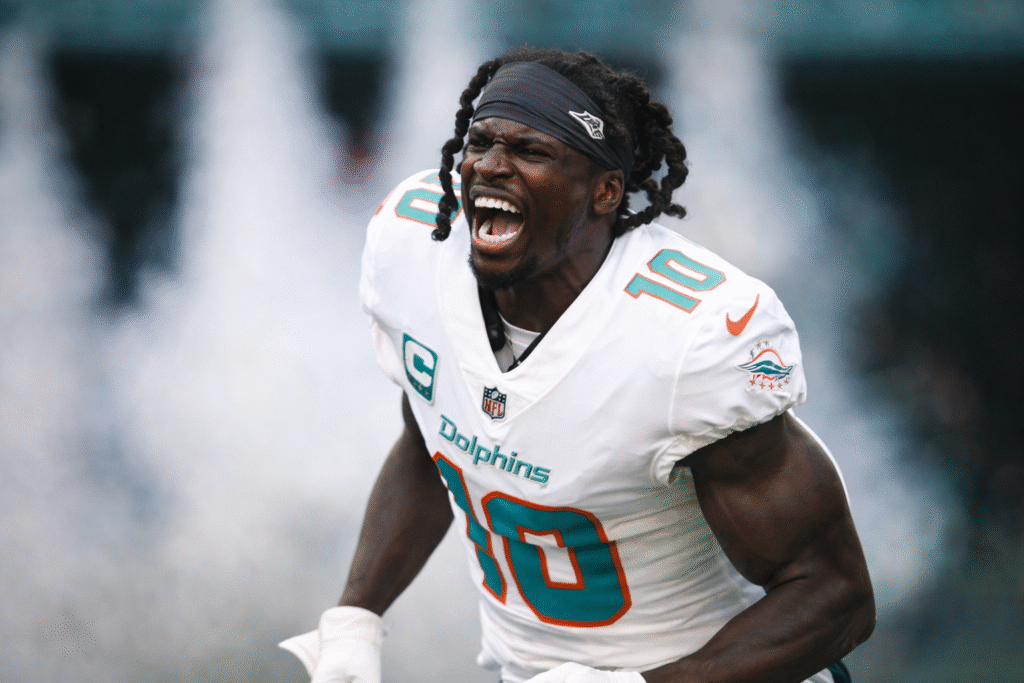
This release followed months of visible uncertainty. After the Week 4 knee injury in 2025, the focus around Hill shifted from production targets to recovery timelines. Public discussion centered on rehabilitation, long term health and what his career might look like after surgery. That tone matters.
Front offices do not wait for clarity. They study medical projections, contract triggers and depth chart options well in advance. When a team begins planning around recovery windows instead of game plans, evaluation has already moved from optimism to risk management. Decisions like this are rarely sudden. They are prepared.
Tyreek Hill’s financial arc did not begin in 2026. In August 2024, Miami agreed to a major restructure worth 90 million dollars, adjusting guarantees and future cap impact. (ESPN, Adam Schefter, August 3, 2024, Dolphins Tyreek Hill agree to restructured 90M deal) (https://www.espn.com/nfl/story/_/id/40717296/miami-dolphins-wr-tyreek-hill-agree-restructured-90m-deal)
Restructures push pressure forward. They provide short term flexibility but increase long term evaluation points. When a significant injury intersects with escalating guarantees, the contract becomes a decision trigger. This was not sudden. It was structural.
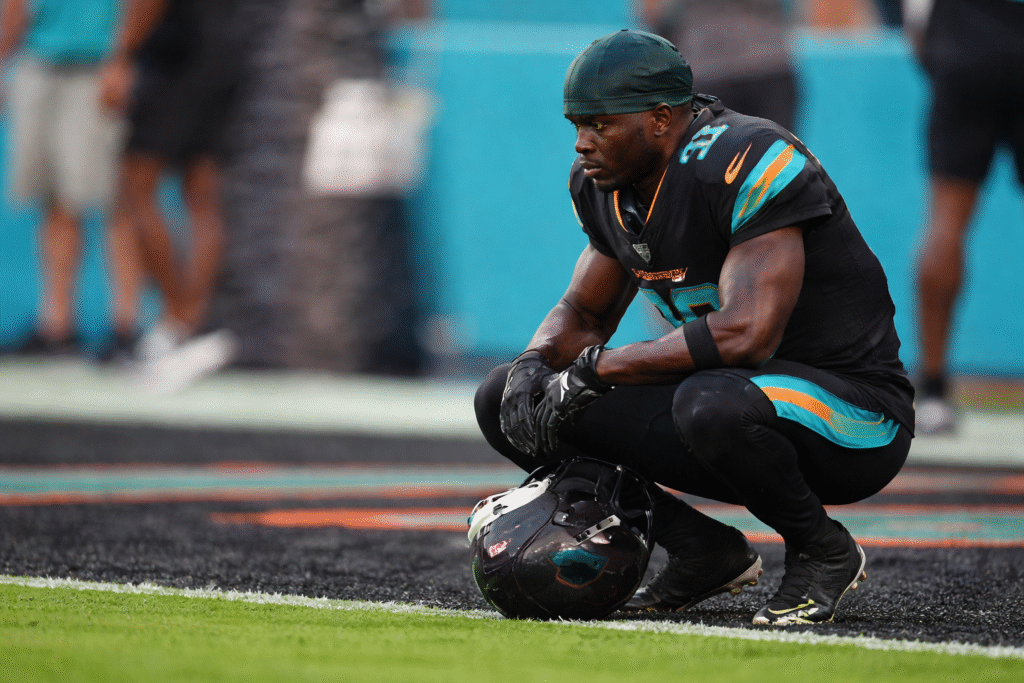
Tyreek Hill enters free agency as a proven playmaker recovering from major knee reconstruction. His resume commands respect, but his medical file shapes negotiation. Teams will not evaluate highlights alone. They will assess recovery progress, explosiveness data and contract structure before making a commitment.
What teams will measure most carefully:
b. Playoff teams will study whether Hill can still stretch coverage late in the season. They will project how his speed fits into high leverage games and cold weather schedules. Championship windows demand immediate impact.
c. Developing franchises will examine long term value against cap allocation. They will weigh leadership presence against injury probability and future flexibility. Every dollar must align with growth plans.
The decision is no longer emotional. It is analytical.
Tyreek Hill’s exit from Miami reflects the deeper mechanics of modern NFL decision making. Star production builds brand value, but cap projections determine sustainability. Injury timelines shift negotiating power. Contract guarantees activate strategic checkpoints. Teams no longer react to emotion. They model scenarios years ahead. Hill’s release was not impulsive. It was aligned with financial structure, medical projection and roster balance.
What this moment ultimately reveals:
• Salary cap space outweighs sentiment
• Medical recovery shapes market leverage
• Contract triggers create exit windows
• Front offices prioritize flexibility over nostalgia
• Timing often decides more than talent
In the NFL, greatness earns recognition, but structure decides permanence.
Tyreek Hill is still a headline level talent, but the league is now watching his rehab clock as closely as his highlight tape. Miami chose flexibility over nostalgia. Now the next team will choose between risk and reward and Hill’s comeback will decide which side wins.