Physical Address
304 North Cardinal St.
Dorchester Center, MA 02124
Physical Address
304 North Cardinal St.
Dorchester Center, MA 02124
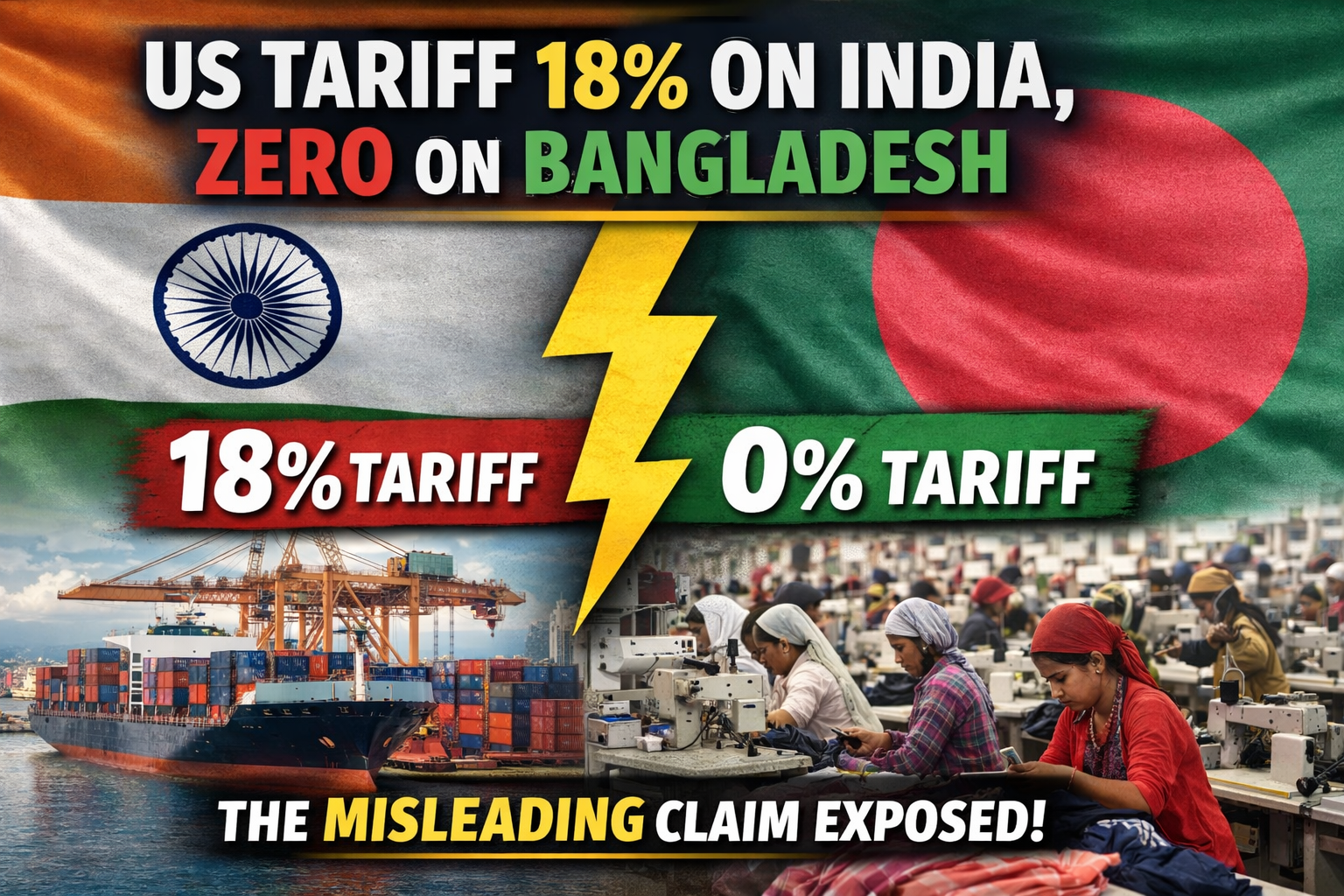
Trade debates often explode around one number. US Tariff comparisons between India and Bangladesh are frequently framed as simple percentages, yet the structure behind those claims is far more layered and strategic.
The claim that the United States imposes 18% tariffs on India while giving Bangladesh zero spreads quickly because it sounds decisive. A trade weighted average gives more importance to goods imported in larger volumes. According to the Office of the United States Trade Representative, the United States applies duties under a detailed product classification system rather than country wide flat rates (Office of the United States Trade Representative, Office of the United States Trade Representative, March 1, 2024, 2024 Trade Policy Agenda and 2023 Annual Report of the President of the United States on the Trade Agreements Program) (https://ustr.gov/sites/default/files/2024-03/2024%20Trade%20Policy%20Agenda%20and%202023%20Annual%20Report.pdf). A single percentage cannot capture thousands of tariff lines.
The US Tariff system operates on classification, not nationality. Pharmaceuticals, machinery, chemicals, electronics and apparel all fall under different schedules. India exports pharmaceuticals, refined petroleum products, machinery, chemicals and electronics to the United States. Bangladesh relies heavily on ready made garments. Apparel often faces noticeable import duties regardless of origin. Because Bangladesh’s export basket is concentrated in garments, its trade weighted average can reflect higher duty exposure in that sector. India’s diversified export profile spreads exposure across multiple categories, including services, which are not taxed at the border in the same way as goods. Without separating product groups, national averages distort the real structure of trade.
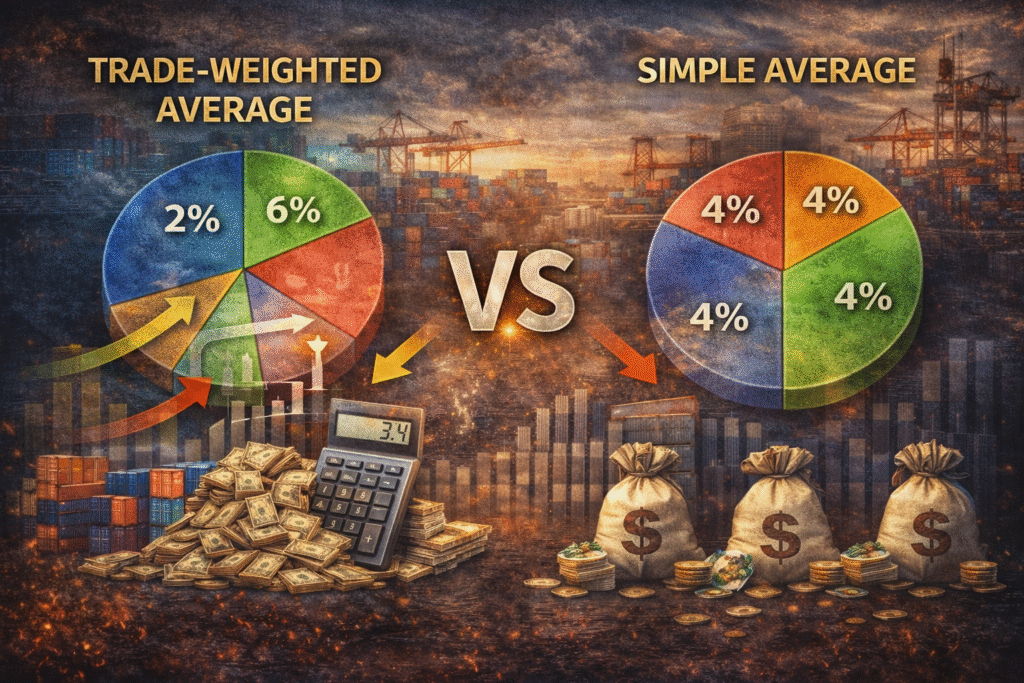
When discussing US Tariff comparisons, calculation method matters. A simple average adds all tariff rates and divides by the number of categories. A trade weighted average multiplies each tariff by the value of imports in that category. High volume goods influence the result more heavily. The World Bank explains that weighted averages reflect the actual structure of imports and therefore provide a more meaningful measure of applied protection (World Bank, World Bank Group, 2023, World Development Indicators Tariff Data Overview)(https://databank.worldbank.org/source/world-development-indicators).
This distinction can significantly change how trade narratives are framed. If a country exports a small volume of products with very high tariffs, a simple average may exaggerate its overall exposure. Conversely, if most exports fall into lower duty categories but a few niche goods carry high rates, the trade weighted average will better capture real economic impact. For policymakers, investors and analysts, the weighted figure offers a closer reflection of how US Tariff policy actually affects trade flows, pricing and competitiveness.
Tariffs are tools of negotiation and industrial policy. In 2019 the United States removed India from its Generalized System of Preferences program. That action affected certain goods that previously entered duty free. It did not impose a blanket tariff on all Indian exports. The Congressional Research Service notes that GSP eligibility can be modified based on statutory criteria and policy decisions (Congressional Research Service, Vivian C. Jones, January 17, 2023, Generalized System of Preferences GSP) (https://crsreports.congress.gov/product/pdf/IF/IF11232). Bangladesh had earlier lost GSP eligibility, yet many of its key garment exports were not substantially covered under that scheme. Policy shifts target defined product lines and reflect changing economic priorities rather than simple national penalties.
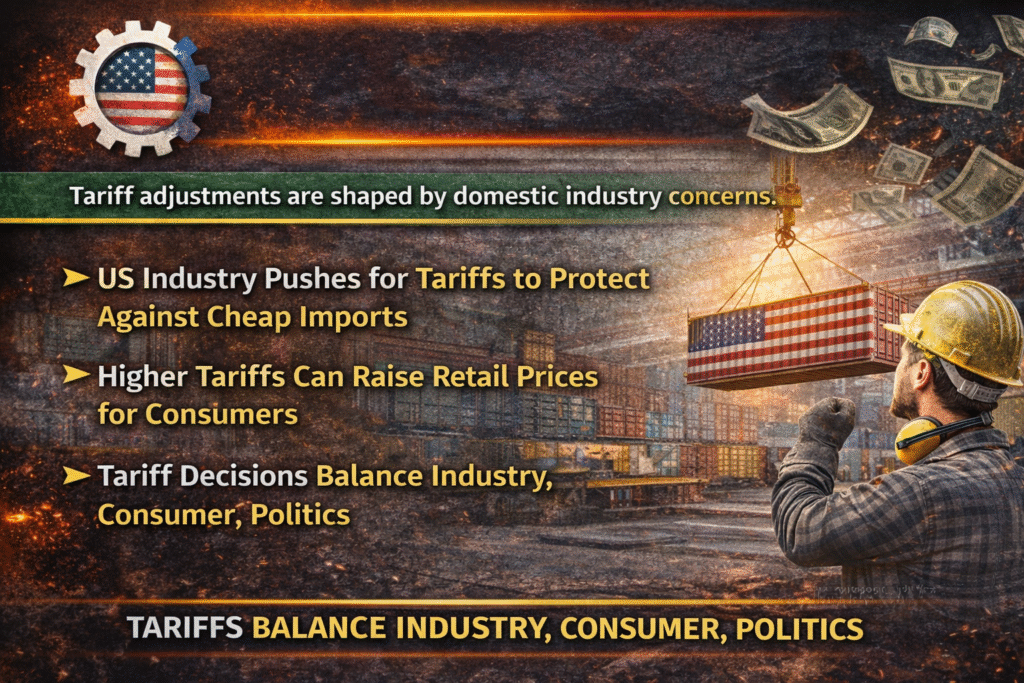
Tariff adjustments are shaped by domestic industry concerns. US producers competing with imports may lobby for higher protection when they face price pressure. Policymakers must also consider consumers because higher import duties can increase retail prices. The Congressional Research Service highlights that Section 301 grants authority to respond to unfair trade practices and that tariff measures under this authority may ripple through downstream industries and consumers, raising costs for some sectors while protecting others (Congressional Research Service, Tara M. Brancoli and Karen M. Sutter, May 13, 2024, Section 301 of the Trade Act of 1974) (https://sgp.fas.org/crs/row/IF11346.pdf).
Modern supply chains function as integrated cross border networks rather than isolated national systems. A garment assembled in Dhaka may rely on imported yarn and accessories, while a pharmaceutical ingredient produced in India may pass through multiple production stages before entering the US market. Companies evaluate the specific duty under the US Tariff schedule attached to their product code, not a headline national average. Even small rate adjustments can influence sourcing and long term investment decisions.
Investment decisions respond quickly to these signals because capital follows cost efficiency.
Sourcing Flexibility
Firms diversify suppliers across countries to manage tariff risk. If duties increase in one location, production can shift toward regions with more favorable access.
Long Term Capital Allocation
Manufacturers assess tariff stability before committing to factories or expansion. Predictable US Tariff policy supports investment planning, while sudden changes increase uncertainty.
Margin Sensitivity
Global contracts operate on narrow profit margins. Minor percentage differences in duty can alter competitiveness in bidding, especially in sectors such as apparel, electronics and intermediate chemicals.
This dynamic shows that tariffs influence more than customs revenue. They shape supply chain design, capital allocation and long term industrial strategy.
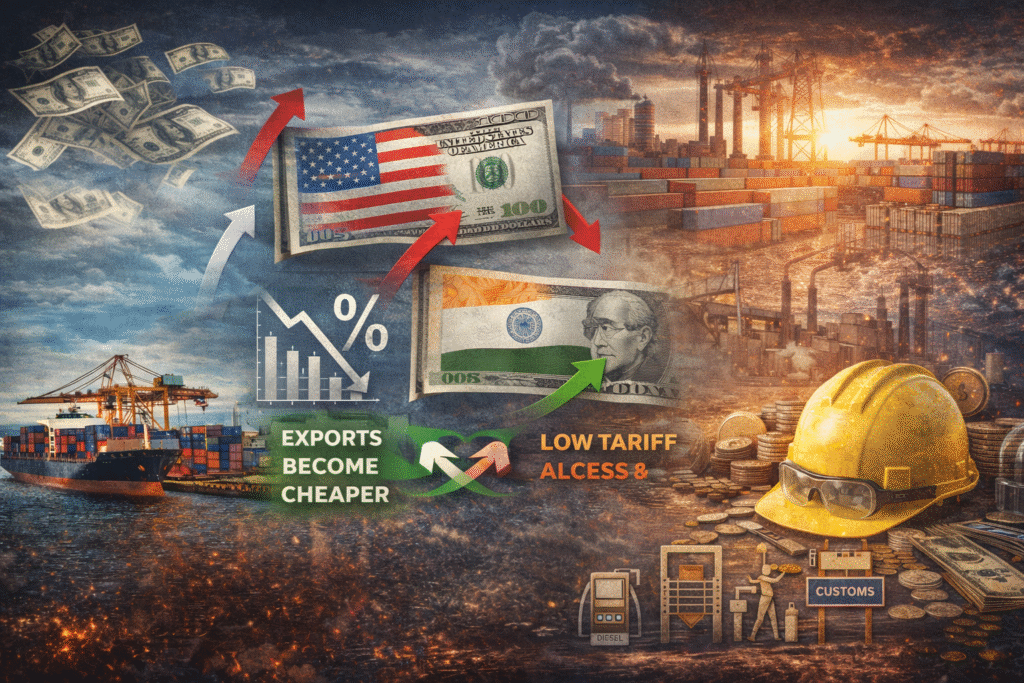
Exchange rates and production costs directly influence how US Tariff policy affects trade outcomes. If a country’s currency depreciates against the US dollar, its exports become cheaper in dollar terms, which can offset higher duties and help maintain competitiveness. If the currency strengthens, even low tariff access may not prevent erosion of price advantage. Rising wages, energy costs and freight rates can further increase the final landed price of goods, reducing the benefit of favorable tariff treatment.
Competitiveness is also shaped by productivity, infrastructure quality and regulatory efficiency. Efficient ports, stable power supply and streamlined customs procedures lower operational costs and delivery time. Firms with higher productivity can absorb part of a US Tariff increase without losing market share. This broader economic equation shows that tariff rates are only one variable. Trade performance ultimately reflects the combined impact of currency movements, cost structures and structural economic strength.
Long term trade relationships depend on stability and predictability. Investors seek clarity on tariff frameworks before committing capital. Sudden shifts in US Tariff policy can create uncertainty that influences investment planning. Over time, transparent and consistent policy encourages deeper integration between economies. Public debate often compresses this complexity into dramatic contrasts. An eighteen percent figure may represent one calculation. A zero percent rate may apply to selected goods under specific conditions. Neither number alone explains the broader economic relationship. US Tariff policy is built on product classifications, sector composition and strategic calculation. When those layers are examined carefully, the narrative becomes clearer and grounded in economic structure rather than political simplification.
In the end, US Tariff comparisons between India and Bangladesh cannot be reduced to one dramatic percentage. Real trade dynamics depend on product categories, sector composition and strategic policy decisions. Understanding US Tariff structure requires looking beyond headlines and examining how applied duties, weighted averages and global supply chains shape long term economic relationships.








Uuddbet is a place I go when I want something different. The variety keeps me going. So so worth it to me uuddbet