Physical Address
304 North Cardinal St.
Dorchester Center, MA 02124
Physical Address
304 North Cardinal St.
Dorchester Center, MA 02124
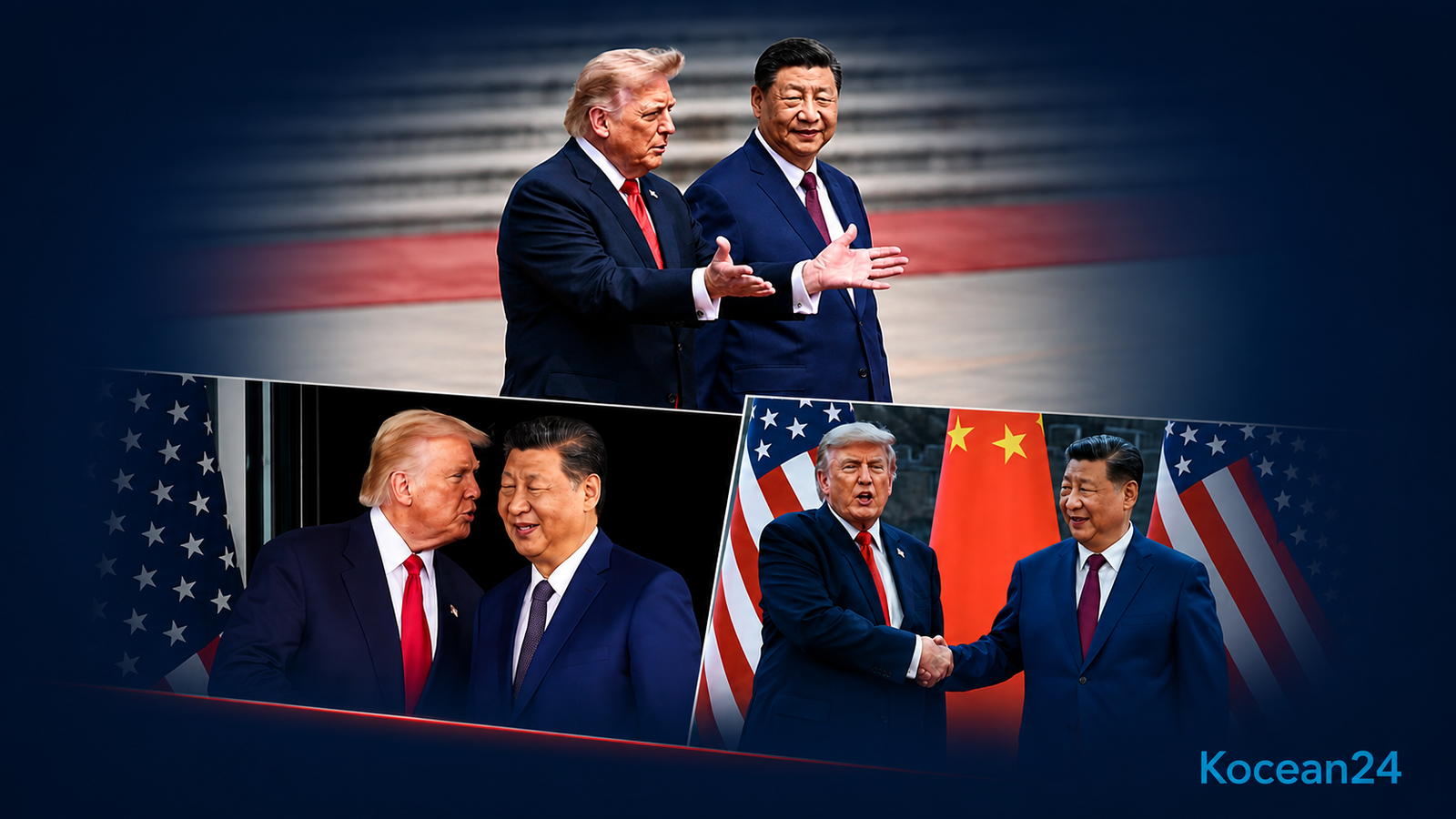
Trump Xi Summit arrived at a moment when the United States and China were already facing rising pressure across trade, technology, military strategy and global influence. The Beijing meeting was expected to reduce tension and reopen practical cooperation between the world’s two largest powers. Instead, Taiwan quickly became the defining issue because it exposed how fragile the relationship still remains. Trump focused on economic progress and diplomatic momentum, while Xi Jinping pushed hard on sovereignty and regional security.
The summit carried discussions on trade, AI competition, semiconductor dependence and Middle East stability, but Taiwan changed the emotional and political atmosphere inside the talks. What began as a carefully managed diplomatic event soon turned into a visible reminder that the future of US China relations may depend on how both sides handle one island at the center of global power politics.
Trump Xi Summit opened with ceremony, red carpet messaging and strong public language from both sides. Trump arrived at the Great Hall of the People for a formal welcome before face to face talks with Xi Jinping. (The Guardian, Amy Hawkins and Andrew Roth, May 14, 2026, Xi warns Trump of ‘clashes and even conflicts’ with US over Taiwan) (https://www.theguardian.com/world/2026/may/14/trump-xi-jinping-meet-beijing-ahead-of-summit-trade-iran-war-ai-talks)
Those visuals carried strategic meaning. Beijing wanted to present China as an equal superpower capable of managing global crises with Washington. Trump wanted visible diplomatic momentum after years of economic and geopolitical friction between both countries. The carefully managed optics also aimed to calm investors and international allies watching US China relations closely.
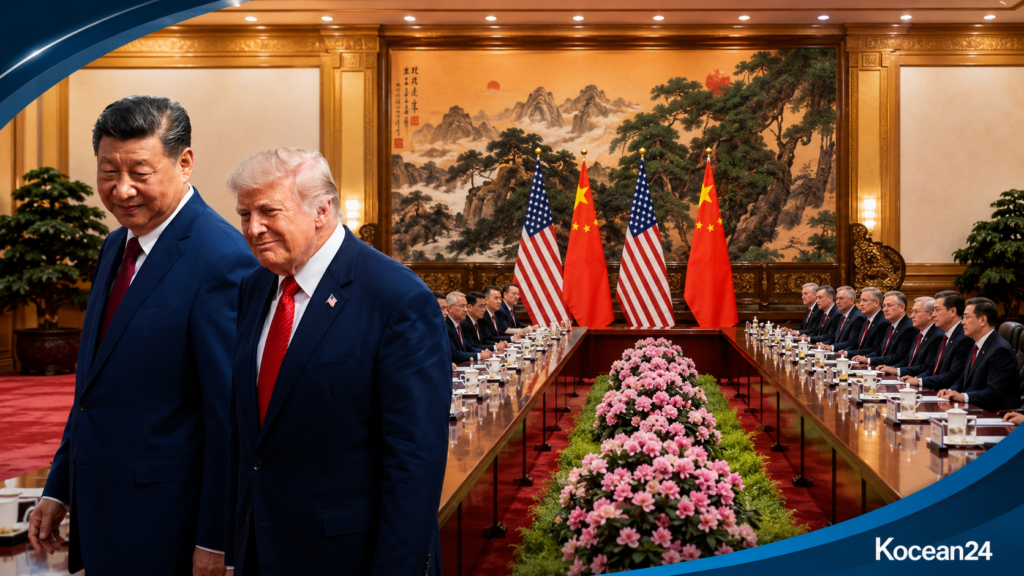
But behind the ceremonial tone, the agenda remained highly sensitive. The talks involved trade access, AI competition, semiconductor control, military positioning in Asia and the future of Taiwan. That combination turned Trump Xi Summit into more than a diplomatic event. It became a high pressure negotiation over power, security and global influence.
Xi warned that Taiwan was the most important issue in China US relations and said mishandling it could lead to clashes and conflict. (The Guardian, Amy Hawkins and Andrew Roth, May 14, 2026, Xi warns Trump of ‘clashes and even conflicts’ with US over Taiwan) (https://www.theguardian.com/world/2026/may/14/trump-xi-jinping-meet-beijing-ahead-of-summit-trade-iran-war-ai-talks)
That warning changed the tone of Trump Xi Summit because it moved the meeting beyond trade language. Taiwan is not just a diplomatic disagreement. It sits at the center of military planning, chip supply security and American credibility in Asia.
Trump did not announce a major change in US Taiwan policy. Marco Rubio later said the US position on Taiwan was unchanged. (The Guardian, Amy Hawkins and Andrew Roth, May 14, 2026, Xi warns Trump of ‘clashes and even conflicts’ with US over Taiwan)
Beijing delivered a direct warning over Taiwan while Washington avoided any visible policy concession during the talks. That balance shaped the atmosphere of the summit. Public diplomacy continued, but the discussions increasingly reflected strategic caution, competing red lines and the reality that both powers are trying to prevent rivalry from turning into open confrontation.
Trump spoke positively about trade after the talks. Reuters reported that he said American farmers would be happy with his trade deals and that China would buy billions of dollars of soybeans, while giving few details. (Reuters, May 15, 2026, Trump touts China agriculture deals, gives few details) (https://www.reuters.com/world/china/xi-gives-trump-rare-tour-secret-garden-heart-chinese-government-2026-05-15/)
The trade messaging sounded warmer than previous years, but the summit produced few concrete commitments with measurable timelines or enforcement details. Both sides appeared more focused on preventing economic escalation than announcing a structural reset in US China trade relations.
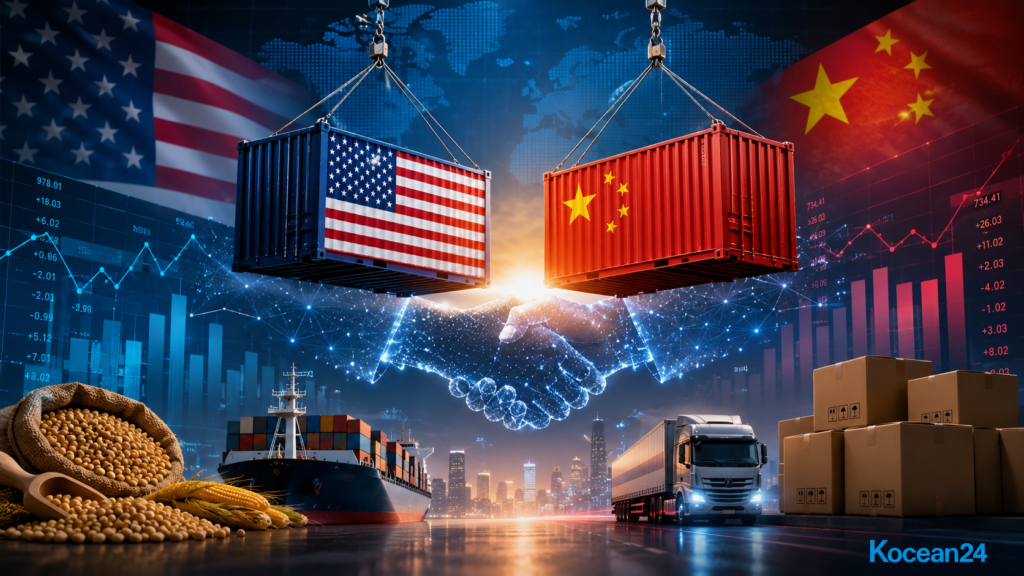
That shift still carries global importance. Even limited stabilization between Washington and Beijing can ease pressure on manufacturing networks, commodity pricing and investor confidence. Yet without formal agreements on tariffs, technology restrictions or market access, uncertainty continues hanging over the broader economic relationship.
Technology competition remained deeply connected to the Taiwan discussion throughout Trump Xi Summit. CNBC reported that trade, AI policy, semiconductor restrictions and Taiwan security all entered the broader strategic conversation between Washington and Beijing during Trump’s Beijing visit. (CNBC, Evelyn Cheng, May 15, 2026, Trump Xi summit: The 3 big takeaways from historic meeting in Beijing) (https://www.cnbc.com/2026/05/15/trump-xi-summit-the-3-big-takeaways-from-historic-meeting-in-beijing.html)
Taiwan carries enormous technological importance because the island remains central to advanced semiconductor production used in artificial intelligence systems, defense computing, cloud infrastructure and high end manufacturing. That dependency has transformed Taiwan from a regional flashpoint into a critical part of the global digital economy.
As a result, the summit was never only about diplomacy or trade tariffs. The Taiwan issue also represented a struggle over chip access, AI leadership, industrial resilience and long term strategic influence. Kocean24 has already explained that technology is becoming political infrastructure in 2026 as semiconductor control, AI systems and data dominance increasingly shape global power competition. (Kocean24, February 21, 2026, Global Politics in 2026: 7 Powerful Challenges Ahead) (https://kocean24.com/global-politics-in-2026-7-powerful-challenges-ahead/)
Iran widened the scope of Trump Xi Summit because it connected US China diplomacy with energy security and Middle East risk. TIME reported that Trump said Xi offered to help negotiate an end to the Iran conflict and keep the Strait of Hormuz open to global shipping. (TIME, Nik Popli, May 14, 2026, Trump Says Xi Offered To Help Broker Peace With Iran) (https://time.com/article/2026/05/14/trump-xi-china-iran-strait-hormuz/)
That mattered because the Strait of Hormuz is one of the world’s most important energy routes. Any disruption there can raise oil prices, pressure shipping costs and weaken confidence across global markets. China has a strong reason to avoid that shock because its economy depends heavily on steady energy flows.
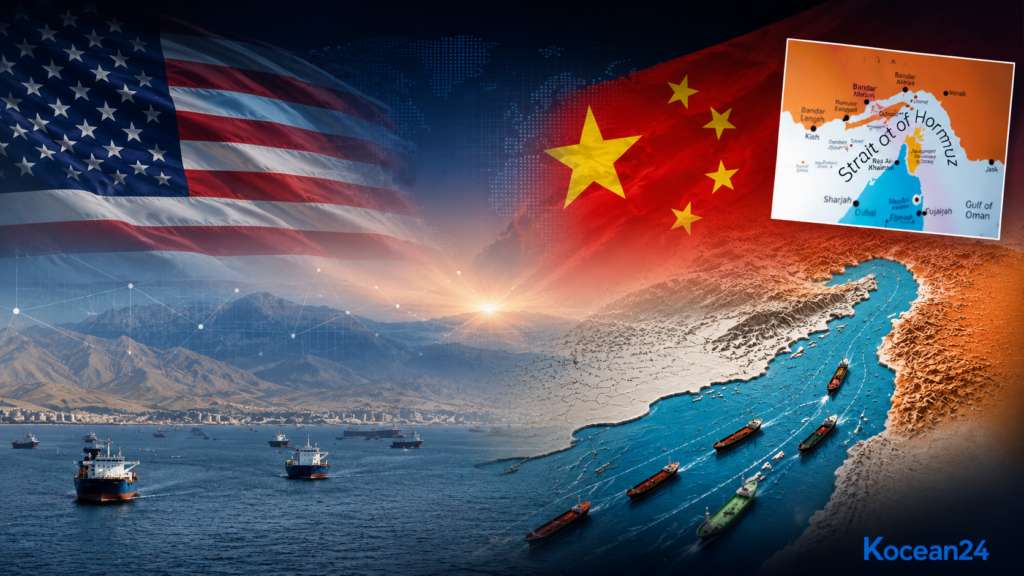
Still, Iran did not replace Taiwan as the central tension. It showed that Trump Xi Summit was not limited to bilateral trade. The meeting became a wider test of whether Washington and Beijing can manage overlapping crises without turning competition into direct confrontation.
Trump Xi Summit showed that US China relations have entered a stage where economics, military strategy, technology and diplomacy can no longer be separated. The meeting looked stable in public, but every major discussion carried deeper geopolitical consequences underneath. Taiwan reshaped military strategy. AI rivalry intensified economic friction. Energy corridors affected diplomatic decision making.
Even ceremonial gestures became part of a larger battle over international image and leadership credibility. Both governments wanted to avoid escalation, yet neither side showed willingness to step back from core strategic positions.
The summit exposed several realities clearly:
• Taiwan is now connected directly to semiconductor security and AI competition
• Trade stabilization remains fragile without formal structural agreements
• China and the US still depend on each other economically despite rivalry
• Energy security and Middle East tensions are increasingly part of US China diplomacy
• Symbolic diplomacy cannot fully hide long term strategic distrust
The real importance of the summit was the recognition that future competition between Washington and Beijing will shape technology, markets, military balance and political stability far beyond Asia.
Trump Xi Summit gave the world a polished diplomatic image, but Taiwan exposed the harder truth underneath. Trade language improved, symbolic gestures looked strong and both sides tried to present stability. Still, the central rivalry remains alive. The summit mattered because it showed that Washington and Beijing are still talking. The significance is even more because being not present anywhere, Taiwan proved how quickly the tone can change. The two super powers stuck up with the Tiny Taiwan!






[…] Kocean24 has already covered how modern geopolitics now connects technology, AI, semiconductor control, military strategy and Middle East stability into one larger power contest. (Kocean24, Ava Grace, May 15, 2026, Inside the Trump Xi Summit’26 and How Taiwan Changed the Entire Tone) (https://kocean24.com/trump-xi-summit-taiwan-tensions-2026/) […]