

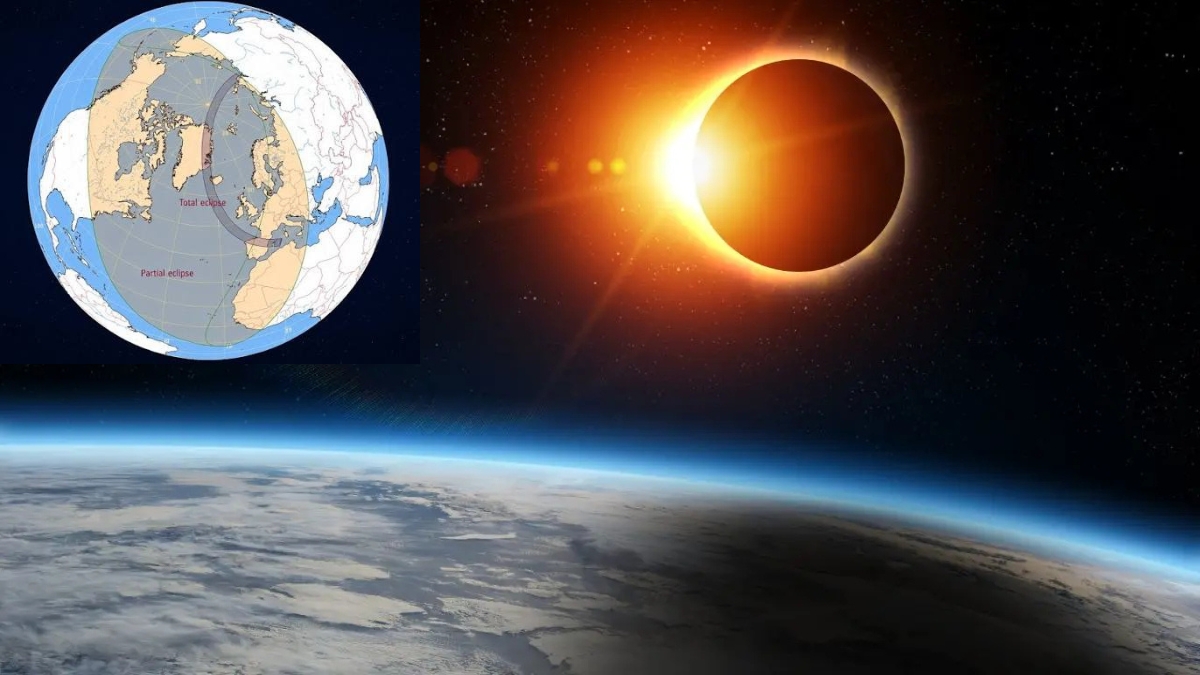
Solar Eclipse 2026 has put Europe at the center of one of the most anticipated astronomical events of the year. On August 12, millions of people across the continent are looking skyward as the Moon passes between Earth and the Sun, creating totality across a narrow path and a dramatic partial eclipse across a much wider area.
In Europe, the importance goes far beyond a few minutes of darkness. The continent has waited 27 years since its previous total solar eclipse in 1999. Spain is experiencing an even rarer moment, while Iceland, Greenland, Portugal and other locations are drawing observers, scientists and travelers from across the world. Solar Eclipse 2026 combines astronomical rarity, scientific opportunity, tourism, public safety challenges and a remarkable European viewing experience.
Table of Contents
Why Solar Eclipse 2026 is Historic for Europe
The strongest reason for the enormous attention is simple: Europe rarely experiences total solar eclipses.
A total solar eclipse occurs when the Moon moves directly between Earth and the Sun from the perspective of observers inside a narrow path. The Moon blocks the bright solar disk completely for a short period, allowing the much fainter solar corona to become visible.
Solar Eclipse 2026 crosses Greenland, Iceland, northern Russia, the Atlantic Ocean, Spain and a small corner of Portugal. Much of Europe, northwestern Africa, Canada and parts of the northern United States can see a partial eclipse. NASA also notes how people across parts of mainland Europe and Africa may see the Sun set while it remains partially eclipsed.
(NASA Science, June 5, 2026, Total Solar Eclipse on August 12, 2026) (https://science.nasa.gov/eclipses/future-eclipses/total-solar-eclipse-on-august-12-2026/)
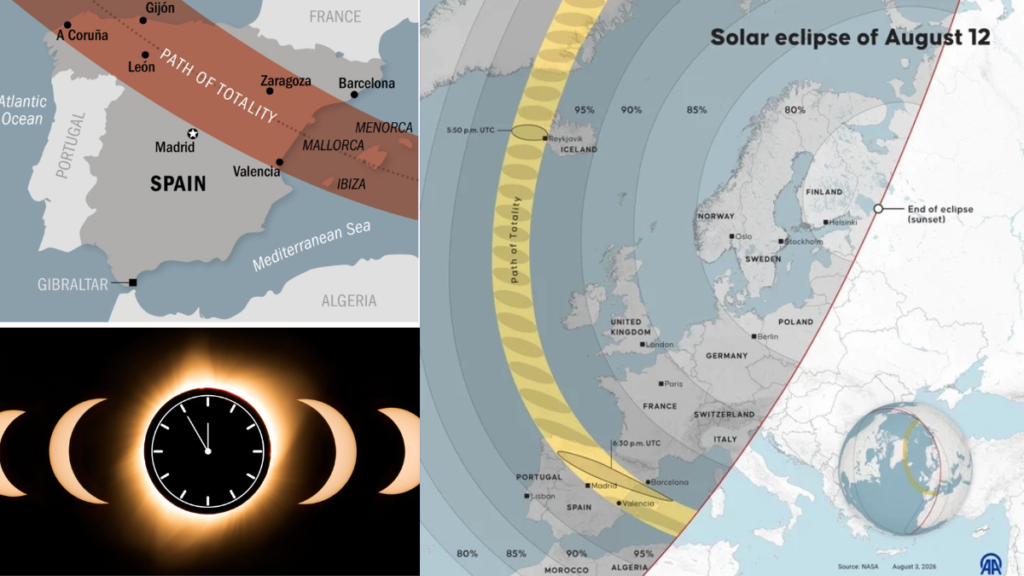
For European observers, this creates two very different experiences. People inside the path of totality can briefly see the Sun disappear completely. People elsewhere across much of Europe can still watch a large portion of the solar disk become covered.
Europe Waited 27 Years for This Moment
The 1999 Connection
Solar Eclipse 2026 carries particular emotional and historical importance because Europe last experienced a total solar eclipse 27 years ago.
The August 11, 1999 eclipse became one of the defining astronomical events of its generation in Europe. Millions watched from locations across the continent. In 2026, a new generation is receiving its own opportunity.
Reuters reported millions gathering in Iceland and northern Spain for Europe’s first total solar eclipse in 27 years. Spanish authorities expected as many as 6 million visitors in mostly rural areas along the eclipse path, while Iceland expected up to 80,000 visitors.
(Reuters, Corina Pons and Tom Little, August 12, 2026, Millions of people in Iceland and Spain set for ‘event of the century’ eclipse) (https://www.reuters.com/science/eclipse-craze-grips-spain-iceland-millions-get-set-event-century-2026-08-12/)
Those numbers show why Solar Eclipse 2026 has grown beyond a specialist astronomy event. It has become a major public event involving tourism, transport, emergency planning and national attention.
Spain Becomes the European Center of Solar Eclipse 2026
Spain holds a special position in this eclipse.
The path of totality crosses northern Spain before continuing toward the Mediterranean. Areas within the path can experience complete coverage of the Sun, while other Spanish regions receive a partial eclipse.
More Than a Century of Waiting in Mainland Spain
The historical scale becomes even clearer when Spain is examined separately.
The Associated Press reported the event brings a total solar eclipse to mainland Spain for the first time in more than a century. Maximum totality along the overall eclipse route can reach about two minutes and 18 seconds. Most of the approximately 5,130 mile path runs over the ocean, with maximum totality occurring off Iceland’s west coast.
The AP also reported more than 60 high altitude balloons from Spain and Iceland were planned for scientific research into atmospheric changes during the eclipse. A NASA aircraft mission was also designed to study the solar corona while pursuing the Moon’s shadow.
(Associated Press, Marcia Dunn, August 2, 2026, August’s total solar eclipse will sweep over Spain, Iceland and Greenland) (https://apnews.com/article/total-solar-eclipse-sun-moon-0757e313d90c684f87163318ada5cf03)
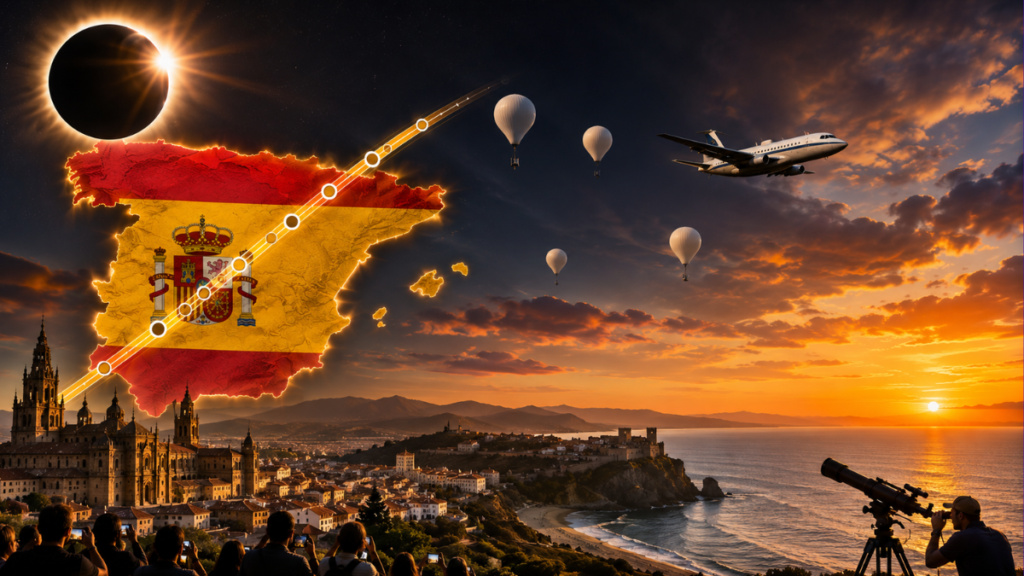
Solar Eclipse 2026 therefore gives Spain something much bigger than a spectacular sunset. It provides a rare intersection of public astronomy, international tourism and active scientific research.
Why the Timing Makes the Eclipse So Dramatic
Totality Arrives Close to Sunset in Spain
The position of the Sun makes the European phase especially unusual.
In Spain, totality arrives late in the day, shortly before sunset. Instead of looking almost directly overhead, many observers need a clear western horizon.
This changes the visual character of Solar Eclipse 2026. The surrounding landscape, low Sun and rapidly changing light can create an experience very different from an eclipse occurring around midday.
The short duration also makes preparation important. Totality lasts only briefly at any individual location. Missing the correct moment can mean missing the defining part of the entire event.
Why Scientists Care about Solar Eclipse 2026
A solar eclipse is visually impressive, but its scientific value is equally important.
The Sun normally overwhelms its faint outer atmosphere with intense visible light. During totality, the Moon blocks the brilliant solar surface and gives researchers a temporary natural window for observing the corona.
Scientists can also examine how Earth’s atmosphere responds when sunlight suddenly falls and then returns. Temperature, atmospheric conditions and other measurements can shift as the Moon’s shadow crosses a region.
Solar Eclipse 2026 gives researchers access to observation points across very different environments, including Iceland, Spain and locations above the eclipse path.
Public interest also helps science institutions connect astronomy with people who may rarely follow space research.
Solar Eclipse 2026 Starts a Rare European Eclipse Sequence
The August event is significant on its own, but Europe has more unusual eclipse activity approaching.
The European Space Agency identifies three major European solar eclipse dates in close succession. The August 12, 2026 event brings totality to Greenland, Iceland, Spain and Portugal. Another total solar eclipse follows in Spain on August 2, 2027. An annular solar eclipse follows across Portugal and Spain on January 26, 2028.
(European Space Agency, May 21, 2026, Join ESA for a total solar eclipse on 12 August 2026) (https://www.esa.int/Science_Exploration/Space_Science/Join_ESA_for_a_total_solar_eclipse_on_12_August_2026)
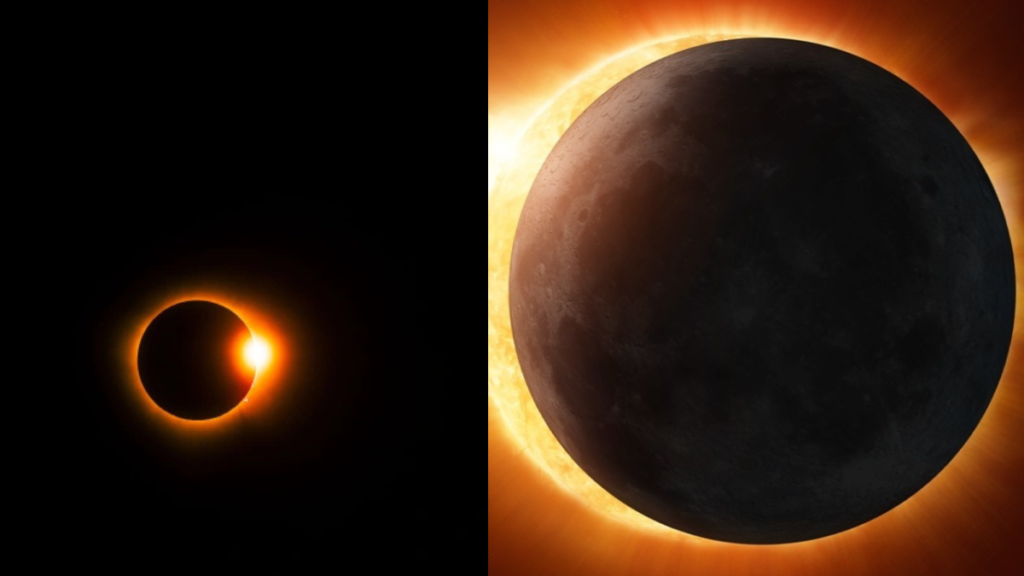
This sequence makes the Iberian Peninsula one of the most important eclipse regions in Europe during the late 2020s.
Solar Eclipse 2026 effectively opens this extraordinary period.
Public Safety Has Become Part of the Story
Huge crowds can transform an astronomical event into a major logistical challenge.
Spain has faced a particularly difficult combination of eclipse tourism, high temperatures and wildfire danger. Visitors traveling toward rural viewing areas increase pressure on roads, emergency services and sensitive landscapes.
Public safety during major natural events deserves the same attention as the spectacle itself. Kocean24 has recently covered how rapidly changing natural conditions can lead to evacuations and emergency responses, including wildfire developments in California.
(Kocean24, Alex Hamilton, August 9, 2026, California Bug Fire Surges to 6,528 Acres as Evacuations Expand) (https://kocean24.com/california-bug-fire/)
For Solar Eclipse 2026 viewers, responsible planning means respecting local restrictions, avoiding risky viewing locations and following instructions from authorities.
Eye Safety Remains Essential
Eclipse Glasses are Different from Sunglasses
The excitement surrounding totality should never override eye safety.
During partial phases, people must never stare directly at the Sun without proper solar viewing protection. Ordinary sunglasses do not provide enough protection.
People inside the path of totality may remove approved solar viewing protection only during the brief period when the Sun is completely covered. Protection must return as soon as bright sunlight begins appearing again.
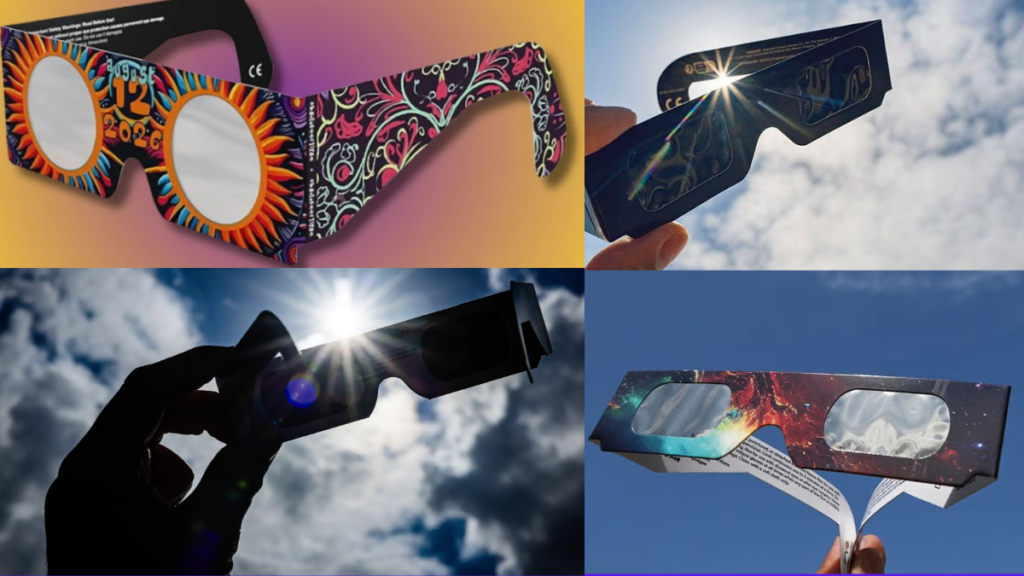
People outside the path of totality never experience a safe naked eye viewing phase because some portion of the Sun remains visible throughout the eclipse.
This distinction matters across Europe because millions of people are seeing only a partial eclipse.
What Comes after Solar Eclipse 2026
Europe does not have to wait another 27 years for its next major eclipse opportunity.
Spain returns to the center of attention in August 2027 with another total solar eclipse. The Iberian Peninsula then receives an annular eclipse in January 2028.
For anyone who misses Solar Eclipse 2026 because of weather, location or travel limitations, more opportunities are coming. Still, every eclipse follows its own path and creates its own viewing conditions.
The combination of history, sunset timing, geography and mass public interest makes the August 12 event impossible to reproduce exactly.
Conclusion
Solar Eclipse 2026 deserves its extraordinary attention in Europe because it brings together rarity, history, science and human experience in a single event.
Europe’s 27 year wait gives the eclipse historical weight. Spain’s exceptional position makes the moment even more significant. Iceland and Greenland add dramatic northern viewing locations, while much of the wider continent can share the event through a partial eclipse.
For a few minutes, everyday life gives way to one of nature’s most precise alignments. Streets, fields, observatories and viewing sites fill with people looking in the same direction.
The darkness lasts only briefly. The memory of Solar Eclipse 2026 may last for decades.