Physical Address
304 North Cardinal St.
Dorchester Center, MA 02124
Physical Address
304 North Cardinal St.
Dorchester Center, MA 02124
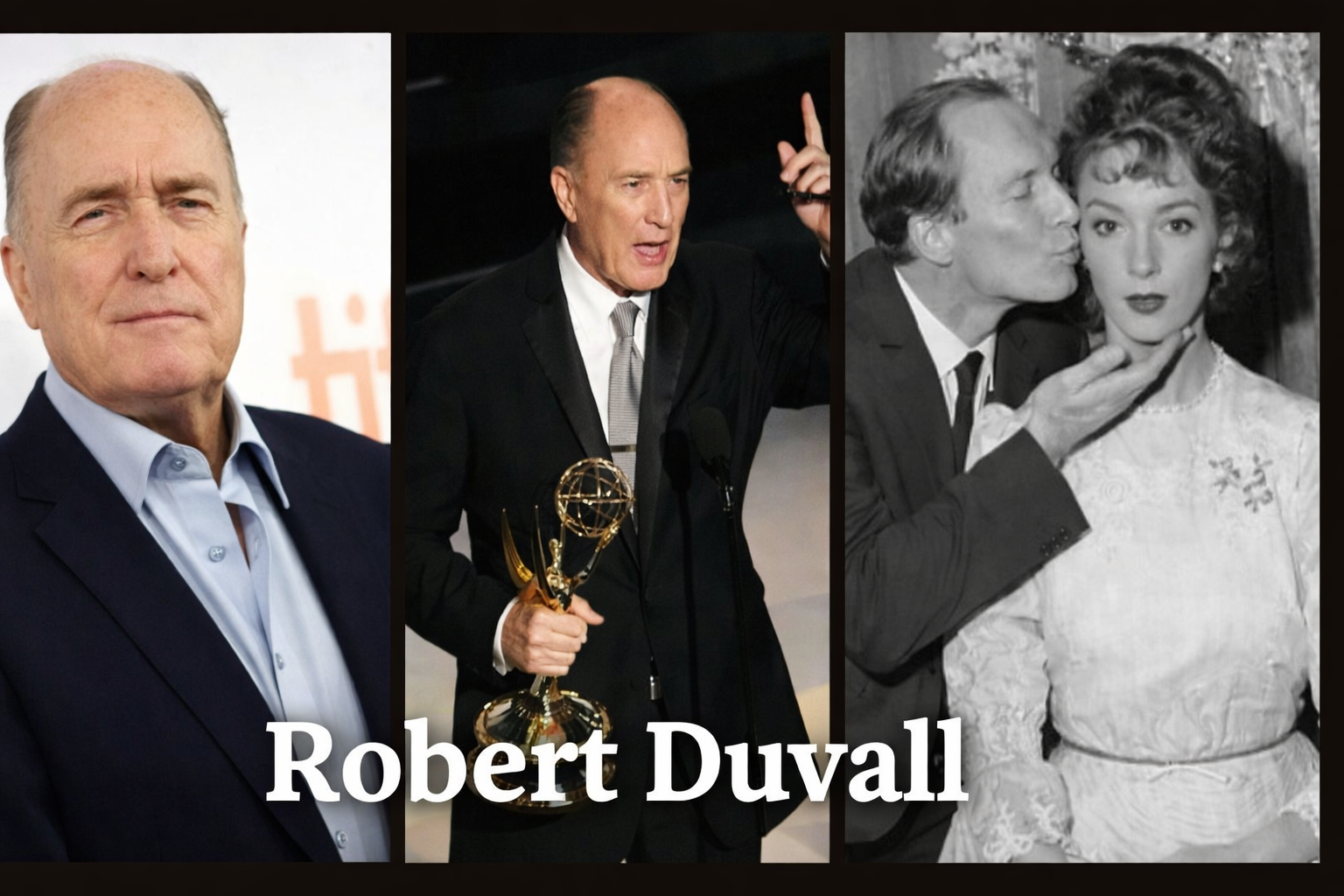
Robert Duvall did not dominate the screen with noise. He ruled it with stillness. On February 15, 2026, at the age of 95, the world said goodbye to one of the most disciplined actors in American cinema. Yet the phrase that follows his name most often is not simply Oscar winner. It is something deeper. You may term it as legacy. Through 7 powerful performances, Robert Duvall carved a place in film history that feels permanent.
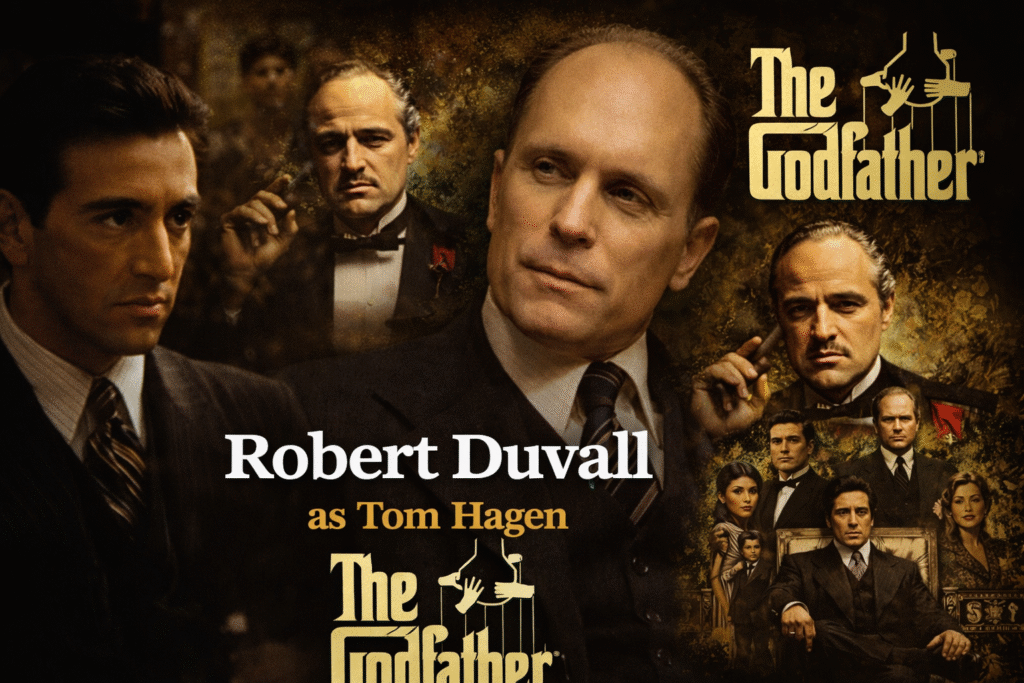
When audiences first met Tom Hagen in The Godfather, they met a different kind of power. Hagen was not a loud gangster. He was a strategist, a lawyer and a quiet negotiator inside chaos. Robert Duvall earned his first Academy Award nomination for this role.
The American Film Institute later ranked The Godfather among the greatest American films ever made, reinforcing how culturally seismic the project became (American Film Institute, June 16, 2008, AFI’s 10 Top 10) (https://www.afi.com/afis-10-top-10/). Duvall’s performance helped anchor that legacy. He did not overpower scenes. He steadied them with control and emotional discipline.
Tom Hagen remains immortal because he represents influence without noise. Duvall showed that strength can be measured in composure rather than aggression. In a film filled with explosive personalities, he proved that quiet intelligence can be the most enduring force on screen.
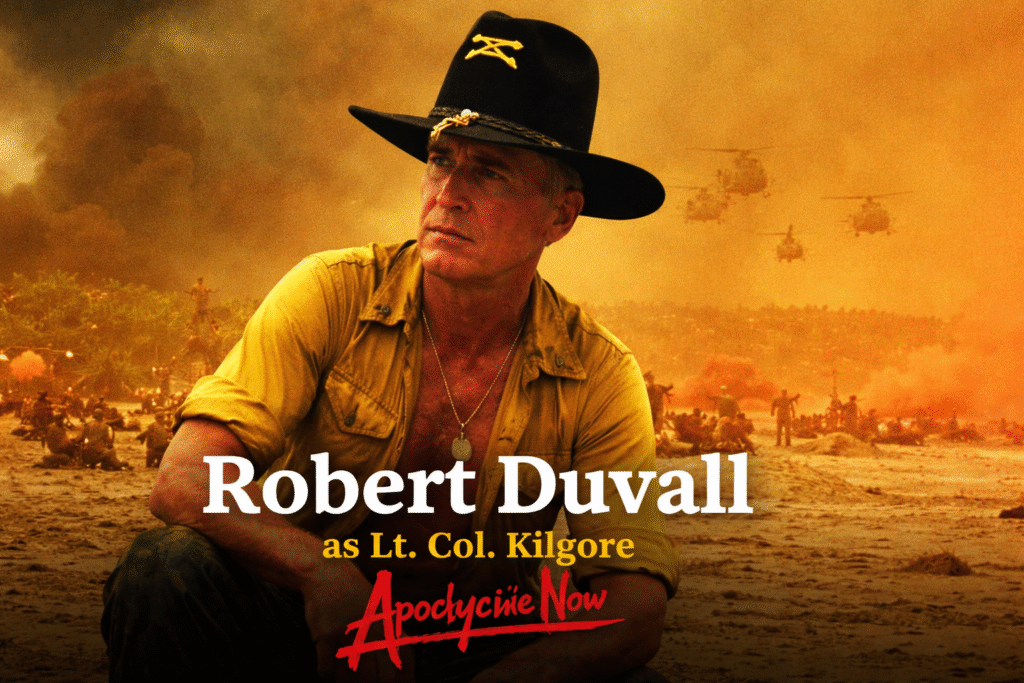
Kilgore is controlled madness wrapped in confidence. Robert Duvall plays him as fearless and disturbingly calm, a man who treats war like a stage built for his ego. The performance works because it never slips into parody. Duvall gives Kilgore charisma and rhythm, then allows the moral emptiness beneath it to surface naturally.
What makes the role immortal is efficiency. He dominates the film without owning it. In limited screen time, he creates one of cinema’s most quoted and analyzed characters.
Apocalypse Now was later selected for preservation in the National Film Registry for its cultural and historical significance. (Library of Congress, December 28, 2000, Librarian of Congress Names 25 More Films to National Film Registry) (https://www.loc.gov/item/prn-00-200/librarian-of-congress-names-25-more-films-to-national-film-registry/2000-12-27/)
That recognition confirms the film’s lasting impact, but Kilgore’s legacy rests on something more precise. Duvall proved that a supporting character, played with conviction and discipline, can become larger than the story itself. That is the mark of an actor who understood the power of presence.
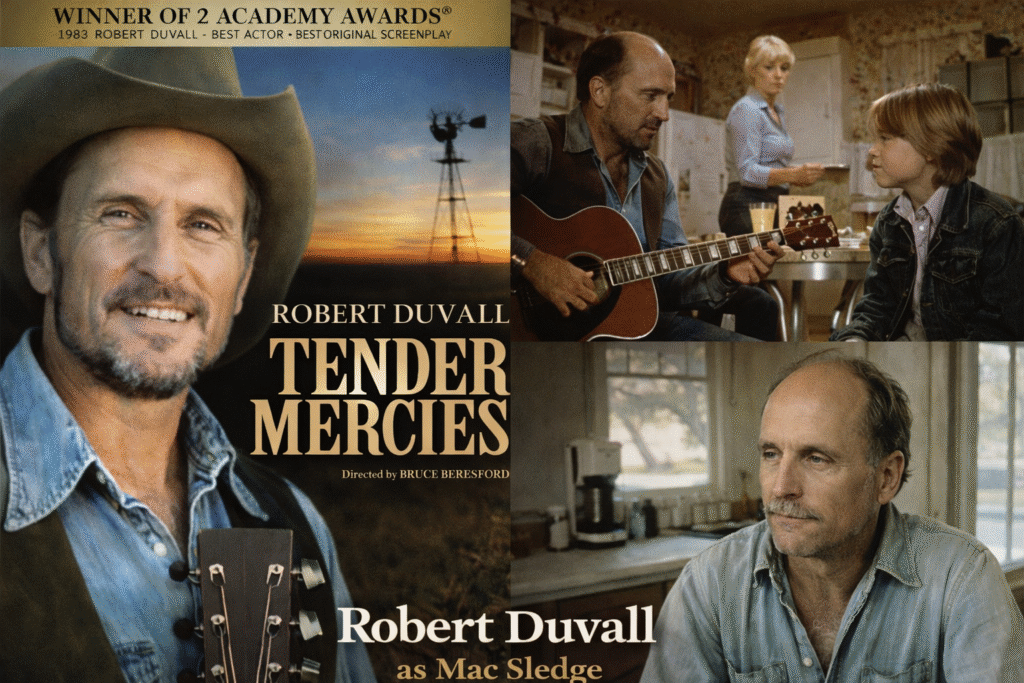
If immortality has a single turning point, it might be Mac Sledge in Tender Mercies. A washed up country singer seeking redemption.
In 1984, Robert Duvall won the Academy Award for Best Actor for this role. The Academy confirmed his win during the 56th Academy Awards ceremony (Academy of Motion Picture Arts and Sciences, April 9, 1984, 56th Academy Awards Winners) (https://www.oscars.org/oscars/ceremonies/1984).
The performance was quiet, but painfully human. There were no grand speeches, just vulnerability. He portrayed regret without melodrama, growth without exaggeration.
It proved that subtle acting could still move mountains.
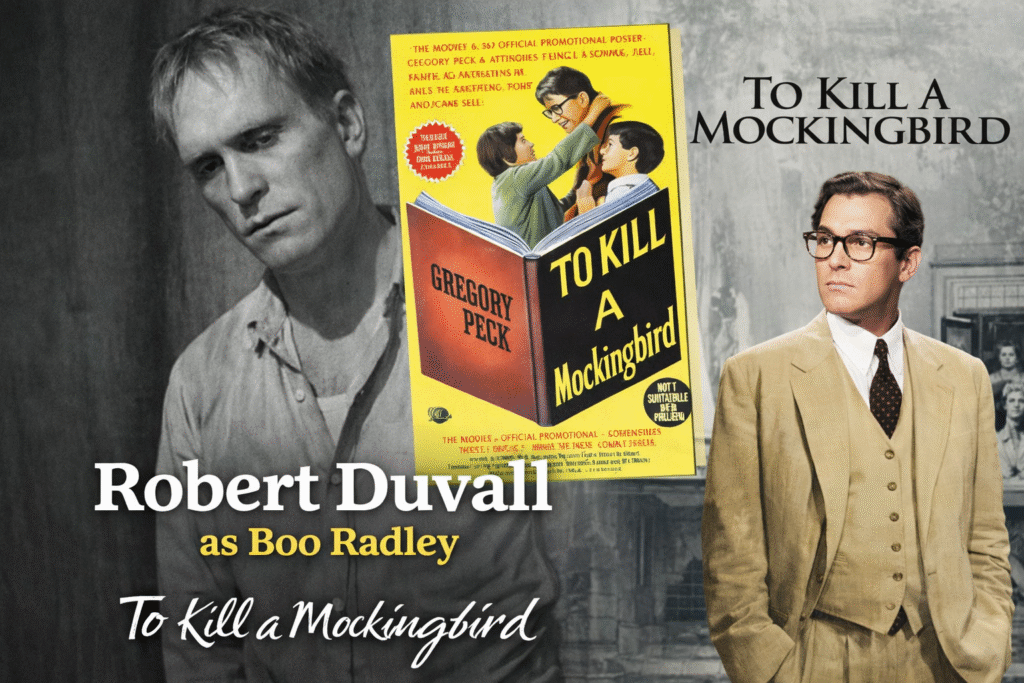
Before global recognition, Robert Duvall appeared briefly as Boo Radley in To Kill a Mockingbird. The role offered almost no dialogue and minimal screen time, yet it demanded emotional precision.
Boo had to feel mysterious but deeply humane. Duvall achieved that through posture, silence, and restraint rather than speech. The film went on to win three Academy Awards and remains one of the most respected literary adaptations in American cinema.
Even in this early appearance, Duvall demonstrated a defining strength of his career. He could communicate vulnerability and empathy without words.
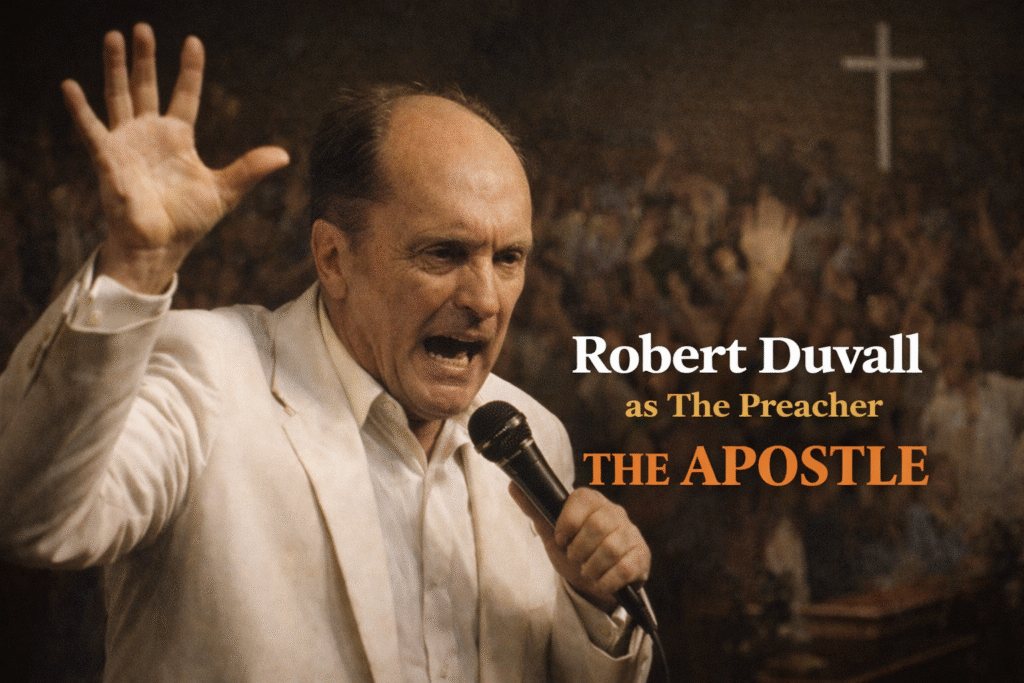
With The Apostle, Robert Duvall took full creative control. He wrote, directed, produced, and starred in the film, playing Sonny Dewey, a Pentecostal preacher whose public faith clashes with private failure. The character is charismatic and flawed at the same time. Duvall does not simplify him. He presents a man who truly believes in his calling, yet repeatedly collapses under ego and anger. That tension gives the performance its emotional force.
The role earned Duvall an Academy Award nomination for Best Actor and reaffirmed his range late in his career. More importantly, it revealed his artistic priorities. He chose spiritual struggle over commercial comfort. He chose moral complexity over applause. The Apostle stands as proof that Robert Duvall was not just a performer of strong characters. He was a storyteller willing to examine the uncomfortable layers of belief, guilt, and redemption.
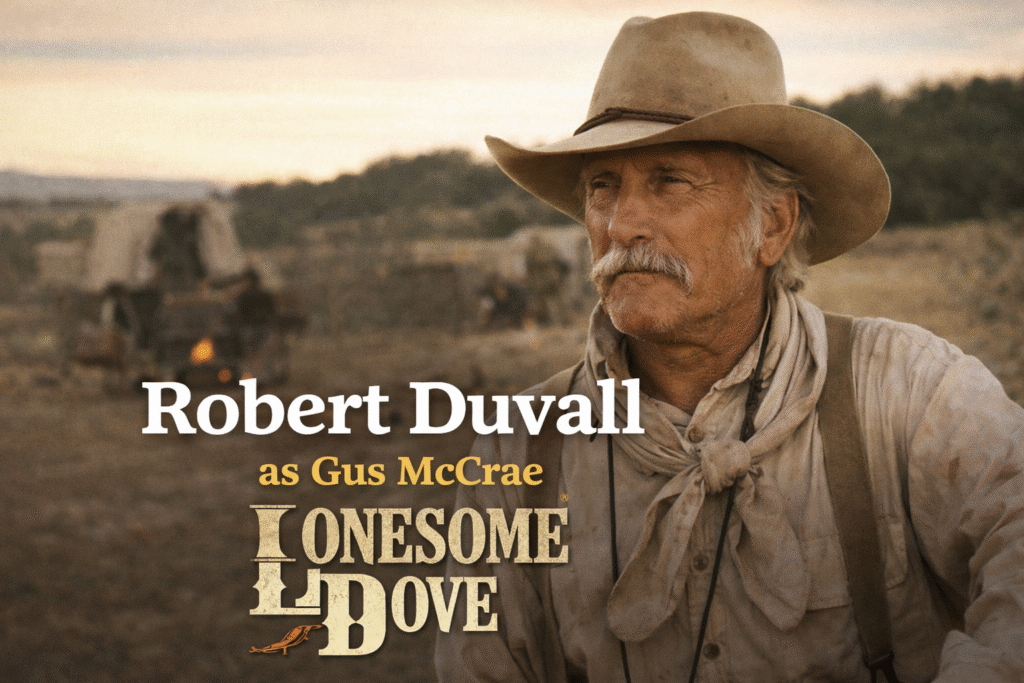
In the television miniseries Lonesome Dove, Robert Duvall portrayed Captain Augustus “Gus” McCrae, a retired Texas Ranger embarking on one last cattle drive. The performance earned him a Golden Globe Award and an Emmy nomination, confirming that his influence extended beyond theatrical cinema. Duvall approached Gus not as a stereotype of frontier toughness, but as a layered man shaped by loyalty, humor, regret, and aging.
The Western genre often celebrates stoicism and bravado. Duvall chose warmth and emotional nuance. He gave Gus wit without turning him into comic relief, and dignity without romanticizing the past. Through this role, he helped elevate television storytelling, proving that long form narrative could achieve the same emotional scale and character depth traditionally reserved for film.
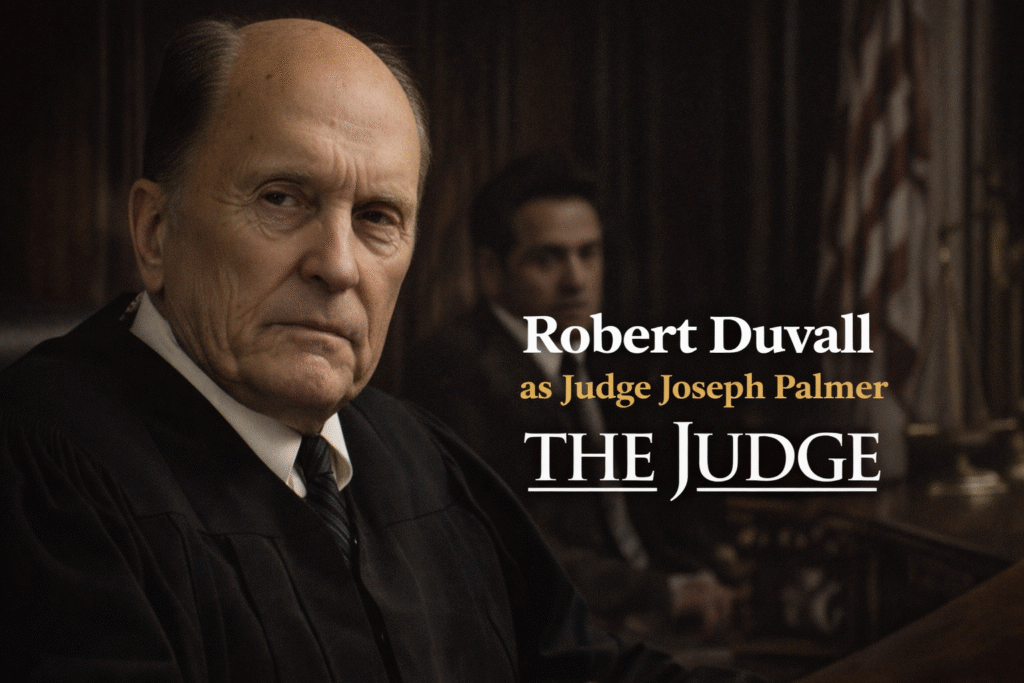
In The Judge, Robert Duvall delivered one of the most powerful late career performances in modern American cinema. He portrayed Judge Joseph Palmer, a rigid and aging father confronting illness, regret and a fractured relationship with his son. Acting opposite Robert Downey Jr., Duvall balanced authority with vulnerability, allowing the character’s emotional cracks to surface without melodrama.
The role earned him an Academy Award nomination for Best Supporting Actor, confirming that his craft had not diminished with age. It reinforced a defining truth about Robert Duvall. His relevance did not depend on era or trend. More than seven decades into his career, he continued to command scenes through restraint, precision and emotional authenticity rather than spectacle.
Robert Duvall built his legacy on discipline, restraint and character truth rather than celebrity visibility. He avoided spectacle and selected roles that demanded psychological depth. Across more than six decades, he consistently portrayed layered and morally complex individuals with emotional control. Encyclopaedia Britannica notes that he became known for characters marked by quiet intensity (Encyclopaedia Britannica, February 16, 2026, Robert Duvall American actor) (https://www.britannica.com/biography/Robert-Duvall). That quality defined his screen presence and separated him from trend driven performers.
His immortality in cinema rests on three enduring foundations:
Duvall pursued truth over transformation. He did not exaggerate emotion for visibility. He allowed internal conflict to surface gradually, which made his performances feel lived rather than performed.
He understood that the camera amplifies honesty. Subtle shifts in posture, tone, or silence carried more impact than dramatic gestures. Precision became his signature strength.
Immortality in film is archival memory. It is the ability of a performance to remain relevant across generations. Duvall’s roles continue to resonate because they reflect human complexity without distortion.
Robert Duvall trained at the Neighborhood Playhouse in New York, where he studied method acting but refused to be confined by it. He blended structured technique with instinct, building performances from internal logic rather than surface effect. This discipline made his characters believable across genres, from courtroom drama to Western epic. His craft reflected a principle often explored in cinema studies, that enduring performers rely on psychological depth rather than external intensity (James Van Der Beek: 5 Powerful Legacy Moments). (https://kocean24.com/james-van-der-beek-5-legacy-moments/)
Peers consistently described him as prepared, focused and grounded on set. He did not depend on spectacle to command attention. Instead, he trusted silence, timing and emotional precision. That approach influenced younger actors who saw that minimalism, when rooted in authenticity, can carry more weight than exaggeration.
Robert Duvall proved that disciplined craft creates lasting impact in cinema. Through 7 powerful roles, Robert Duvall turned restraint into authority and silence into presence. His performances resolved the tension between fame and artistry by choosing truth over spectacle. Film history will continue to study his work because it feels human, honest and timeless. Explore more cinematic legacies on kocean24.












Always on the lookout for new online casinos and casinosnuevosonline.net keeps me in the loop. Really apreciate the information for new casinos in Spanish. Great way to find hidden gems! casinosnuevosonline