
3 Reasons Why The Immortal Man Ruined Peaky Blinders
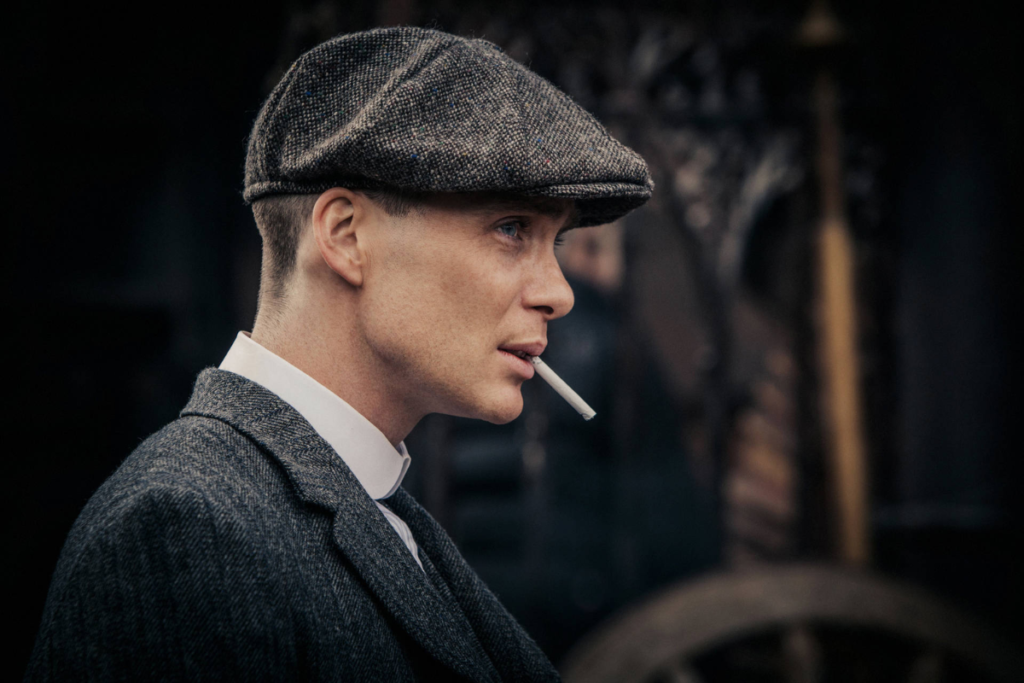
Peaky Blinders: The Immortal Man promised a definitive conclusion to Tommy Shelby’s extraordinary story. Instead, the Netflix film turned out to be a massive disaster. For six seasons, Peaky Blinders was more than a gangster drama. Created by Steven Knight, the British television series explored ambition, political corruption, family loyalty, class conflict, trauma, and the devastating consequences of violence. At its centre stood Thomas Shelby, portrayed by Cillian Murphy, a man whose intelligence and ruthlessness were matched only by his inability to escape the horrors of his past.
When the series concluded in 2022, Tommy Shelby rode away on a white horse, leaving his burning caravan and former life behind. It was an ending filled with uncertainty, but that uncertainty was precisely what made it powerful. However, the ending left a question mark regarding the ending of some of the most notorious antagonists including Jack Nelson and Oswald Mosley.
Four years later, Peaky Blinders: The Immortal Man arrived on Netflix in March 2026, bringing Murphy back alongside Barry Keoghan as Duke Shelby, Rebecca Ferguson as Kaulo, and Tim Roth as the Nazi-linked antagonist Beckett. Fans were really excited for the series. However, most returned with a heavy hurt filled with disappointments.
To know about other famous movie sequels that also came out in 2026, read this article.
Here are five reasons why The Immortal Man damaged the legacy of Peaky Blinders.
Table of Contents
1. Arthur Shelby and Other Essential Characters Were Denied Proper Closure
Although Tommy Shelby was the central figure, Peaky Blinders was never entirely his story. Its emotional power came from the Shelby family and the complicated relationships connecting its members.
Arthur represented the destructive consequences of violence and emotional dependence. Polly Gray, played by the late Helen McCrory, provided intelligence, authority, and moral confrontation. Ada Shelby offered a different perspective on politics, family, and the world beyond the gang. Characters such as Alfie Solomons, Finn Shelby, Lizzie Stark, and Oswald Mosley expanded the story far beyond Tommy’s immediate ambitions.
One of the film’s greatest disappointments is how little meaningful closure many of these characters receive.
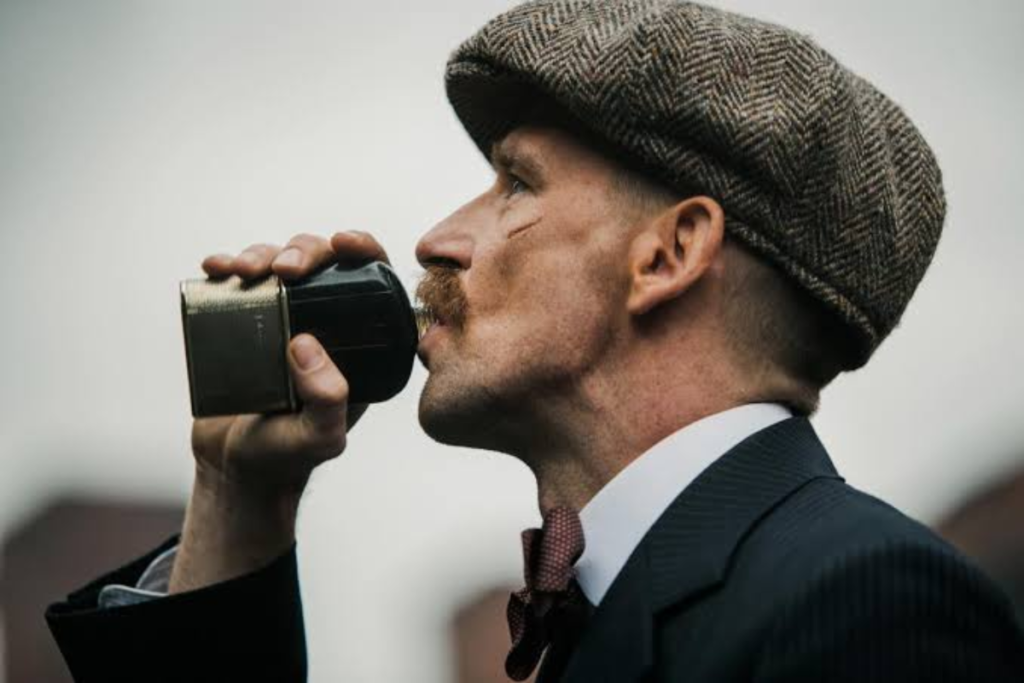
Arthur’s absence is particularly damaging. Paul Anderson’s character survived six seasons of addiction, psychological breakdowns, family conflicts, and repeated brushes with death. He deserved a conclusion that acknowledged his significance to the series. Instead, the audience learns that Arthur died before the events of the film, killed by Tommy in an incident never shown.
That decision denies Arthur both an independent ending and the opportunity to confront the brother whose ambitions shaped so much of his suffering.
Ada’s fate is similarly frustrating. After Polly’s death, Ada became increasingly important to the Shelby family’s political and emotional stability. She possessed the intelligence to challenge Tommy without simply imitating him.
In the film, Ada attempts to confront Duke over his involvement with Beckett’s operation. Although Duke refuses to kill her, Beckett shoots her. Her death becomes the event that helps drive Tommy back into action. It is shocking, but shock is not the same as meaningful dramatic development. Ada’s murder removes one of the few surviving characters capable of challenging Tommy intellectually and morally. Her loss matters, yet the film has insufficient time to explore its full consequences.
The unresolved storylines extend beyond the immediate family.
Finn Shelby, expelled from the organisation in the sixth-season finale, had threatened Duke with retaliation. That conflict suggested a potentially significant struggle over the future of the Peaky Blinders. The film does not meaningfully continue it.
Oswald Mosley, whose political rise became one of the defining threats of the later seasons, is also absent despite the wartime setting. Alfie Solomons, one of the series’ most memorable and unpredictable characters, receives no comparable final appearance.
Meanwhile, Lizzie and Charles remain largely outside the central narrative.
For many viewers, the film’s missing characters and abrupt deaths are among its most significant weaknesses.

2. Tommy Shelby’s Character Development Was Undermined
Tommy Shelby was never a conventional hero. He was a traumatised First World War veteran who built an empire through intimidation, deception, political manipulation, and murder. His intelligence made him formidable, but his inability to find peace made him tragic.
Throughout six seasons, Tommy repeatedly attempted to escape the circumstances that had shaped him. He accumulated wealth, entered legitimate businesses, became a Member of Parliament, and pursued political influence. None of these achievements could erase his wartime trauma, his guilt, or the deaths of those closest to him.
Yet the sixth season appeared to offer something different. After discovering that his supposedly terminal illness had been fabricated, Tommy abandoned the suicide he had contemplated. Instead of returning to his criminal empire, he rode away from the burning remains of his former life. It was not proof that Tommy had become a good man. Nor was it a guarantee that he would live happily.
It was something more meaningful: the possibility that he could finally choose a different existence.
The Immortal Man reverses much of that progress. Set six years after the series finale, the film finds Tommy living in isolation, haunted by memories and writing an account of his life. He has withdrawn from the family and the criminal organisation he once controlled. A return to grief is not inherently unrealistic. Trauma does not disappear simply because someone decides to start over.
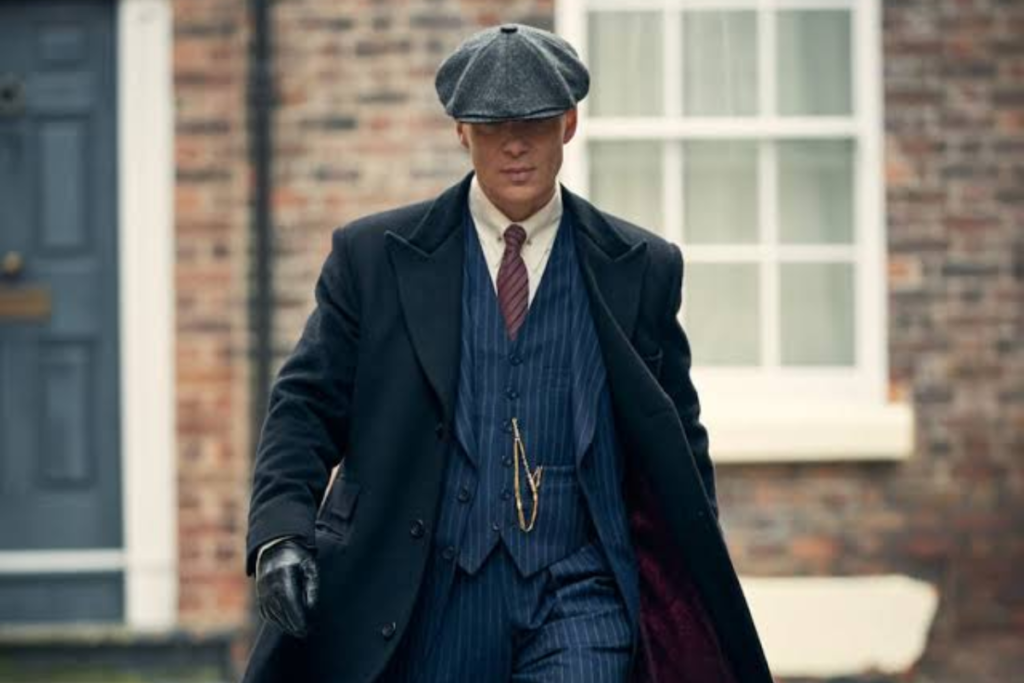
The problem is that the film introduces an enormous development in Tommy’s life without allowing the audience to witness how it happened. Tommy Shelby has killed his own brother, Arthur. During a confession beside Ada’s body, Tommy reveals that Arthur did not die by suicide, as others believed. Tommy shot him while overwhelmed by alcohol and rage.
This revelation is intended to demonstrate how completely Tommy has destroyed the things he once valued.
But the relationship between Tommy and Arthur was not simply another example of family dysfunction.
It was one of the emotional foundations of Peaky Blinders. Arthur was unstable, violent, vulnerable, and deeply dependent on Tommy. Their relationship contained resentment and exploitation, but it also survived repeated betrayals and extraordinary suffering.
To reveal that Tommy murdered Arthur off-screen is therefore not a minor plot development. It fundamentally changes the audience’s understanding of both characters. A tragedy of this magnitude needed to be explored, not merely disclosed. We never witness the confrontation that led to Arthur’s death. We do not see the immediate aftermath or the emotional destruction of the remaining family relationships.
Instead, the film presents the murder as an established fact and uses Tommy’s guilt to explain his subsequent isolation.
That is an enormous amount of character development to compress into a single revelation. The original Peaky Blinders spent years demonstrating that Tommy could survive almost anything except the consequences of his own decisions. The Immortal Man takes one of his most consequential decisions and places it outside the story
3. Tommy Shelby’s Death Was Predictable and Weakened the Original Ending
The death of Tommy Shelby should have been one of the most devastating moments in modern television drama.
Instead, The Immortal Man builds towards an outcome that feels increasingly inevitable. From its opening scenes, the film surrounds Tommy with images of death, guilt, isolation, and unfinished business.
He is haunted by his past. He has withdrawn from society. He is burdened by Arthur’s death. His return to Birmingham is framed as one final responsibility. These elements make his eventual death relatively easy to anticipate.
During the final confrontation, Tommy succeeds in stopping Beckett’s operation but suffers serious gunshot wounds. Duke saves him from an approaching vehicle, yet Tommy’s injuries leave him facing death.
He asks his son to end his suffering, invoking the idea of showing mercy to a wounded horse. Duke ultimately shoots him.
Tommy’s life has been defined by violence, and the son who inherits his legacy becomes the person who brings that life to an end. It is also possible to interpret the scene as Tommy finally relinquishing control.
But a character’s death is not automatically the most powerful conclusion to their story.
Sometimes survival demands greater courage. That was what made the original series finale so effective.
For years, Tommy seemed unable to imagine a future beyond violence, ambition, and suffering. The discovery that he was not dying created an opportunity to reject the destiny he had accepted.
He could continue living without knowing what came next.
The white horse, the burning caravan, and his departure suggested a symbolic rebirth without pretending that his past had disappeared.
It was an ending that trusted the audience to live with uncertainty.
By contrast, The Immortal Man offers a much more literal conclusion.
Tommy returns, confronts an enemy, saves the country from a wartime conspiracy, and dies.
His death provides closure, but it also removes the ambiguity that made his previous departure so memorable.
There is another problem.
Tommy Shelby had repeatedly survived circumstances that should have killed him. His endurance became an essential part of his mythology.
The title The Immortal Man plays directly into that reputation.
Yet the film ultimately concludes that the only way to free Tommy from his suffering is through death.
Conclusion: Was The Immortal Man Really Necessary?
There is nothing inherently wrong with returning to a beloved fictional universe.
A continuation can deepen an established story, challenge familiar characters, or reveal consequences that the original ending deliberately left unexplored.
The problem arises when the continuation offers less than the ending it replaces.
Peaky Blinders concluded with Tommy Shelby riding away from the wreckage of his former life. He was not absolved of his crimes, and his future was not guaranteed.
But he was alive.
For a character who had spent years struggling with suicidal thoughts, survivor’s guilt, and self-destructive ambition, that mattered.
The Immortal Man takes away that possibility and substitutes a final act of violence.
It also reveals that Tommy murdered Arthur, kills Ada, and leaves several important relationships unresolved.
These are not insignificant creative decisions. They reshape the emotional meaning of the original series.
The film does have genuine strengths. Cillian Murphy remains extraordinary as Tommy Shelby, communicating exhaustion, guilt, and emotional repression with remarkable subtlety. Barry Keoghan is a convincing choice to portray Duke, while the cinematography and soundtrack preserve much of the franchise’s distinctive atmosphere.
The wartime setting also offers a compelling historical backdrop.
But strong performances and impressive production values cannot fully compensate for the weaknesses of the screenplay. The issue is not that The Immortal Man is devoid of worthwhile moments.
It is that those moments belong to a conclusion that often seems determined to destroy the surviving pieces of the Shelby family rather than meaningfully resolve their stories.