
5 Famous Movie Sequels that Have Been Released in 2026
Hollywood has never been shy about bringing back a successful movie franchise, but 2026 is proving to be a particularly interesting year for sequels. From the return of Pixar’s beloved toys to the revival of an iconic fashion comedy, some of cinema’s most recognizable characters are making their way back to the big screen.
What makes the 2026 movie sequels especially noteworthy is the variety of stories involved. Some are continuing franchises that have entertained audiences for decades. Others are revisiting characters who disappeared from theaters nearly twenty years ago. Meanwhile, major science-fiction productions are preparing to conclude storylines that have become defining cinematic events of the 2020s.
The year has already delivered several high-profile sequels, including Toy Story 5 and The Devil Wears Prada 2. Others, including Dune: Part Three, are scheduled for the final months of 2026.
Here are five famous movie sequels released or scheduled to arrive in 2026, along with their release dates, returning stars, storylines, and what makes each film significant.
Table of Contents
1. Toy Story 5 — June 19, 2026
More than three decades after Woody and Buzz Lightyear first appeared on screen, Pixar’s most celebrated franchise returned with Toy Story 5.
Released on June 19, 2026, the fifth installment introduces a distinctly modern challenge for the toys: competing with technology for children’s attention.
Unlike previous installments, where the central conflicts revolved around abandonment, growing up, or finding a new home, the latest movie examines whether traditional toys still have a place in a world increasingly dominated by digital entertainment.
The storyline: Toys versus technology
At the center of the story is Lilypad, a sophisticated tablet device voiced by Greta Lee.
Lilypad enters Bonnie’s life with her own ideas about what children need, threatening the role Woody, Buzz, Jessie, and the other toys have traditionally played.
The premise touches on a familiar concern for modern parents. Children who once spent hours playing with action figures, dolls, and building blocks now have access to tablets, smartphones, and interactive digital entertainment.
For Woody and his friends, this is more than another rivalry. Their entire purpose has always been to bring happiness to children through play.
What happens when a child no longer needs them in the same way?
That question gives Toy Story 5 an emotional foundation that connects the franchise’s original themes with contemporary childhood.

The returning cast and creative team
Tom Hanks returns as Woody, Tim Allen reprises Buzz Lightyear, and Joan Cusack voices Jessie.
The movie is directed by Andrew Stanton, whose extensive Pixar career includes directing Finding Nemo and WALL-E. Kenna Harris serves as co-director, while Randy Newman returns to compose the score.
Stanton’s involvement is especially significant because he has contributed to the Toy Story franchise since its earliest days.
The film also introduces new performers, including Greta Lee and Conan O’Brien, alongside familiar voices from the series.
Why Toy Story 5 matters
The fourth film, released in 2019, gave Woody an ending that appeared to close a major chapter of his life. He chose a different future with Bo Peep rather than continuing his familiar role in Bonnie’s household.
Bringing the characters back for another adventure therefore presented a storytelling challenge.
The new installment needed to justify its existence without simply repeating the emotional journeys audiences had already experienced.
By focusing on the relationship between childhood and technology, Pixar found a conflict that reflects a real generational shift.
The franchise’s commercial history also explains why expectations were high. Toy Story 3 and Toy Story 4 each earned more than $1 billion worldwide, establishing the series as one of animation’s most successful properties.
For longtime viewers, Toy Story 5 is not merely another children’s movie. It is an opportunity to revisit characters associated with their own childhood while watching those characters confront a world that has changed dramatically since 1995.

2. The Devil Wears Prada 2 — May 1, 2026
Few movies from the 2000s have maintained the cultural influence of The Devil Wears Prada.
The original 2006 film transformed a story about a young journalist entering the fashion industry into a widely recognized portrait of workplace ambition, power, personal sacrifice, and professional identity.
Nearly twenty years later, The Devil Wears Prada 2 brought its central characters back together.
Released on May 1, 2026, the sequel reunited Meryl Streep, Anne Hathaway, Emily Blunt, and Stanley Tucci.
Miranda Priestly returns to a changing industry
The first film followed Andy Sachs, an aspiring journalist who became an assistant to Miranda Priestly, the demanding editor-in-chief of the fictional fashion magazine Runway.
Miranda, portrayed by Meryl Streep, became one of modern cinema’s most recognizable bosses.
Her icy composure, extraordinary professional influence, and unforgiving standards made her both intimidating and fascinating.
The sequel returns to the world of Runway in an era when fashion journalism and traditional publishing face a very different business environment.
Print magazines no longer dominate cultural conversations as they once did. Digital platforms, influencers, social media, and changing advertising models have transformed the industry.
That evolving landscape gives the sequel a relevant backdrop for revisiting Miranda’s authority and the professional relationships established in the original film.

The original stars reunite
Meryl Streep returns as Miranda Priestly, with Anne Hathaway reprising Andy Sachs, Emily Blunt returning as Emily Charlton, and Stanley Tucci once again portraying Nigel.
David Frankel, who directed the 2006 movie, also returned to direct the sequel.
Screenwriter Aline Brosh McKenna, responsible for the original film’s screenplay, wrote the new installment.
The supporting cast includes Kenneth Branagh, Simone Ashley, Justin Theroux, Lucy Liu, and several additional performers.
Bringing back the original creative team was particularly important because much of the first movie’s appeal came from its sharply observed dialogue and complicated workplace relationships.
Why this sequel became such a major event
The original The Devil Wears Prada earned approximately $326 million worldwide and developed a lasting following.
Its popularity extended well beyond the box office. Miranda’s dialogue, the film’s fashion choices, and Andy’s transformation became recurring reference points in popular culture.
The sequel also arrived at a time when conversations about toxic workplaces, career ambition, and work-life balance had become more prominent.
That context gave audiences an opportunity to reconsider the original film’s characters from a modern perspective.
Commercially, the return proved substantial. Disney reported in June 2026 that The Devil Wears Prada 2 had generated more than $676 million worldwide, making it a major theatrical success.
The film subsequently became available through digital and streaming platforms, extending its audience beyond theaters.
Its success illustrates that nostalgia can still be a powerful commercial force when a sequel brings back recognizable performers and a world audiences have continued to revisit for years.

3. The Super Mario Galaxy Movie — April 1, 2026
After the extraordinary box office success of The Super Mario Bros. Movie in 2023, another big-screen adventure for Nintendo’s famous plumber seemed almost inevitable.
The first film earned more than $1.3 billion worldwide, making it one of the highest-grossing video game adaptations in cinema history.
Its sequel, The Super Mario Galaxy Movie, arrived in American theaters on April 1, 2026, with its Japanese release following on April 24.
The movie expands Mario’s cinematic universe beyond the familiar landscapes of the Mushroom Kingdom, drawing inspiration from Nintendo’s celebrated Super Mario Galaxy games.
From the Mushroom Kingdom to a bigger universe
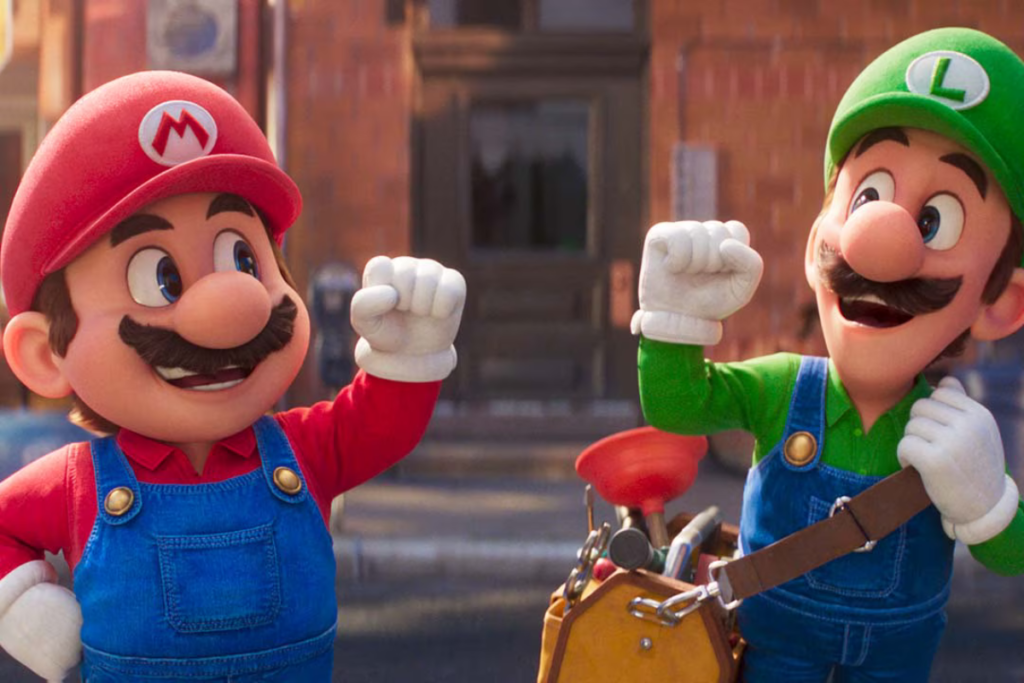
The original film introduced audiences to Mario and Luigi, two Brooklyn plumbers who become involved in a fantastical conflict involving Princess Peach, Bowser, and the Mushroom Kingdom.
Its sequel builds upon that foundation while introducing more characters from Nintendo’s extensive gaming history.
Mario and Luigi continue their adventures in the Mushroom Kingdom, supporting Princess Peach and encountering new challenges.
Among the most significant additions are Yoshi, the friendly dinosaur who has been part of Nintendo’s gaming universe since Super Mario World, and Rosalina, the mysterious character closely associated with the Super Mario Galaxy games.
Rosalina’s appearance is particularly meaningful for longtime Nintendo fans.
First introduced in the 2007 Wii game Super Mario Galaxy, she became an important figure in the series’ cosmic mythology, overseeing the Comet Observatory and caring for the star-like Lumas.
Her inclusion gives the movie an opportunity to explore a more expansive fantasy setting than the original film.

The voice cast brings back familiar favorites
Chris Pratt returns as Mario, while Charlie Day reprises Luigi.
Anya Taylor-Joy voices Princess Peach, Jack Black returns as Bowser, and Keegan-Michael Key once again portrays Toad.
The sequel also introduces several major performers:
- Brie Larson as Rosalina
- Donald Glover as Yoshi
- Benny Safdie as Bowser Jr.
- Issa Rae as Honey Queen
- Luis Guzmán as Wart
Directors Aaron Horvath and Michael Jelenic returned after overseeing the 2023 movie. Screenwriter Matthew Fogel and composer Brian Tyler also resumed their respective roles.
Nintendo and Illumination officially confirmed the principal cast and creative team in March 2026.
Why this sequel is important for Nintendo
The first Super Mario Bros. Movie proved that a video game adaptation could become a global theatrical phenomenon while remaining closely connected to its source material.
For decades, Hollywood had struggled to consistently translate popular video games into commercially successful movies.
Nintendo’s partnership with Illumination demonstrated a different approach: prioritize recognizable characters, familiar visual elements, and the adventurous spirit of the games.
The sequel builds on that strategy by incorporating characters and environments from another beloved part of Mario’s history.
Its importance also extends beyond the immediate box office.
A successful continuation strengthens Nintendo’s ability to develop its intellectual properties across movies, merchandise, games, and other entertainment platforms.
For audiences who grew up exploring the Mushroom Kingdom, the return of Mario and Luigi offers a familiar attraction. For younger viewers, the films provide another introduction to characters who have shaped video game culture for more than forty years.
4. Scream 7 — February 27, 2026
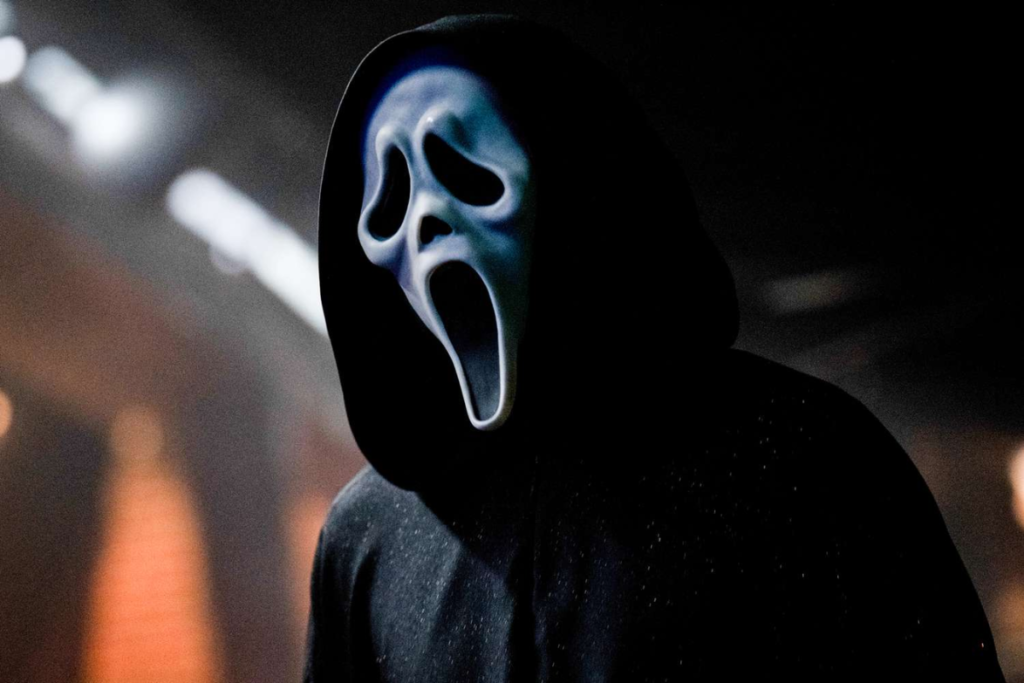
Nearly thirty years after the original Scream revolutionized the slasher genre, Ghostface returned for another chapter of violence, mystery, and psychological terror.
Scream 7 was released in theaters on February 27, 2026, bringing Neve Campbell back as Sidney Prescott.
Her return was one of the film’s defining attractions, particularly because Campbell had not appeared in Scream VI in 2023.
The seventh installment shifts the focus back toward Sidney, the character whose survival has been central to the franchise since 1996.
Sidney Prescott faces a new nightmare
In Scream 7, Sidney has attempted to establish a peaceful life away from the violence that defined her earlier years.
However, that peace is shattered when a new Ghostface killer emerges in the community where she lives.
This time, the danger becomes intensely personal when her daughter, Tatum, portrayed by Isabel May, is targeted.
Sidney is forced to confront the possibility that the nightmare she spent decades trying to escape could now destroy the family she has built.
That premise introduces an important change to the franchise’s familiar formula.
In the original movie, Sidney was a teenager trying to survive a killer whose actions were connected to her family’s past.
Three decades later, she is a mother confronting threats against her own child.
The central fear is no longer simply whether Sidney can survive. It is whether she can protect the next generation from the horrors that have followed her throughout her life.
Kevin Williamson returns to direct
One of the most notable creative developments is the involvement of Kevin Williamson as director.
Williamson wrote the screenplay for the original Scream in 1996, helping establish the franchise’s distinctive combination of horror, mystery, and self-aware commentary on slasher films.
His return as director creates a direct connection between the series’ origins and its latest installment.
Alongside Neve Campbell, the cast includes Courteney Cox, Isabel May, Jasmin Savoy Brown, Mason Gooding, Anna Camp, Joel McHale, and Mckenna Grace.
David Arquette and Matthew Lillard also appear in the film, reconnecting the production with performers associated with earlier installments.
A commercially successful return for Ghostface
The original Scream was released in December 1996 and became a major horror success.
Directed by Wes Craven, it challenged established slasher conventions by featuring characters who understood horror-movie rules.
That self-awareness became one of the franchise’s defining characteristics.
Scream 7 continued the series’ commercial momentum.
Paramount announced that the movie had surpassed $200 million worldwide, becoming the highest-grossing installment in the franchise’s history. A subsequent company release reported worldwide earnings exceeding $214 million.
Those figures are especially significant for a horror franchise approaching its thirtieth anniversary.
Unlike many blockbuster productions, slasher films can achieve strong commercial returns without requiring the enormous production budgets associated with superhero or science-fiction spectacles.
The enduring appeal of Scream also lies in its central mystery.
Ghostface is not one supernatural villain who repeatedly returns from the dead. The mask is an identity adopted by different killers, allowing each installment to introduce new motives, suspects, and betrayals.
That structure has helped the franchise remain adaptable across generations.
With Sidney Prescott once again at the center of the story, Scream 7 combines the series’ original emotional foundation with a new threat directed at her family.
5. The Strangers: Chapter 3 — February 6, 2026
Nearly two decades after the original The Strangers terrified moviegoers in 2008, the horror franchise reached another milestone with the release of The Strangers: Chapter 3.
Released in U.S. theaters on February 6, 2026, the movie concludes the trilogy that began with The Strangers: Chapter 1 in 2024 and continued with Chapter 2 in 2025.
Directed by Renny Harlin, the third installment follows Maya, portrayed by Madelaine Petsch, as she confronts the masked killers who have repeatedly turned her life into a nightmare.
The storyline: Maya’s final confrontation
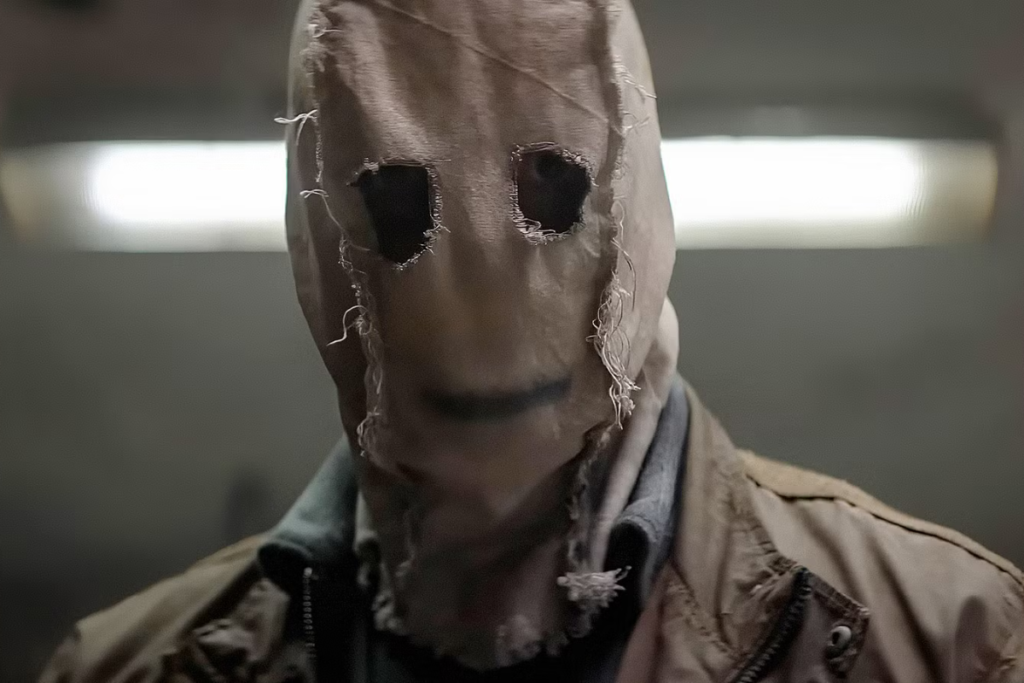
The trilogy began with Maya and her boyfriend Ryan becoming stranded in an unfamiliar town, where they encountered three masked attackers.
What initially appeared to be a terrifying encounter with strangers gradually developed into a prolonged struggle for survival.
In Chapter 3, Maya is no longer simply trying to escape an isolated attack. Her experiences have pushed her toward a final confrontation with the people responsible for her suffering.
The film explores the relationship between survival, trauma, revenge, and the psychological consequences of prolonged violence.
Unlike the original 2008 movie, which emphasized the terrifying randomness of a home invasion, the new trilogy develops a more extensive narrative surrounding the killers and their victims.
Madelaine Petsch leads the returning cast
Madelaine Petsch reprises Maya, continuing the character’s journey across all three installments.
Gabriel Basso returns as Gregory, while Ema Horvath portrays Shelly. Richard Brake also appears as Sheriff Rotter.
Harlin directed all three chapters of the new trilogy, giving the films a consistent creative approach.
The screenplay for Chapter 3 was written by Alan R. Cohen and Alan Freedland, based on characters originally created by Bryan Bertino.
Why The Strangers: Chapter 3 matters
The original The Strangers, starring Liv Tyler and Scott Speedman, became a memorable entry in modern horror because of its unsettling simplicity.
Rather than relying on supernatural creatures or elaborate mythology, it explored the fear of ordinary people becoming victims of seemingly motiveless violence.
The franchise subsequently expanded with The Strangers: Prey at Night in 2018 before being reimagined through Harlin’s three-part storyline.
The 2026 installment brought that new narrative to its conclusion, although its reception was considerably less enthusiastic than the commercial performance of some other horror sequels.
According to Box Office Mojo, The Strangers: Chapter 3 earned approximately $11.2 million worldwide, including about $8.6 million domestically.
Its comparatively modest theatrical earnings illustrate an important reality about Hollywood sequels: even an established horror brand cannot guarantee strong box office results.
Nevertheless, the film remains a notable 2026 release because it concludes a deliberately interconnected horror trilogy within one of the genre’s recognizable franchises.
For viewers who followed Maya’s story through the first two chapters, the third installment provides the final confrontation promised by the series.
Final Thoughts: Why 2026 Movie Sequels are Important
The 2026 movie calendar offers a fascinating mix of nostalgia, ambitious storytelling, and franchise expansion.
For animation lovers, Toy Story 5 and The Super Mario Galaxy Movie bring back characters who have entertained generations of viewers.
For audiences who enjoy fashion, comedy, and workplace drama, The Devil Wears Prada 2 marks the long-awaited reunion of one of the most memorable casts of the 2000s.
Horror fans have already witnessed Sidney Prescott’s return in Scream 7, while science-fiction enthusiasts still have Dune: Part Three to look forward to in December.
What ultimately distinguishes a memorable sequel from a forgettable one is not simply the popularity of its predecessor.
It is whether the filmmakers can give audiences a compelling reason to return.
The strongest sequels preserve the qualities that made their originals successful while introducing conflicts, characters, and ideas that allow the story to move forward. If you want to read more about movie reviews, check out the category on our website.
With several major releases already behind us and another highly anticipated installment still to come, 2026 has become a significant year for some of Hollywood’s most recognizable movie franchises.
