
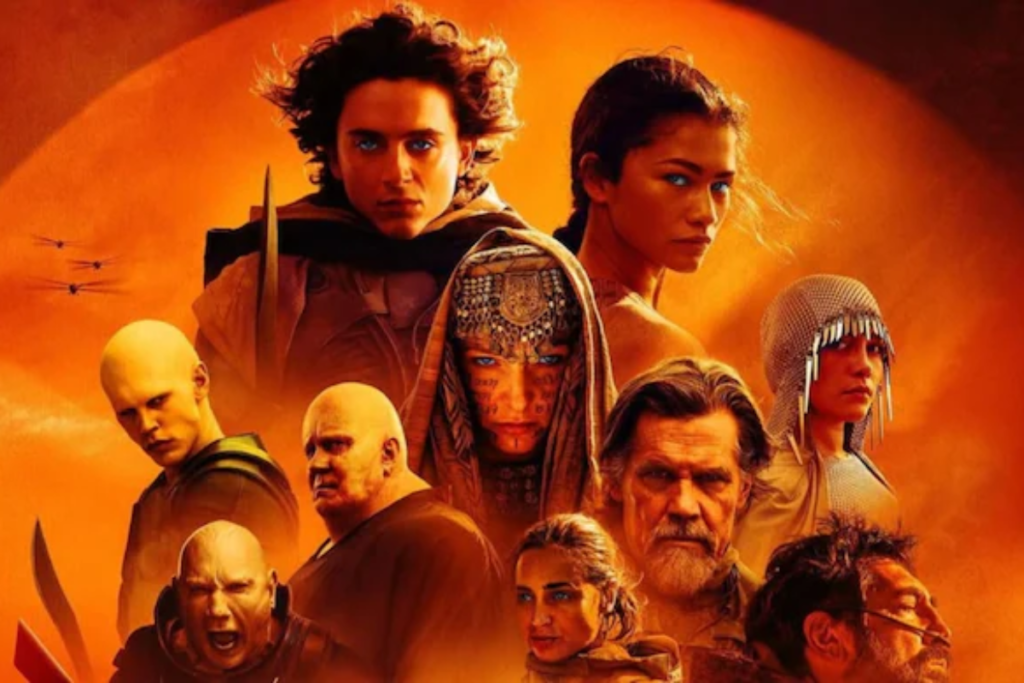
What to Expect in Dune 3 (Release Date: December 18, 2026)
After two films filled with political betrayal, desert warfare, religious prophecy, and extraordinary visual storytelling, Denis Villeneuve is preparing to conclude his Dune trilogy. Dune: Part Three, commonly called Dune 3, will arrive in North American theaters on December 18, 2026, with international screenings beginning December 16.
However, audiences expecting another straightforward battle between rival houses may be surprised. The third film shifts its attention from Paul Atreides’ rise to power toward the consequences of his victory. The young nobleman who once struggled to survive on Arrakis has become an emperor whose decisions affect billions of lives.
Inspired by Frank Herbert’s 1969 novel Dune Messiah, the upcoming film promises a more psychologically demanding story, with political conspiracies, dangerous alliances, and unresolved tensions between Paul and Chani.
The biggest question is no longer whether Paul can defeat his enemies. It is whether he can escape the devastating future his own rise has helped create.
If you want to know what other famous sequels were released in 2026, read this article. Now let’s get into Dune 3.
Table of Contents
Dune 3 Release Date: When Is Dune: Part Three Coming Out?
Warner Bros. Pictures and Legendary Pictures have confirmed that Dune: Part Three will open in theaters and IMAX across North America on Friday, December 18, 2026. International theatrical releases will begin on Wednesday, December 16, although individual countries may have different opening schedules.
The release follows Dune (2021) and Dune: Part Two (2024), completing Villeneuve’s planned three-film interpretation of Paul Atreides’ journey.
Unlike the earlier films, which arrived in October and March, the third installment enters the competitive December holiday box-office season.
Its scheduled opening also coincides with Marvel Studios’ Avengers: Doomsday, creating a potentially enormous weekend for theatrical moviegoing. Whether both productions retain their dates remains subject to studio scheduling decisions.
For viewers hoping to watch the film at home, no official streaming release date has been announced. The confirmed initial release is theatrical, including IMAX presentations.
The official movie website provides release information and promotional material: Dune: Part Three — Warner Bros. and Legendary Pictures.
What Will Dune 3 Be About?
The story begins nearly two decades after Paul Atreides seized control of the Imperium. The political landscape has changed dramatically, but the empire remains unstable.
Paul is now an immensely powerful ruler. His authority extends across worlds, while his identity as the Fremen’s prophesied messiah gives his political leadership a religious dimension.
That combination has made him extraordinarily influential, but also dangerously isolated.
His victory over House Harkonnen and Emperor Shaddam IV at the end of Dune: Part Two triggered a much larger conflict. The Fremen armies began expanding his rule, and the resulting violence transformed Paul’s liberation movement into an imperial force.
The third film explores what happens when the revolutionary becomes the establishment.
According to the official synopsis, Paul faces betrayal, emerging threats, the return of figures from his past, and a conspiracy that threatens both his empire and his personal relationships.
Chani occupies a central position in this conflict. Her relationship with Paul, already fractured by his political decisions, becomes one of the most important emotional threads in the sequel.
The film draws from Dune Messiah, but it is not expected to reproduce the novel scene by scene. Villeneuve has already made significant changes to character relationships, particularly Chani’s response to Paul’s embrace of religious power.
These differences give the filmmaker room to develop a conclusion that retains Herbert’s central ideas while following the emotional continuity of the films.
1. Paul Atreides Will Be a Much Darker Character
The most significant change in Dune 3 concerns Paul himself.
In the first film, Paul was a young heir forced into exile after the destruction of House Atreides. In the second, he became a military and religious leader capable of overthrowing the emperor.
By the third installment, he has spent years exercising the kind of power that once belonged to his enemies.
This creates an uncomfortable reversal. Paul initially opposed an oppressive political system, yet he now occupies its highest position.
His ability to foresee possible futures further complicates his situation. Prescience allows him to anticipate consequences that ordinary rulers cannot perceive, but knowledge does not automatically grant him the freedom to prevent them.
Frank Herbert’s original story questions the dangers of charismatic leaders who become objects of unquestioning devotion. Paul embodies that warning.
Villeneuve has described the third installment as a thriller, distinguishing it from the more contemplative first film and the war-driven second installment.
Expect Paul to face threats that cannot be resolved simply by commanding another army. His greatest challenges may involve decisions for which every possible outcome carries an enormous cost.

2. Paul and Chani’s Relationship Will Become More Complicated
One of the most consequential decisions in Dune: Part Two was Paul’s marriage to Princess Irulan, the daughter of the defeated emperor.
Although the marriage was political, it deeply affected Chani, who had already become increasingly uncomfortable with Paul’s acceptance of his messianic identity.
The second film ends with Chani leaving him rather than celebrating his victory.
That departure matters because it creates a major difference between Villeneuve’s adaptation and Herbert’s original novels.
In Dune Messiah, Chani remains central to Paul’s private life despite his political marriage to Irulan. The films, however, have established a more direct ideological conflict between Paul and Chani.
Chani has consistently resisted the belief that Paul should be treated as a supernatural savior. Her opposition comes from her understanding of Fremen independence and her distrust of religious manipulation.
Consequently, their reconciliation cannot convincingly depend on a simple romantic apology.
Paul would need to confront the political and moral consequences of the choices that drove them apart.
The promotional material also points toward questions surrounding their family and future children. How the film develops those elements without undermining Chani’s established independence could determine much of its emotional success.
3. Robert Pattinson’s Scytale Could Become the Most Dangerous New Villain
Robert Pattinson joins the franchise as Scytale, a character associated with the mysterious Bene Tleilax.
In Herbert’s Dune Messiah, Scytale is a Face Dancer, a genetically engineered being capable of changing appearance and impersonating other people.
This ability makes him particularly dangerous in a story dominated by deception, political maneuvering, and uncertainty.
Unlike Feyd-Rautha Harkonnen, who represented a direct physical threat in Dune: Part Two, Scytale’s significance lies in infiltration and manipulation.
His methods challenge the very foundations of trust.
For an emperor surrounded by political enemies, the possibility that individuals may not be who they appear to be is a formidable vulnerability.
Pattinson’s casting also introduces an actor experienced in playing psychologically complicated characters. His performances in The Batman, The Lighthouse, and Good Time demonstrate a willingness to portray individuals whose motivations are difficult to interpret.
The character’s abilities and the source material suggest a villain suited to Villeneuve’s more suspenseful approach.
However, the exact extent of Scytale’s role and the details of the film’s conspiracy remain unconfirmed.

4. Jason Momoa Returns Despite Duncan Idaho’s Death
One of the most intriguing confirmed casting decisions is the return of Jason Momoa as Duncan Idaho.
Duncan died during the first Dune film while protecting Paul and Lady Jessica from Sardaukar soldiers.
His reappearance is therefore more complicated than an ordinary character return.
In Dune Messiah, the Bene Tleilax introduce a ghola named Hayt, created using cells from Duncan Idaho’s deceased body.
A ghola is a regenerated human whose relationship with the original person’s memories and identity can become central to the story.
This concept introduces questions that the earlier films have barely explored.
Can a recreated individual genuinely be considered the same person? Can memories survive physical death? And could someone who appears to be a trusted friend actually be used as a political weapon?
Duncan’s return has enormous emotional significance for Paul because he was one of the few figures who knew him before his transformation into an emperor.
The character’s reappearance may force Paul to confront the life he lost while simultaneously exposing him to a new form of manipulation.
Jason Momoa’s return is confirmed, but viewers should distinguish the novel’s explanation from the precise way the film will reveal it.
5. Alia Atreides Will Finally Become a Major On-Screen Character
Anya Taylor-Joy returns as Alia Atreides, Paul’s younger sister.
Her character was introduced in Dune: Part Two through a vision of the future, while Lady Jessica was still pregnant with her.
Alia’s circumstances are extraordinary because Jessica consumed the Water of Life during pregnancy. This exposed Alia to ancestral consciousness before birth, giving her abilities unlike those of an ordinary child.
The third film’s substantial time jump allows Alia to appear as an adult.
Her presence adds another powerful member of the Atreides family to an already unstable political environment.
In Herbert’s novels, Alia possesses remarkable awareness and inherited memories, but those abilities also create psychological vulnerabilities.
She represents a different expression of the same central problem affecting Paul: extraordinary knowledge can become a burden rather than a gift.
Taylor-Joy’s expanded involvement should also provide a clearer view of the internal dynamics of the imperial family.
Alia is more than another character with unusual powers. She is part of the political future of House Atreides, and her decisions may carry consequences beyond the immediate events of the film.
6. Princess Irulan and the Bene Gesserit Will Have Greater Political Importance
Florence Pugh returns as Princess Irulan, whose marriage to Paul helped legitimize his claim to the imperial throne.
Although Irulan received relatively limited screen time in Dune: Part Two, her position becomes considerably more important in the sequel’s political setting.
She is the daughter of the former emperor, Paul’s wife, and a woman connected to the Bene Gesserit.
Those identities create conflicting loyalties.
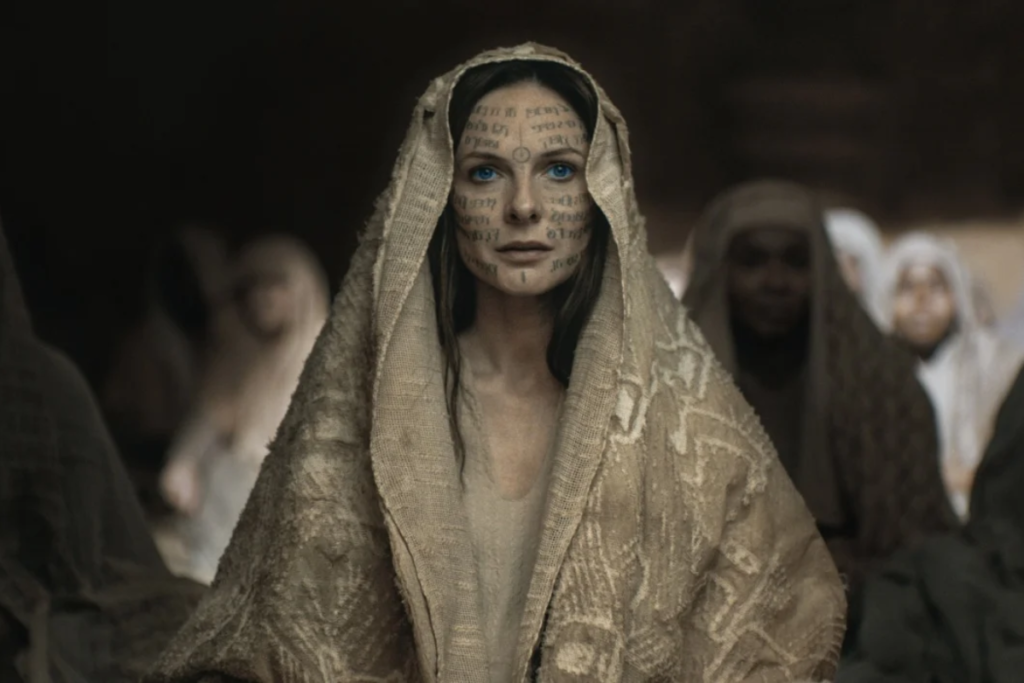
The Bene Gesserit have spent generations influencing bloodlines and political succession. Paul’s unexpected rise disrupted their long-term plans, leaving the sisterhood with reasons to fear and influence his reign.
Irulan’s position inside the imperial household could make her especially valuable to competing factions.
Charlotte Rampling also returns as Reverend Mother Gaius Helen Mohiam, one of the most influential representatives of the Bene Gesserit.
Together, these characters allow the film to explore how political control can operate through family relationships, marriage, inheritance, and carefully arranged alliances.
The conflict surrounding Paul may therefore be as much about who succeeds him as who currently occupies the throne.
7. The Future of Paul’s Children Will Become Important
The confirmed cast includes Nakoa-Wolf Momoa as Leto II and Ida Brooke as Ghanima, characters associated with the next generation of the Atreides family.
Their presence indicates that succession and family legacy will feature in the film.
For Paul, producing heirs is not merely a private matter. His children would inherit a position shaped by religious authority, imperial conflict, and generations of Bene Gesserit intervention.
That makes their existence politically consequential.
The books explore the extraordinary abilities of Paul’s descendants and the far-reaching consequences of the Atreides bloodline.
However, the film’s approach to these characters remains an area where viewers should avoid assuming that every development from the novels will occur exactly as written.
Their confirmed casting establishes their involvement, not the full sequence of events surrounding them.
8. Dune 3 Will Explore the Consequences of Religious Warfare
The political and religious consequences of Paul’s rise are central to Dune Messiah.
In the novels, his followers wage a devastating campaign across the known universe. Paul becomes the symbolic center of a movement whose violence extends far beyond the original struggle for Fremen independence.
This creates one of the franchise’s most disturbing contradictions.
The Fremen initially fought to free themselves from exploitation and outside domination. Under Paul’s leadership, their military power becomes an instrument of imperial expansion.
The distinction between liberation and conquest begins to collapse.
Paul understands the destructive potential of the forces operating in his name, yet his extraordinary abilities do not necessarily allow him to control them.
This is where Herbert’s criticism of messianic leadership becomes especially relevant.
A leader may possess intelligence, charisma, and even genuine concern for his people while still creating a political system capable of extraordinary harm.
The film’s official description confirms that Paul must confront the consequences of his reign. How explicitly it depicts the human cost of imperial warfare remains to be seen.
Villeneuve has an opportunity to make the political implications of the earlier films much harder to ignore.
9. Dune 3 Trailer: What Has Been Revealed?
Warner Bros. began promoting Dune: Part Three with a teaser in March 2026, followed by a longer trailer in July.
The promotional footage establishes several important developments.
Paul has aged considerably since the events of Dune: Part Two. His imperial position is secure enough to make him a dominant political figure, but the atmosphere surrounding his reign suggests instability rather than triumph.
Chani remains central to the story, while the appearance of new and returning characters signals the emergence of threats that go beyond conventional military conflict.
The footage also highlights the franchise’s continuing emphasis on immense architectural spaces, desert imagery, and personal confrontations.
Most importantly, the trailers suggest that the final installment will be more concerned with the psychological cost of Paul’s power than the excitement of acquiring it.
The promotional material deliberately leaves major narrative questions unresolved, particularly those concerning Scytale, Duncan Idaho’s return, and the future of Paul’s family.
The official trailers and promotional updates are available through the Dune movie website.

Dune 3 Cast: Who Is Returning and Who Is New?
The confirmed ensemble brings together many of the central performers from the earlier films while introducing characters essential to the Dune Messiah storyline.
| Actor | Character |
|---|---|
| Timothée Chalamet | Paul Atreides |
| Zendaya | Chani |
| Florence Pugh | Princess Irulan |
| Anya Taylor-Joy | Alia Atreides |
| Robert Pattinson | Scytale |
| Jason Momoa | Duncan Idaho |
| Rebecca Ferguson | Lady Jessica |
| Javier Bardem | Stilgar |
| Charlotte Rampling | Reverend Mother Mohiam |
| Josh Brolin | Gurney Halleck |
| Isaach de Bankolé | Farok |
| Nakoa-Wolf Momoa | Leto II |
| Ida Brooke | Ghanima |
The involvement of so many returning characters reinforces the importance of the political relationships established in the earlier installments.
Meanwhile, Pattinson’s Scytale and the introduction of Paul’s children suggest that the final chapter will expand the franchise’s exploration of identity, inheritance, and power.
The principal cast and crew are listed in the film’s official publicity materials and Fandango’s movie information page.
Is Dune 3 the Last Dune Movie?
Dune: Part Three is intended to conclude Denis Villeneuve’s trilogy, but it does not exhaust Frank Herbert’s fictional universe.
Herbert wrote six original Dune novels, beginning with Dune in 1965 and ending with Chapterhouse: Dune in 1985.
The second novel, Dune Messiah, provides the principal foundation for the upcoming film.
The third novel, Children of Dune, continues the story through the next generation of the Atreides family. Later installments expand the narrative across increasingly enormous periods of time, introducing profound changes to the political, ecological, and religious systems of the universe.
Consequently, the conclusion of Villeneuve’s trilogy does not mean that the franchise has run out of material.
Warner Bros. and Legendary have also explored the fictional universe through the television series Dune: Prophecy, which focuses on an earlier period in its history.
However, a fourth film continuing Villeneuve’s trilogy has not been officially confirmed.
Future theatrical adaptations would depend on new creative decisions, commercial considerations, and the willingness of filmmakers to tackle Herbert’s increasingly complex material.
Final Thoughts: Will Dune 3 Be Better Than Dune: Part Two?
Dune: Part Two set an exceptionally high standard for the franchise.
Its combination of large-scale battles, political intrigue, powerful performances, and technical achievement helped establish Villeneuve’s adaptation as one of contemporary science fiction’s most ambitious film projects.
The third installment faces a different challenge.
It must provide a satisfying conclusion without turning Paul’s increasingly troubling political journey into an uncomplicated heroic victory.
That requires more than impressive visuals or another climactic confrontation.
The film needs to make Paul’s internal conflict convincing, preserve Chani’s independent perspective, develop Scytale into a credible threat, and explain the consequences of the imperial system established in the previous installment.
Its success will also depend on how effectively Villeneuve adapts Dune Messiah, a novel that relies heavily on philosophical debate, political conspiracy, and psychological tension.
These elements can be more difficult to translate into cinema than desert warfare.
Nevertheless, the decision to frame the story as a thriller offers a promising approach. Suspense, mistrust, and competing political agendas can provide narrative momentum without abandoning the novel’s central ideas.
The greatest opportunity for Dune 3 is to deliver a more mature and morally challenging conclusion than its predecessors.
Whether it surpasses Dune: Part Two will depend on its execution, not simply its scale.
