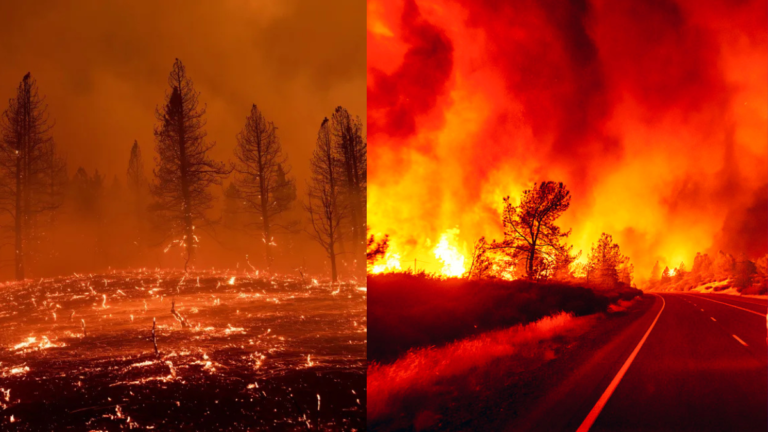

Sandy Fire is once again forcing California to confront a painful reality. Hillsides burn within hours. Families rush into evacuation traffic. Helicopters fill the sky. Smoke turns daylight orange. Then the same question returns again. Why does this keep happening in California?
The latest wildfire near Simi Valley is not only another emergency headline. It is part of a much bigger story involving climate pressure, dangerous wind systems, housing expansion, dry vegetation, and decades of environmental imbalance. California’s wildfire crisis is no longer seasonal fear. It is becoming part of everyday life for millions of people.
Table of Contents
Sandy Fire Spread with Frightening Speed
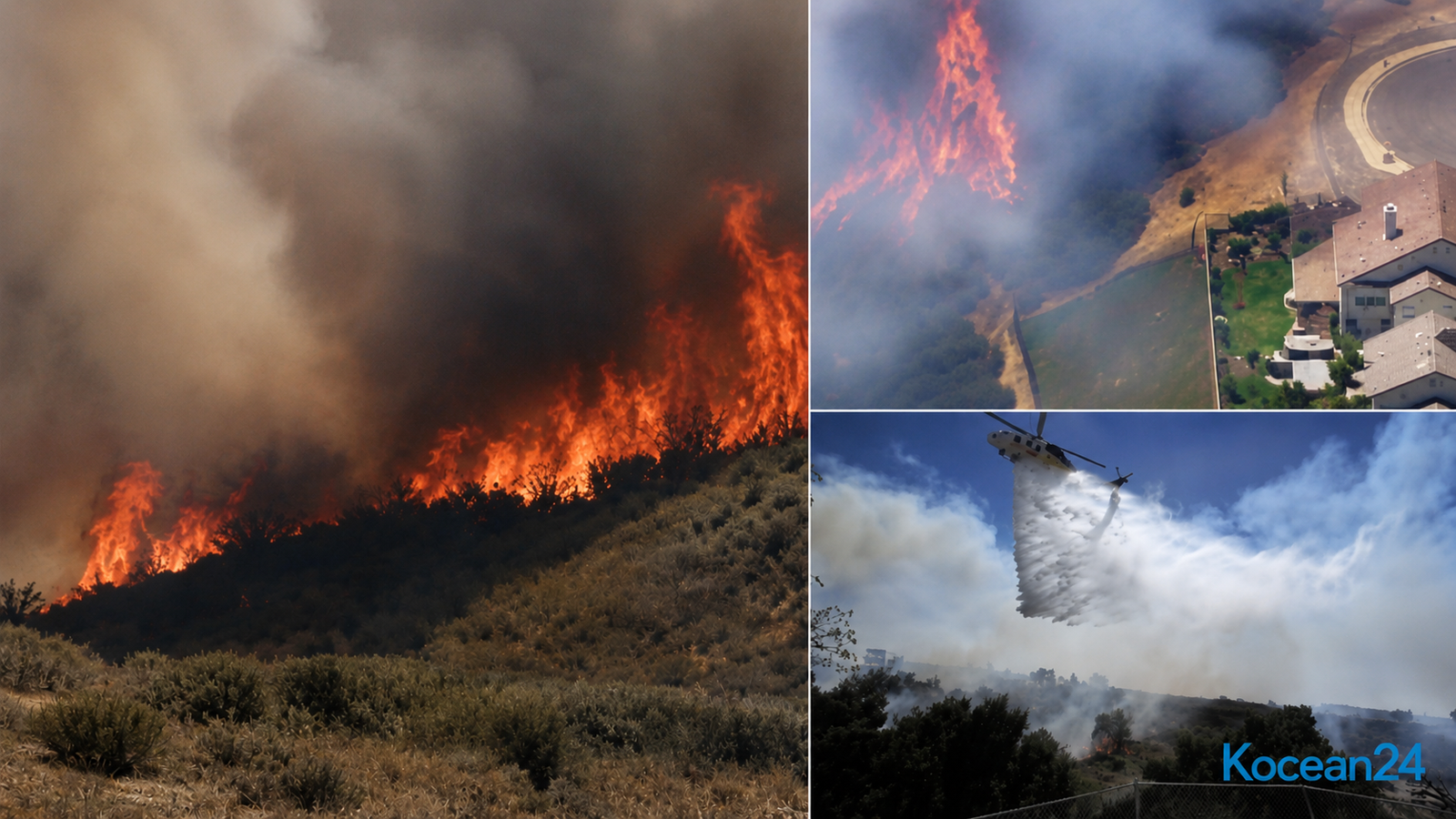
The Sandy Fire erupted near Simi Valley and expanded rapidly across dry Ventura County hills as wind pushed flames toward homes, roads, and evacuation zones within hours. Fire crews deployed helicopters, fixed wing aircraft, bulldozers, and ground teams while authorities issued mandatory evacuation orders across threatened neighborhoods. (San Francisco Chronicle, Aidin Vaziri, May 18, 2026, Sandy Fire forces mass evacuations in Southern California) (https://www.sfchronicle.com/california-wildfires/article/sandy-fire-simi-valley-22265205.php)
What made Sandy Fire especially dangerous was not only the flame height. It was the speed of spread. Strong winds carried embers ahead of the main fire line while extremely dry brush allowed ignition to move rapidly through steep terrain. In wildfire conditions like this, containment becomes difficult because flames can jump roads, move uphill faster, and ignite multiple spots at once.
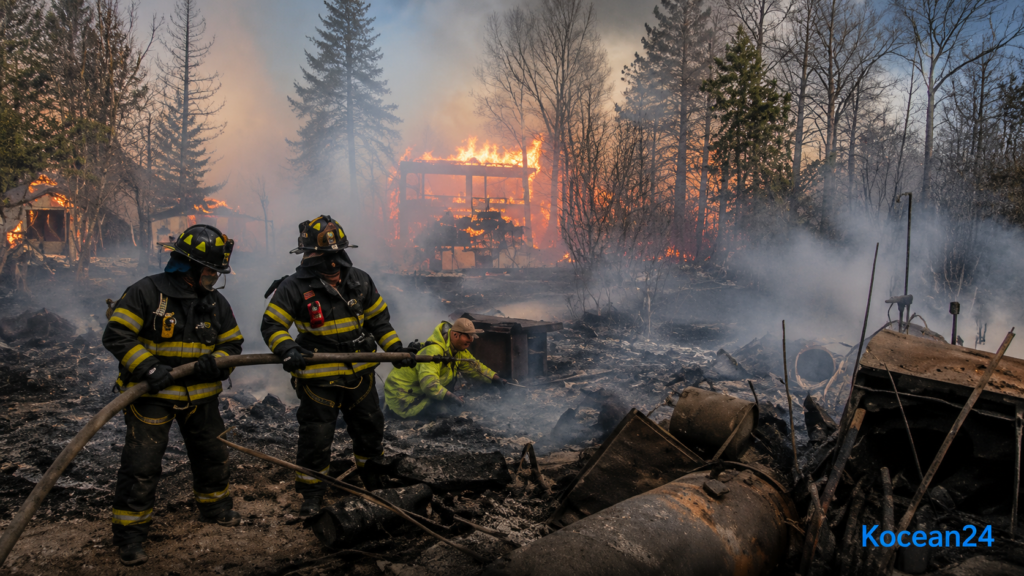
Southern California now faces these fast moving wildfire conditions more frequently because prolonged heat, low humidity, dense dry vegetation, and expanding development near wildland areas create a highly combustible environment. When wind enters that equation, even a small ignition source can evolve into a regional emergency within a single afternoon.
California was Built Inside Fire Country
One major reason California struggles with endless wildfires is geography itself. Southern California contains large areas of chaparral vegetation, dry grasslands, steep canyons, and mountain corridors that naturally support fire spread.
Wildfire is not new to California. Indigenous communities lived with fire cycles for thousands of years. But modern development changed the scale of danger.
Today, millions of homes sit directly beside burnable wildland. Experts call this the wildland urban interface. That means cities and suburbs now overlap with fire prone landscapes.
Los Angeles Times explained that expanding suburbs in wind and fire corridors have increased wildfire danger across Southern California. The report quoted retired NASA climatologist Bill Patzert, who warned that population growth pushed more communities directly into hazardous terrain. (Los Angeles Times, Sammy Roth and Rong Gong Lin II, October 18, 2019, Winds drive California’s wildfire season. People make it dangerous.) (https://www.latimes.com/california/story/2019-10-18/california-wildfire-season-santa-ana-winds-explainer)
That sentence explains California’s modern wildfire problem perfectly. Fire existed before. But now far more people live directly in its path.
The Power of Santa Ana Winds
Sandy Fire also revealed the terrifying role of Santa Ana winds.
These hot, dry winds move from inland desert regions toward the California coast. As the winds descend through mountain passes and canyons, they become faster, hotter, and drier. That combination can transform a small brush fire into a massive emergency within hours.
Researchers studying California fire weather found that high temperature, low humidity, and strong wind conditions are expected to become more common across parts of the state during future decades. (ProPublica, Abrahm Lustgarten and Moiz Syed, October 24, 2019, New Maps Show How Climate Change is Making California’s “Fire Weather” Worse) (https://projects.propublica.org/california-fire-weather)
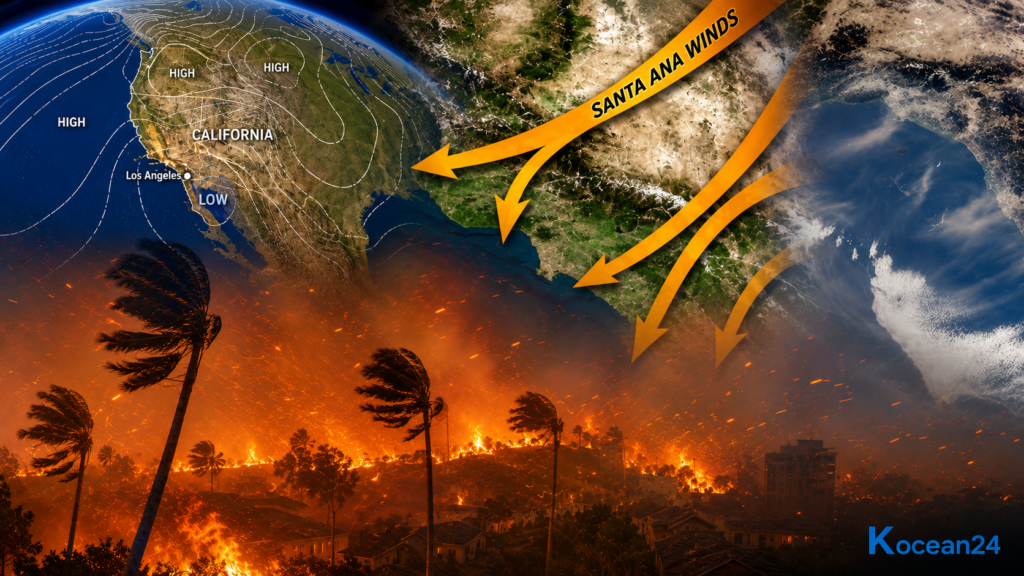
Santa Ana winds are especially dangerous because they carry embers long distances. Flames do not need to physically touch homes anymore. Burning embers can travel through the air, land on roofs, enter vents, and ignite structures far ahead of the fire line.
That is why modern wildfires move so unpredictably.
Climate Change is Drying the Background
Climate change does not directly start every wildfire. But it makes conditions more favorable for destructive fires.
California now faces longer heat waves, reduced winter moisture, weaker snow reserves, and increasingly severe drought conditions. Shrubs and grasslands lose moisture earlier in the year, forests remain under prolonged environmental stress, and dry vegetation turns large areas into highly combustible fuel zones.
Scientists studying the Los Angeles wildfire conditions in recent years said extremely dry vegetation and unusual wind conditions created a “perfect recipe” for rapid wildfire development. They also warned that prolonged dryness left Southern California vulnerable long after traditional fire season normally declines. (UCLA Sustainable LA Grand Challenge, Daniel Swain and Alex Hall, January 13, 2025, Study: Climate Change A Factor In Unprecedented LA Fires) (https://sustainablela.ucla.edu/2025lawildfires)
This is why Sandy Fire matters beyond Ventura County. It reflects broader environmental pressure building across the American West.
California’s Fire Seasons are Becoming Longer
California once had a more predictable wildfire calendar. Today, dangerous fires happen almost year round.
Rainfall patterns changed. Vegetation growth increased during wetter years. Then extreme heat dries that vegetation into fuel. Wind events arrive later into winter. The result is a longer and more unstable fire cycle.
Research published through the California Office of Environmental Health Hazard Assessment found that Santa Ana wind driven fires spread 3 times faster and occur closer to urban areas than many traditional non Santa Ana fires. (California Office of Environmental Health Hazard Assessment, 2022, Indicators of Climate Change in California Wildfires) (https://oehha.ca.gov/sites/default/files/media/downloads/climate-change/document/04wildfires.pdf)
This point matters because Sandy Fire threatened populated neighborhoods almost immediately after ignition. Fast moving urban edge fires are becoming one of California’s biggest emergency challenges.
The Insurance and Housing Crisis Behind Wildfires
Wildfires now affect far more than forests.
Insurance companies have reduced coverage in many California fire zones because repeated disasters create massive financial losses. Some homeowners now struggle to secure affordable insurance at all.
Housing demand also keeps pushing development deeper into risky areas because California faces long term housing shortages near major cities.
This creates a dangerous cycle:
- Residential expansion pushes communities deeper into fire prone terrain
- Mandatory evacuations affect larger populations during fast moving blazes
- Roads, utilities, communication systems, and housing networks suffer repeated damage
- Emergency operations demand rising financial and logistical support from state agencies
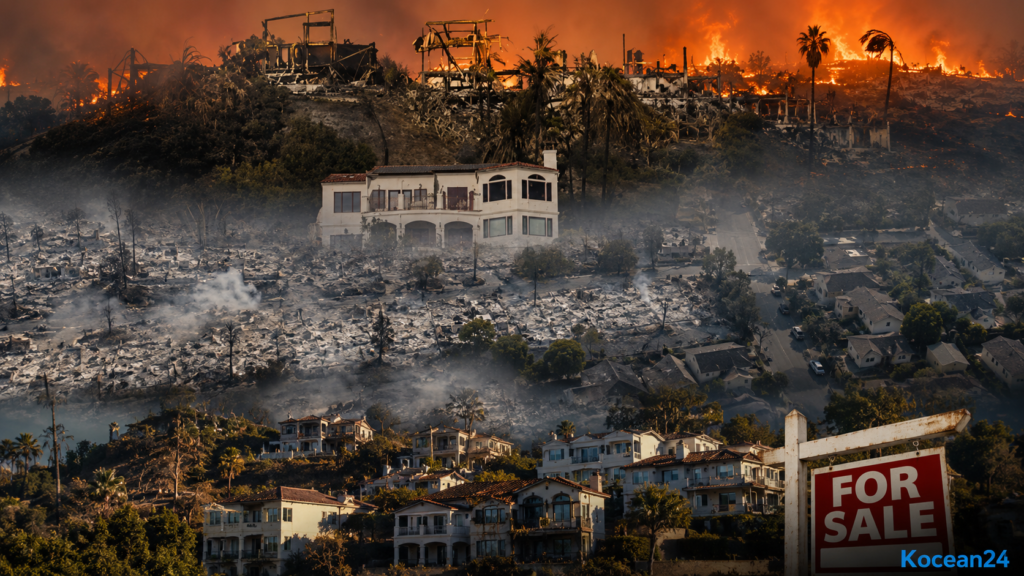
Wildfire has now become an economic, infrastructure, and public safety crisis alongside its environmental impact.
Can California Actually Reduce Wildfire Damage?
California cannot fully stop wildfires because fire has always existed within the state’s natural environment. Dry landscapes, seasonal winds, steep terrain, and dense vegetation make many regions naturally vulnerable to burning. But modern wildfire destruction is not only driven by nature anymore. Expanding suburban growth near wildland areas, prolonged drought conditions, aging infrastructure, and rising temperatures have increased both the scale and financial cost of these disasters.
Experts now believe the goal should not be eliminating fire entirely. The real objective is reducing intensity, slowing spread, protecting communities, and improving survival during major wildfire events.
Several practical strategies are now considered essential for reducing future destruction:
a. Controlled Burns
State agencies and fire experts increasingly support prescribed burns to remove excess dry vegetation before extreme fire conditions develop. These carefully managed fires reduce fuel accumulation across forests, hillsides, and grasslands.
b. Defensible Space around Homes
Properties surrounded by cleared vegetation have significantly better survival chances during fast moving wildfires. Creating buffer zones around buildings can slow flame spread and reduce ember ignition near structures.
c. Fire Resistant Construction
Modern building improvements such as ember resistant vents, fire resistant roofing materials, tempered glass windows, and heat resistant exterior surfaces can greatly improve structural survival during wildfire exposure.
d. Early Warning and Evacuation Systems
Fast emergency alerts, evacuation route planning, community drills, and real time communication systems help reduce panic and save lives during rapidly expanding fire events.
e. Smarter Land and Urban Planning
Experts increasingly argue that future housing development must consider wildfire exposure more seriously. Building deeper into high risk canyons and brush corridors increases long term danger for both residents and emergency responders.
f. Infrastructure Modernization
Power lines, utility equipment, and aging electrical systems have contributed to several California wildfire disasters in recent years. Upgrading infrastructure and improving grid safety remain critical parts of long term wildfire prevention.
California faces a difficult challenge because prevention work often costs billions of dollars before visible disaster occurs. Still, long term mitigation remains far less expensive than rebuilding entire neighborhoods after catastrophic fires destroy homes, roads, businesses, and public infrastructure.
Sandy Fire Reflects a Bigger American Warning
Sandy Fire is no longer just a regional California emergency. It reflects a wider national pattern where climate pressure, rapid urban expansion, environmental stress, and aging infrastructure increasingly collide across the United States. Wildfires now spread faster through populated areas while heat waves intensify, drought conditions last longer, and disaster recovery costs continue rising nationwide. California sits at the center of this crisis because millions of residents live near dry vegetation corridors shaped by steep terrain, powerful seasonal winds, and prolonged moisture loss.
But the deeper warning extends beyond one state. Sandy Fire exposes how modern American communities are becoming more vulnerable when climate instability intersects with dense development and overstretched emergency systems.
The broader national warning behind Sandy Fire is becoming increasingly difficult to ignore:
- Extreme heat now dries vegetation earlier and for longer periods across large parts of the American West
- Expanding suburban growth continues pushing housing deeper into wildfire exposed landscapes
- Insurance markets face growing financial pressure after repeated climate related disasters
- Emergency response systems increasingly operate under year round wildfire conditions instead of seasonal fire periods
- Drought cycles, water stress, and rising temperatures create highly combustible environmental conditions across multiple states
- Severe weather outbreaks, tornado threats, and climate linked emergencies are also placing growing pressure on American infrastructure and public safety systems, as seen in recent multi state storm threats covered by Kocean24 (Kocean24, May 17, 2026, US Storm Outbreak Tornado Threat 6 States) (https://kocean24.com/us-storm-outbreak-tornado-threat-6-states/)
Sandy Fire ultimately represents more than burning hillsides near Simi Valley. It reveals how environmental instability is reshaping public safety, economic security, housing policy, disaster preparedness, and long term climate resilience across modern America.
Conclusion
Sandy Fire shows how quickly modern California can move from ordinary morning life into mass evacuation and emergency response. Wind, heat, dry vegetation, and expanding development now combine into a dangerous equation that repeats across the state every year.
California still has options. Better planning, stronger building standards, fuel reduction, smarter land management, and climate adaptation can reduce future destruction. But ignoring the pattern will only make the next wildfire more dangerous.
The flames moving across Simi Valley are not just burning hillsides. They are exposing the fragile balance between nature, climate, and human expansion in one of America’s most pressured states.