Physical Address
304 North Cardinal St.
Dorchester Center, MA 02124
Physical Address
304 North Cardinal St.
Dorchester Center, MA 02124

Coventry Airport is closing after 90 years, and this is more than a local aviation story. It is a clear example of how cities are changing old transport land into new industrial power. The airport began as Baginton Aerodrome in 1936, carried wartime memory, served passengers for decades and later moved into training and charter use. Now the runway is entering a new chapter as Greenpower Park prepares to turn the site into a clean energy and battery manufacturing hub. For Coventry, the story carries loss, ambition and a hard question about what progress should look like.
Coventry Airport is set to close permanently on June 11, 2026, after flight operations had already ended in May. The Sun reported that the airport started life as Baginton Aerodrome in 1936 and later served as RAF Baginton during the Second World War. It also reported that commercial passenger flights began in the 1950s and that scheduled passenger flights ended in 2008. (The Sun, June 8, 2026, UK airport to close for good this week after 90 years – with all flights already cancelled) (https://www.thesun.co.uk/travel/39337592/uk-airport-shut-flights-scrapped-midlands-city/)
So the closure is not only about falling airport use. It is about replacing a smaller aviation function with a larger manufacturing plan. Coventry Airport is ending as an airfield because the site now carries more value as part of Britain’s electric mobility supply chain.
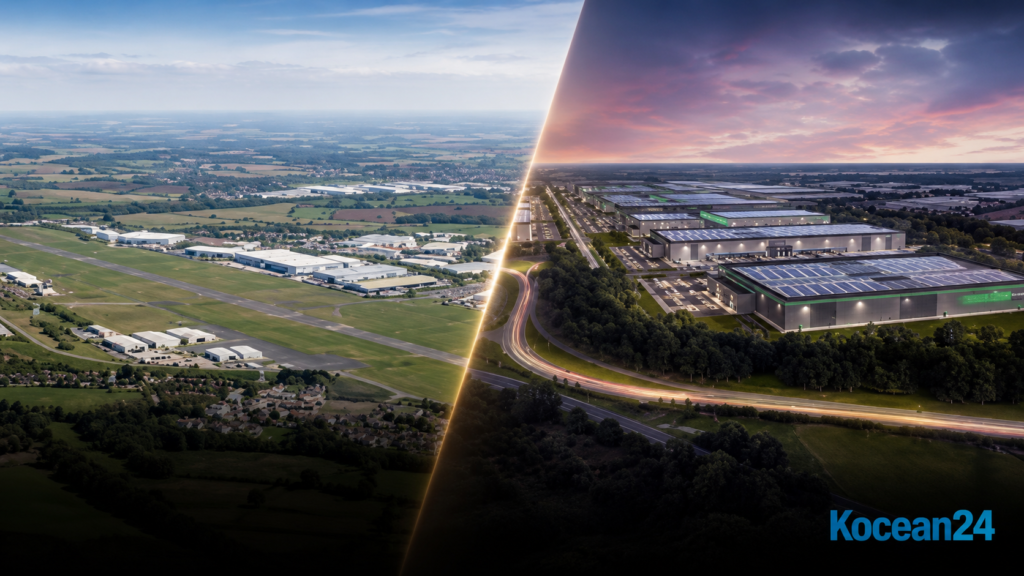
The deeper reason is land value and industrial strategy. Coventry Airport sits on a large site with transport access and redevelopment potential. That made it a strong candidate for Greenpower Park, a planned clean energy and battery manufacturing hub tied to electric vehicles.
The airport’s long life gives this closure real weight. It opened before the Second World War, then became part of Britain’s aviation landscape during a defining period. After the war, it found a civilian role through passenger routes, freight, air ambulance services and general aviation.
That history matters because airports are not only transport sites. They become part of how a city remembers itself. Coventry Airport carries the identity of a working Midlands city that built, moved, repaired and connected.
Its decline also reflects a wider pressure on smaller airports. Without regular scheduled passenger flights, an airport can struggle to justify its land use. Training and charter activity may keep a site alive, but they rarely carry the same public visibility as scheduled routes.
The future plan is Greenpower Park. It is designed as a major battery technology, advanced manufacturing and clean energy project. Coventry City Council describes Greenpower Park as a centre of excellence for battery technology and manufacturing, with a focus on electric vehicles, e mobility and energy storage. (Coventry City Council, 2026, Key investment opportunities) (https://www.coventry.gov.uk/investment-opportunities/developments/11)
This gives the closure a different shape. Coventry Airport is not simply disappearing into empty land. It is being converted into a site aimed at the future of transport manufacturing.
The old airfield helped people move through the sky. The new site aims to support electric mobility on the ground. The function changes, but the transport link remains. Coventry is not leaving mobility behind. It is changing the machine behind mobility.
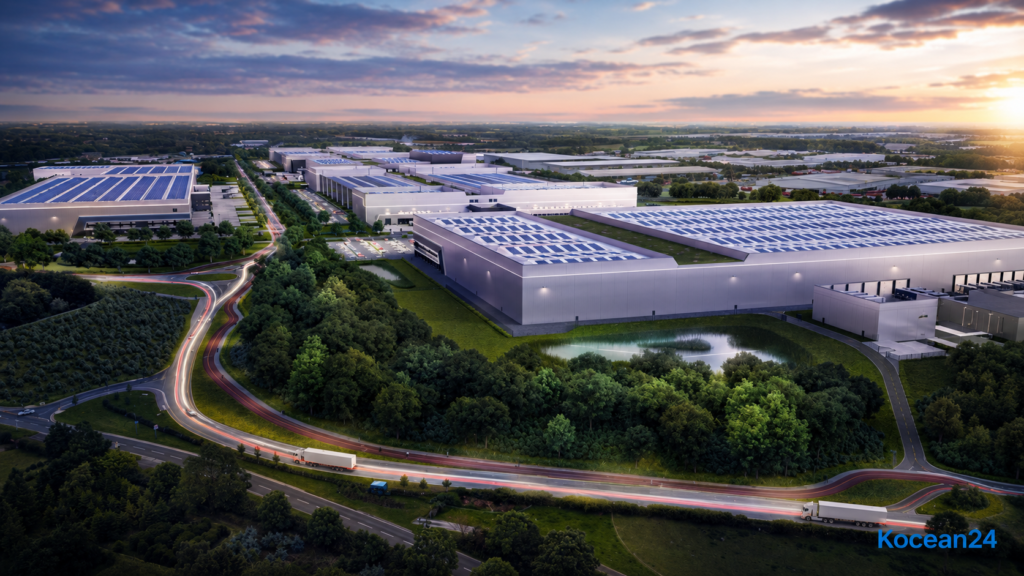
The planning story shows how large the change will be. GreenPower Park secured planning consent for a £2.5 billion manufacturing scheme at Coventry Airport, with 4.8 million square feet of manufacturing space planned across seven units. (BE News, Simon Creasey, April 15, 2026, Plans approved for £2.5bn Coventry manufacturing scheme) (https://benews.co.uk/plans-approved-for-2-5bn-coventry-manufacturing-scheme/)
It shows that Greenpower Park is not just a branding idea. It is a large industrial project with serious land, construction and manufacturing ambition.
The industrial transition here is not instant. It is physical, expensive and disruptive. Coventry Airport will move from aviation infrastructure into clean manufacturing infrastructure through heavy groundwork.
Greenpower Park is also being framed as a jobs story. BE News reported that joint venture partners Coventry City Council and Rigby Group secured planning consent for the £2.5 billion GreenPower Park site at Coventry Airport. It also reported that the park will provide 4.8 million square feet of manufacturing space across seven units. (BE News, Simon Creasey, April 15, 2026, Plans approved for £2.5bn Coventry manufacturing scheme) (https://benews.co.uk/plans-approved-for-2-5bn-coventry-manufacturing-scheme/)
Coventry has deep manufacturing roots. Greenpower Park fits that identity more than it may first appear. The airport site can become a bridge between the city’s industrial past and its clean energy future.
Still, the job promise must be judged by delivery. Large projects often sound powerful during planning. The real test comes when companies arrive, workers are hired and local people feel the benefit.
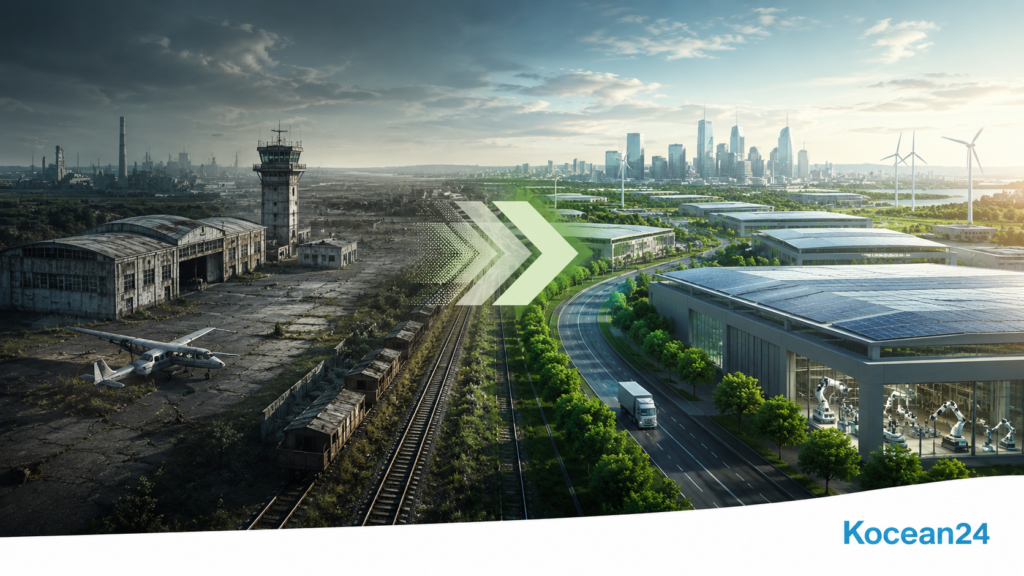
The Coventry Airport story shows a bigger pattern. Infrastructure is no longer judged only by what it used to do. It is judged by what it can become.
Old airports, factories, rail yards and industrial sites are now being reimagined for clean energy, logistics and advanced manufacturing. Some communities welcome the change. Others feel the loss first. Both reactions are valid.
Kocean24 often frames global stories through knowledge, context and public meaning. Its own mission says it aims to support the free flow of information and opinions with honesty and integrity. (Kocean24, 2026, Kocean24 Knowledge is borderless) (https://kocean24.com/)
That lens fits this issue well. The closure should not be treated as only nostalgia. It should also be examined as a public decision about land, economy, memory and future jobs.
Coventry Airport closes after 90 historic years with a rare mix of sadness and purpose. The airfield gave Coventry aviation memory, wartime connection and decades of local identity. Greenpower Park now promises a new industrial role built around clean energy and advanced manufacturing. The real challenge is to make sure the future respects the past while giving local people a stronger economic reason to believe in what comes next.