
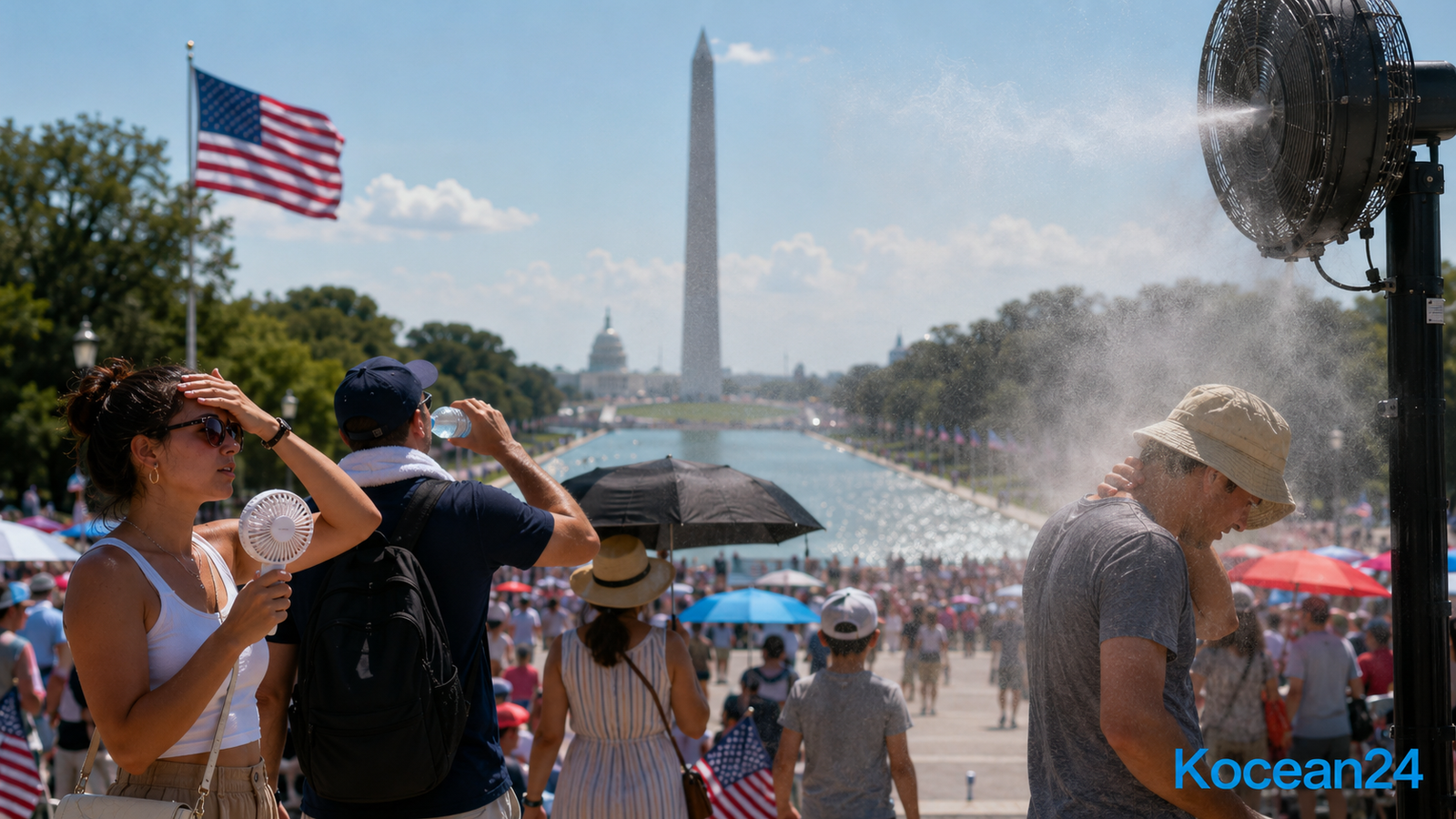
Washington DC Heat Wave turned the 4th of July celebration into a serious public safety story. Independence Day in the capital usually means crowds, flags, parades, fireworks, music and long outdoor gatherings. This year, dangerous heat changed the mood.
Table of Contents
Why Washington DC Heat Wave Becomes a Public Safety Issue
The Washington DC Heat Wave becomes dangerous because heat and humidity work together. The National Weather Service says an Extreme Heat Warning remains in effect from 10 am to 9 pm EDT on July 4, 2026, with heat index values of 110 to 115 expected in Washington DC and nearby areas. (National Weather Service, July 4, 2026, WWA Summary by Location for 38.89N 77.02W with DCZ001/DCC001/DCZ001 emphasis Hazardous Weather Outlook) (https://forecast.weather.gov/showsigwx.php?firewxzone=DCZ001&lat=38.8921&local_place1=Washington+DC&lon=-77.0199&product1=Hazardous+Weather+Outlook&warncounty=DCC001&warnzone=DCZ001)
A heat index above 110 does not feel like normal summer weather. It means the human body struggles to cool down, especially when people stand for hours in direct sun. Sweating may not work well when humidity is high. The result can be dizziness, weakness, confusion, fainting and other signs that a person needs immediate cooling.
The Washington DC Heat Wave also creates risk because the holiday itself pushes people outdoors. Many visitors are not simply walking from one building to another. They are waiting near the National Mall, moving through security lines, watching events and planning to stay until fireworks. Long exposure makes the situation more serious.
How 4th of July Plans Disrupted
The first visible impact was event disruption. Reuters reported that the Great American State Fair on the National Mall was temporarily closed on Friday afternoon as temperatures reached 101 degrees Fahrenheit, and the National Park Service canceled the Independence Day Parade because of safety concerns linked to projected heat index values as high as 115 degrees Fahrenheit. (Reuters, Ahmed Aboulenein and Nathan Layne, July 3, 2026, Heat wave disrupts Fourth of July events across US, strains power grids) (https://www.reuters.com/world/us/heat-wave-disrupts-fourth-july-events-across-eastern-us-2026-07-03/)
The disruption shows how extreme heat can quickly change a celebration. Marching groups, fair visitors, vendors, security staff and families all face higher risk under direct sun. As the Washington DC Heat Wave continues, event planning shifts from celebration first to safety first.
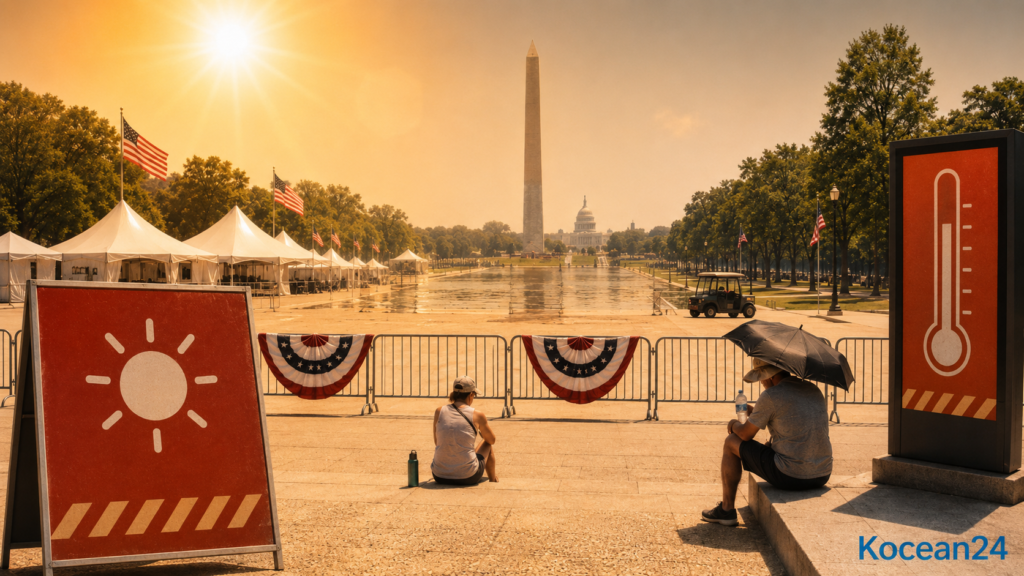
The cancellation of a parade is not a small symbolic issue. Parades bring children, performers, bands, volunteers, police, emergency crews and spectators into the same outdoor corridor. If too many people become overheated at once, emergency response becomes harder. Canceling or delaying events may disappoint visitors, but it can also prevent a dangerous surge in heat related incidents.
Why Heat Changes Crowd Behavior
The Washington DC Heat Wave forced people to think differently about time, movement and comfort. A regular Fourth of July crowd may focus on stage access, food, photos and fireworks. During extreme heat, the priority changes to finding shade, carrying water, limiting walking distance and locating bathrooms, cooling stations or indoor places.
NBC4 Washington reported that organizers canceled America’s Independence Day Parade for the safety of participants, spectators and staff, while Freedom 250 delayed the opening of the Great American State Fair and the FIFA Fan Zone from 10 am to noon Saturday. (NBC4 Washington, NBC Washington Staff, July 4, 2026, Scorching heat puts kibosh on America’s Independence Day Parade) (https://www.nbcwashington.com/weather/weather-stories/weather-dc-independence-day-parade/4125760/)
Why Humidity Makes the Situation Worse
The heat index shows how hot it really feels when relative humidity is added to the actual air temperature. The National Weather Service explains that high atmospheric moisture reduces the rate of evaporation from the body, which makes it harder for the body to cool itself. (National Weather Service, What Is The Heat Index?) (https://www.weather.gov/ama/heatindex)
Sweat is one of the body’s main cooling tools. In dry heat, sweat evaporates more easily and helps release heat from the skin. In humid heat, sweat stays on the skin longer, cooling slows down and the body remains under stress. This is why a 101 degree day can feel closer to 115 degrees during the Washington DC Heat Wave.
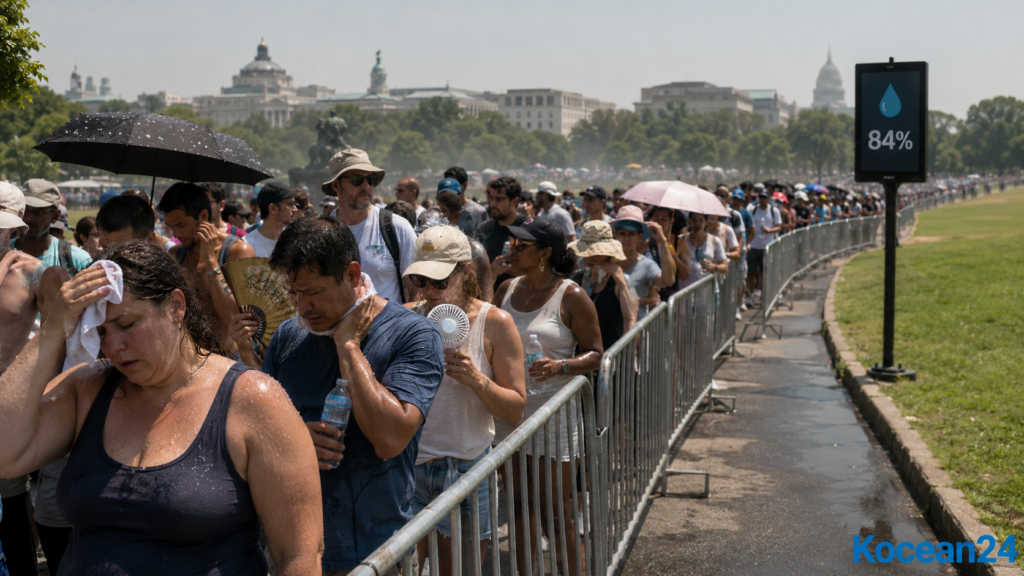
For visitors standing near concrete, asphalt, metal fencing, security barriers and open lawns, the ground environment can feel even hotter. Direct sun adds another layer. Crowds add body heat. Long lines reduce movement. Limited shade increases strain. The Washington DC Heat Wave turns normal holiday waiting into a real health challenge.
Who Faces the Highest Risk
Not every person faces heat the same way. Older adults are at higher risk because the body may regulate temperature less efficiently with age. Children are vulnerable because they heat up faster and may not explain symptoms clearly. People with heart disease, breathing problems or chronic conditions need extra caution. Outdoor workers, security staff, vendors, performers and emergency personnel face longer exposure because they cannot always step away when they want.
DC Mayor Muriel Bowser activated an Extreme Heat Alert from July 1 through July 5 and urged residents and visitors to drink water, dress for the heat, stay cool and look out for vulnerable neighbors. (Executive Office of the Mayor, July 1, 2026, Mayor Bowser Activates Extreme Heat Alert, Urges Residents and Visitors to Plan Ahead for Several Days of Dangerously Hot Temperatures) (https://mayor.dc.gov/release/mayor-bowser-activates-extreme-heat-alert-urges-residents-and-visitors-plan-ahead-several)
That guidance may look basic, but it can prevent serious heat illness. People should:
• Drink water regularly before thirst begins
• Avoid alcohol during long outdoor exposure
• Wear light, loose clothing
• Use sunscreen and cover the head when possible
• Take shade or indoor cooling breaks often
• Check on neighbors, relatives and friends who may need help but may not ask quickly
Why This Story Matters Beyond Washington DC
The Washington DC Heat Wave is not only a local weather story. It shows how extreme weather can reshape public gatherings across the United States. Reuters reported that more than half the US population was under heat alerts on Friday, while power grids faced pressure from air conditioning demand and other heat related stress. That detail connects the DC celebration to a wider national problem.
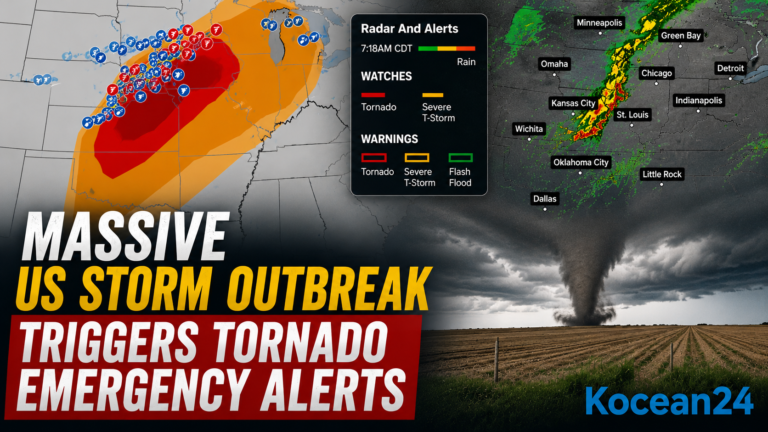
Public events are now judged by more than attendance and entertainment. Safety planning must include heat, storms, air quality, power demand, transportation pressure and medical readiness. Kocean24 has covered similar public safety thinking in weather events, including the need to stay weather aware and act before danger becomes visible. (Kocean24, Alex Hamilton, May 19, 2026, Massive US Storm Outbreak Spreads Dangerous Tornado Threat Across 6 States) (https://kocean24.com/us-storm-outbreak-tornado-threat-6-states/)
That same lesson applies here. Weather alerts are not background noise. They are decision tools. When the forecast says conditions can become dangerous, people should change plans early, not after symptoms begin.
Conclusion
The Washington DC Heat Wave disrupted the 4th of July celebration because extreme heat turned a national holiday into a public health challenge. Parades, fairs, viewing zones and crowd plans had to adjust because the risk was real.
The bigger message is simple. Extreme heat is not just uncomfortable. It can affect transportation, event timing, medical response, power demand and the safety of thousands of people at once. For the public, the best response is preparation. Drink water early. Find shade. Listen to official alerts. Protect children, older adults and pets. Do not ignore warning signs.