
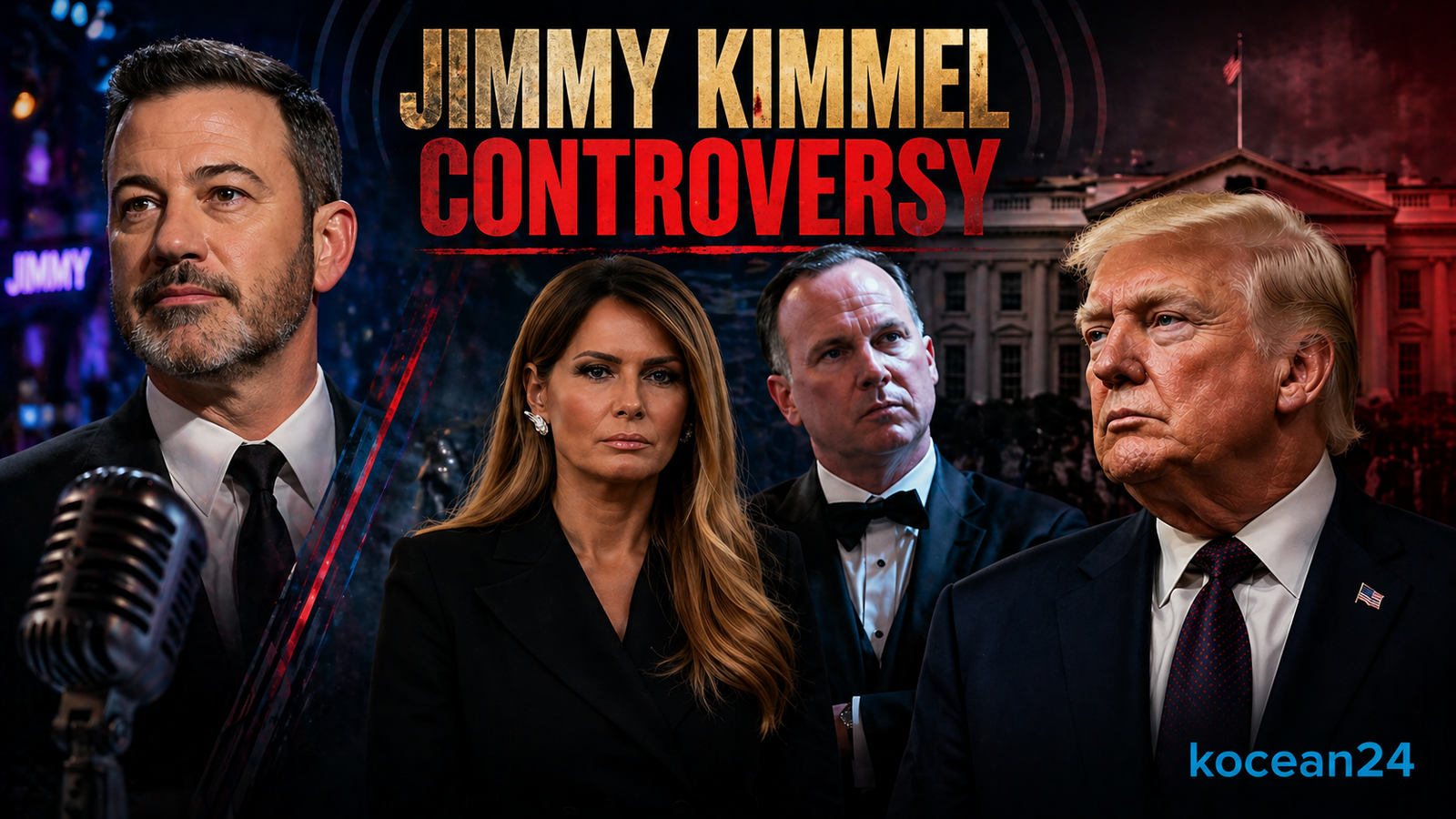
Jimmy Kimmel controversy shows how one late night joke can become a national argument about comedy, power and public responsibility. The issue began with a sharp remark about First Lady Melania Trump. It then grew into a larger fight over satire, political pressure and media ethics. Some people saw the joke as comedy. Others saw it as cruel and irresponsible. The bigger lesson is clear. In today’s media culture, one sentence can travel far beyond its original stage.
Table of Contents
Satire Still Has a Line
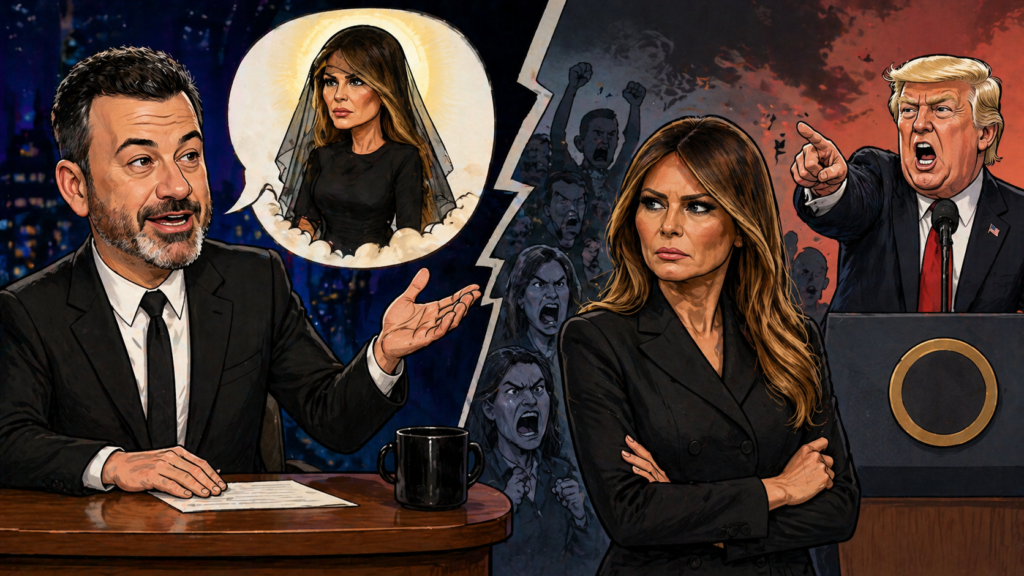
Jimmy Kimmel Controversy started from a remark of him about Melania Trump because critics felt it turned political humor into something personal. Reuters reported that Kimmel said Melania Trump “had a glow like an expectant widow.” (Reuters, David Shepardson, April 27, 2026, Trump says ABC should fire late-night host Kimmel) (https://www.reuters.com/business/media-telecom/melania-trump-says-abc-should-take-stand-late-night-host-kimmel-2026-04-27/). The phrase was short, but the reaction was huge.
That is the first media ethics lesson. Satire can attack power, but it becomes risky when the target feels like a person’s death, family or private pain. Comedy can be fearless without becoming careless.
Political humor works best when it reveals hypocrisy. It becomes weaker when people remember the insult more than the insight. This is why the Jimmy Kimmel controversy matters beyond one monologue.
Timing Can Change the Meaning
The joke did not land in a quiet news cycle. Associated Press reported that the routine came before the White House Correspondents’ Association dinner, an event later cut short after a man armed with guns and knives tried to enter the Washington ballroom. (Associated Press, David Bauder, April 28, 2026, Trumps call for ABC to fire Jimmy Kimmel — again — after morbid joke about first lady) (https://apnews.com/article/trump-melania-kimmel-correspondents-dinner-6ab20d5675a5328b207b1f6a322bf3cc). That timing changed how many people interpreted the joke.
Jimmy Kimmel Controversy shows us again that words do not live alone. They live inside a moment. A joke that sounds harsh on Thursday can sound worse after a security scare on Saturday.
This does not automatically prove intent. It does show why public communication needs judgment. In political media, timing can turn a punchline into a national controversy.
Political Pressure Creates Another Media Ethics Question
President Donald Trump did not only criticize Kimmel. He demanded action from ABC and Disney. ABC News Australia reported that Trump said Kimmel should be fired and that Melania Trump called on ABC to take a stand against the host. (ABC News Australia, April 28, 2026, Donald Trump calls for broadcaster to fire Jimmy Kimmel) (https://www.abc.net.au/news/2026-04-28/donald-trump-call-for-disney-to-fire-jimmy-kimmel/106614588).
This raises a second question. Should political leaders pressure broadcasters over jokes. That question is bigger than the Jimmy Kimmel Controversy itself.
A network has the right to set standards. A public figure has the right to criticize. But when political power pushes a media company to remove a comedian, the debate becomes more serious. It touches free expression, editorial independence and the pressure media companies face from powerful people. Similar tensions involving institutional pressure and power struggles were explored in Global Politics in 2026: 7 Powerful Challenges Ahead (Kocean24, Global Politics in 2026: 7 Powerful Challenges Ahead) (https://kocean24.com/global-politics-in-2026-7-powerful-challenges-ahead/), where broader political friction was examined through a geopolitical lens.
That wider context matters. This is not only a comedy dispute. It also reflects how politics and media increasingly collide.
Public Trust Makes Every Media Fight Hotter
The Jimmy Kimmel controversy became louder because trust in media is already weak. Gallup reported that only 28% of Americans expressed a great deal or fair amount of trust in newspapers, television and radio to report news fully, accurately and fairly. (Gallup, Megan Brenan, October 2, 2025, Trust in Media at New Low of 28% in U.S.) (https://news.gallup.com/poll/695762/trust-media-new-low.aspx)
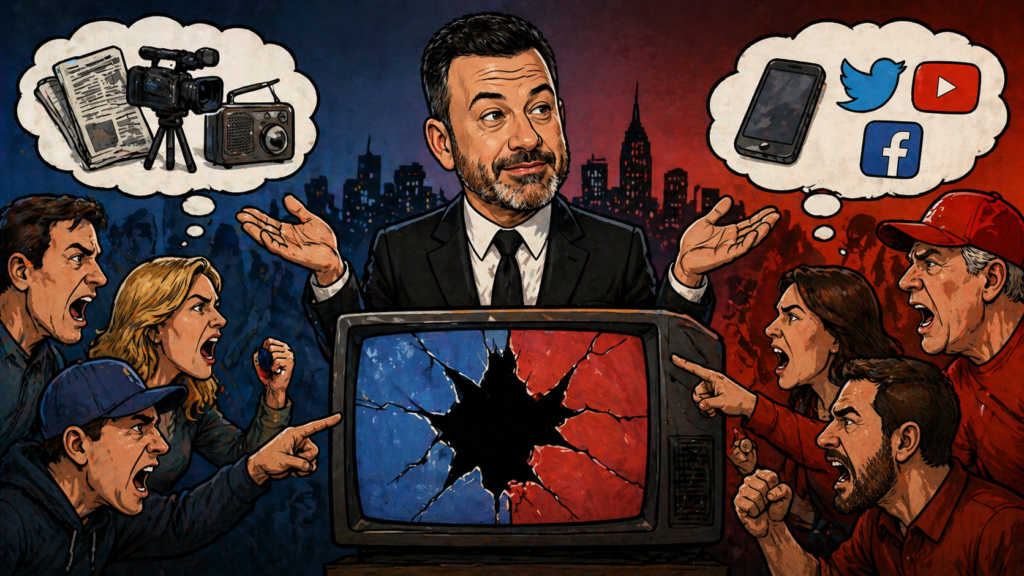
That low trust changes everything. When people already doubt media institutions, a controversial joke becomes evidence for whatever they already believe.
Kimmel supporters may see the backlash as political censorship. Critics may see it as proof that elite media has lost moral judgment. The same incident becomes two different stories because audiences bring different levels of trust into the conversation.
Free Speech and Harm are Now in Constant Conflict
The controversy also reflects a wider cultural tension. Knight Foundation reported that students still value free speech, but many also believe certain speech can cause serious harm. (Knight Foundation, July 30, 2025, College student views on free expression and campus speech 2024) (https://knightfoundation.org/articles/research/college-students-views-on-free-expression/) That tension is no longer limited to campuses. It now shapes politics, entertainment and social media.
People want freedom of expression. They also want public figures to show restraint. These two desires often collide.
That collision is exactly what the Jimmy Kimmel controversy reveals. The issue is not simply whether people should be allowed to make offensive jokes. The harder question is whether influential platforms should reward jokes that deepen public anger.
Why This Became Bigger Than Late Night Comedy
Late night television used to feel like a pressure valve. Hosts mocked politicians. Audiences laughed. The news cycle moved on.
That world has changed. Every clip can become a political weapon. Every joke can be separated from its original context. Every reaction can become content.
Brookings warned that humor and satire can cloak political messages and create strong emotional reactions among voters. (Brookings Institution, Nicol Turner Lee and Jack Malamud, October 3, 2024, AI memes: Election disinformation manifested through satire) (https://www.brookings.edu/articles/ai-memes-election-disinformation-manifested-through-satire/) The same logic applies to modern political comedy. Humor is not always light. Sometimes it becomes fuel.
This is why Kimmel’s joke became more than entertainment. It became a symbol of the fight over who controls public tone.
What Creators Can Learn from the Kimmel Backlash
Creators should not learn the wrong lesson. The answer is not to avoid strong opinions. Strong voices often build strong audiences.
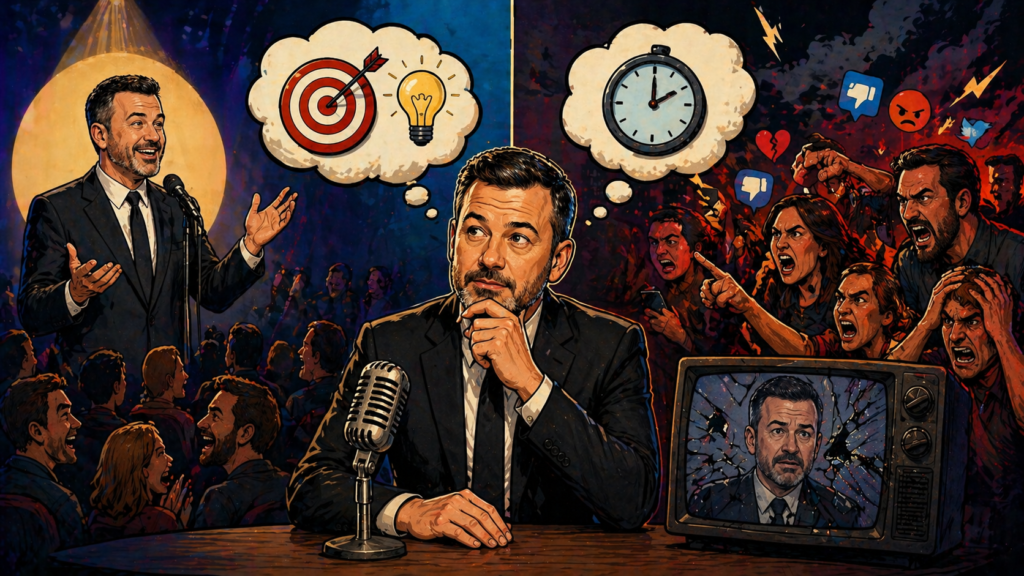
The real lesson is precision. A creator must know the difference between sharp commentary and careless provocation. That difference can decide whether the audience hears a point or only sees an insult.
The Jimmy Kimmel controversy also shows that creators cannot control every reaction. But they can control clarity, context and intent. Those three things matter more when the subject involves politics, family and violence.
A joke may last 10 seconds. The public meaning can last much longer.
What Media Companies Should Learn
Media companies also face a hard lesson. They cannot treat every controversy as only a public relations issue.
They need clear standards before a crisis happens. Those standards should protect creative freedom while recognizing public responsibility. Without clear standards, every decision looks political.
ABC and Disney now face that challenge. If they punish Kimmel, some will call it surrender to pressure. If they ignore the backlash, others will call it moral weakness. That is the trap media companies enter when standards are unclear.
Why the Debate Will Not End Here
The Jimmy Kimmel controversy reflects something deeper than a dispute over one late night joke. It shows how comedy, politics, and media authority now collide in ways that can shape national conversation. Every major satire dispute now carries consequences beyond entertainment because audiences read humor through ideology, trust, and cultural tension. What began as a monologue line has become a case study in how public speech is judged in a polarized era.
The Jimmy Kimmel controversy also reveals that media conflicts rarely end when headlines cool, because they often expose unresolved questions society has been avoiding.
The deeper questions now shaping this debate include:
• Where should political satire stop and personal insult begin
• Whether networks should defend controversial comedy or impose ethical boundaries
• How much political pressure media companies should resist
• Whether outrage now amplifies controversy more than the original content itself
• What creators can learn about timing, tone, and responsibility in volatile news cycles
These questions keep the issue alive because they reach beyond one comedian or one presidency. They touch the future of public discourse itself. That is why this debate may outlast the incident that sparked it, and why the Jimmy Kimmel controversy remains relevant as a broader lesson in media ethics.
Conclusion
The Jimmy Kimmel controversy is not only about one joke or one television host. It is about the fragile line between comedy and cruelty in a polarized media world. The lessons are clear. Satire needs judgment. Timing matters. Political pressure creates risk. Public trust shapes reaction. This controversy will pass, but the media ethics questions behind it will return again.