
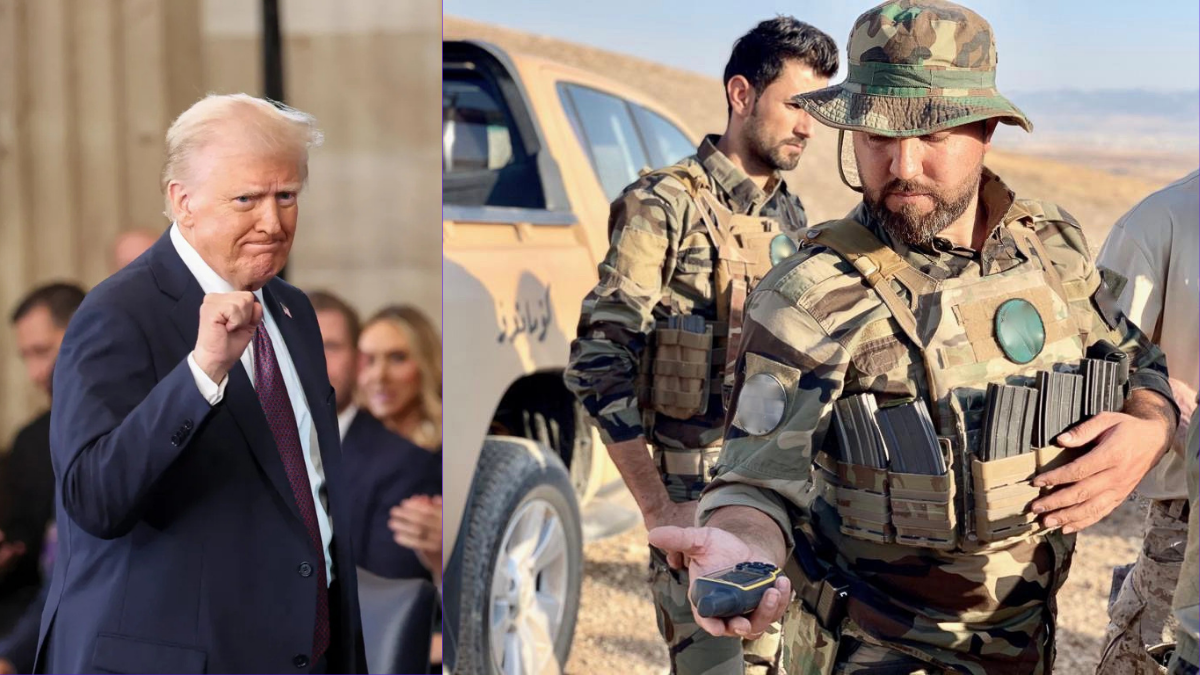
Military aid to Kurds began under a formal US security agreement in 2016 as the fight against ISIS intensified. Nearly a decade later, the fighters who stood beside America during one of the Middle East’s darkest battles could lose crucial US support. The Trump administration reportedly plans to let the current Peshmerga agreement expire as Washington reduces its military presence in Iraq.
The timing raises an uncomfortable question. What happens when a trusted battlefield ally faces growing pressure from Iran while the threat of extremism has not fully disappeared? This article explains why Trump plans to cut US military aid to Kurds, what it means for the Kurdish Peshmerga, and how the decision could reshape security across the region.
Table of Contents
What Trump is Planning to Change
The immediate issue involves a security agreement between the United States Department of Defense and the Kurdistan Regional Government Ministry of Peshmerga Affairs.
According to BBC reporting published on August 29, 2026, Pentagon officials have told Kurdish leaders in recent meetings that Washington does not currently plan to renew the agreement when it expires on September 30. The report cited 4 sources familiar with the discussions, including 2 officials who participated in talks.
The Peshmerga received about $61 million during fiscal year 2026 for weapons, military training, and stipends through the Pentagon counter ISIS program. The Pentagon has also proposed eliminating dedicated Peshmerga security assistance in its fiscal year 2027 budget request.
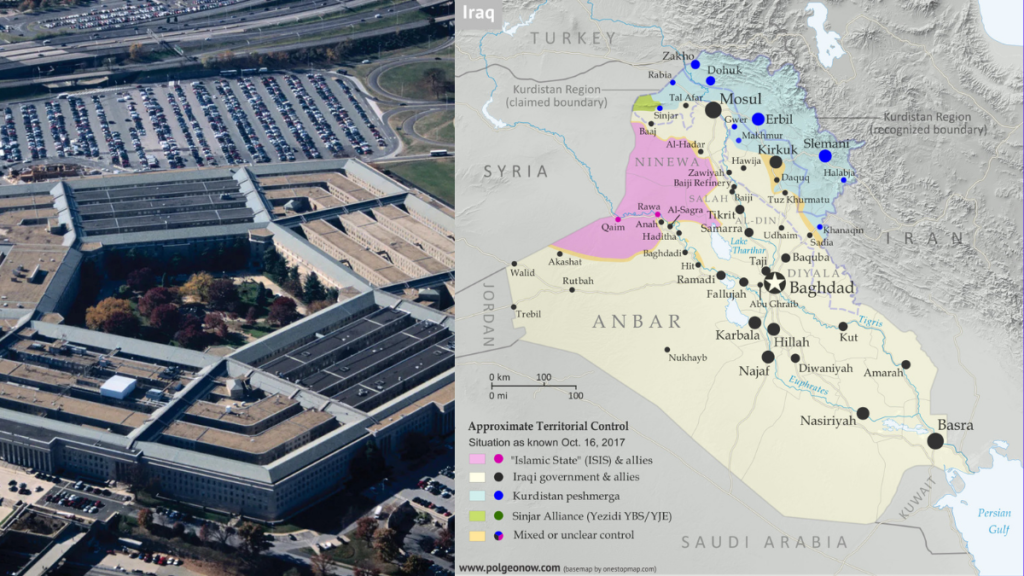
However, military aid to Kurds has not formally ended yet. A final decision concerning future security engagement between Washington and Iraqi Kurdistan remains under review. US officials are reportedly examining options for maintaining some form of security cooperation after the current arrangement expires.
The administration appears ready to end the existing funding structure, but future cooperation could continue under a different framework. (BBC News, August 29, 2026, Trump Administration Plans to Cut Off Military Aid to Key Kurdish Ally)
(https://www.bbc.com/news/articles/cn74m8e5rleo)
Why the Peshmerga Became So Important to America
Military aid to Kurds grew out of battlefield necessity. When ISIS swept across northern Iraq in 2014, captured Mosul, and pushed toward the Kurdistan Region, Iraqi government forces had already suffered major battlefield setbacks. Kurdish Peshmerga units became a critical defensive force across northern Iraq at a moment when Washington wanted to fight ISIS without deploying another large American ground army.
They Helped Stop the ISIS Advance
The crisis became urgent in August 2014 as ISIS forces moved toward Erbil, where American personnel and a US consulate were located. President Barack Obama authorized airstrikes, while Kurdish forces fought ISIS on the ground. This created the basic model Washington would use throughout much of the campaign. American and coalition aircraft provided air power, surveillance, intelligence, weapons, and training while local forces carried much of the ground combat.
The Peshmerga did more than defend Iraqi Kurdistan. They held a front stretching hundreds of kilometers across northern Iraq and remained in regular contact with ISIS forces. Their positions also helped prevent ISIS from expanding farther into strategically important Kurdish controlled territory.
Their Role Became Crucial in the Battle for Mosul
The partnership became even more important during the campaign to retake Mosul, the largest Iraqi city ISIS had captured.
US Army Lieutenant General Stephen Townsend, then commander of the coalition fighting ISIS, later said the Peshmerga had been instrumental in stopping the ISIS offensive during 2014 and 2015. He explained how Kurdish forces helped prepare the Mosul operation by allowing Iraqi troops to stage in Kurdish controlled areas.
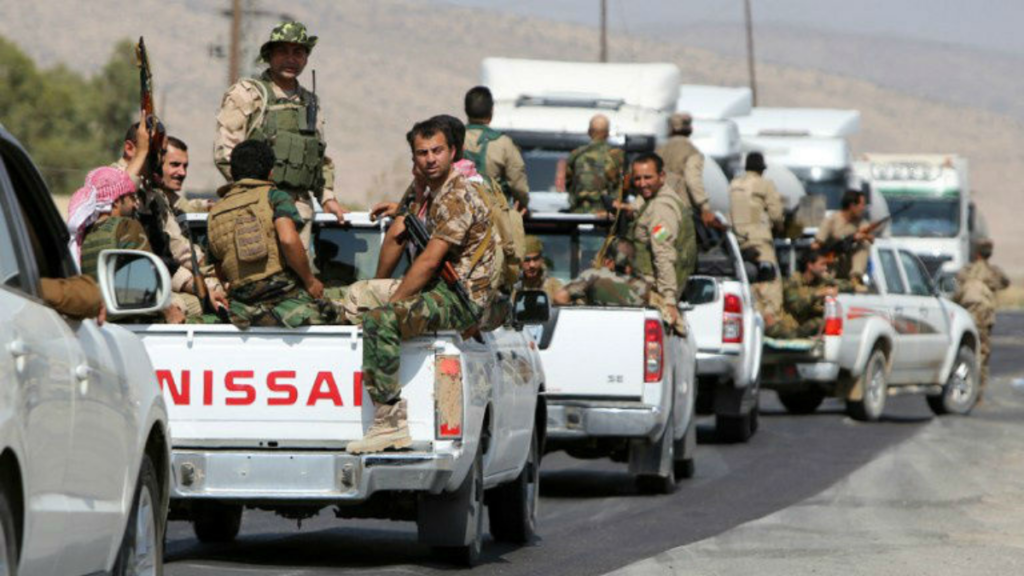
Peshmerga units then launched initial attacks toward Mosul and pushed the forward battle line closer to the city. This allowed Iraqi security forces to approach their main assault positions without having to fight through the same amount of ISIS held territory first. Townsend described those contributions as key accomplishments in the liberation campaign.
This history explains why military aid to Kurds became strategically important for Washington. The United States was not simply financing another foreign security force. It was supporting fighters who helped contain ISIS when the group was expanding rapidly and later helped create the conditions for Iraqi troops to retake Mosul. The relationship eventually moved from emergency battlefield cooperation toward a formal, long term security partnership.
(US Department of Defense, August 31, 2017, Department of Defense Press Briefing by General Townsend via Teleconference from Baghdad, Iraq)
(https://www.defense.gov/News/Transcripts/Transcript/Article/1297228/department-of-defense-press-briefing-by-general-townsend-via-teleconference-fro/)
The 2016 Security Partnership
The Pentagon and Kurdistan Regional Government first signed their security memorandum in 2016.
Washington renewed the agreement in September 2022. Under the renewed arrangement, the United States committed to supporting Peshmerga contributions to operations aimed at preventing ISIS from rebuilding its former power.
The agreement also encouraged reforms inside Kurdish security forces. Washington wanted stronger professional institutions and less political division within Peshmerga structures.
Pentagon officials described the relationship as a long standing partnership connected directly to the enduring defeat of ISIS. For Kurdish leaders, military aid to Kurds therefore became more than a yearly transfer of money. It represented a strategic relationship built during years of fighting.
Why Washington Wants to Reduce Support Now
Washington’s argument starts with a major change on the ground. ISIS no longer controls cities or large territories in Iraq, while Iraqi security forces and the Peshmerga are far more capable than they were during the 2014 crisis. The Trump administration therefore sees an opportunity to transfer greater responsibility to Iraq and reduce military aid to Kurds created for an emergency which has largely passed.
Money and military priorities also matter. The Pentagon is redirecting resources toward threats involving Iran, China, missiles, drones, air defense, cyber operations, and other modern capabilities. Continuing a separate Peshmerga assistance program becomes harder to defend when Washington believes Iraqi institutions should increasingly finance and manage their own security.
This explains the Pentagon’s proposal to eliminate dedicated Peshmerga funding for fiscal year 2027. Yet reducing military aid to Kurds does not automatically mean ending the US relationship with Iraqi Kurdistan. Washington is still considering future security arrangements, making the real question less about whether cooperation survives and more about what replaces the current system.
ISIS Has Lost Territory but Has Not Disappeared
ISIS lost its territorial caliphate in Iraq, but the security problem did not disappear with it. Small cells continue operating in remote and disputed areas, where militants can hide, rebuild networks, move supplies, and launch attacks without controlling major population centers. This makes intelligence, surveillance, rapid response, and coordination between Iraqi and Kurdish forces essential. Any reduction in military aid to Kurds therefore comes with a risk Washington cannot simply measure by how much territory ISIS currently holds.
The Peshmerga remain particularly important across northern Iraq. A 2025 Lead Inspector General report on Operation Inherent Resolve documented the continuing ISIS threat while also tracking US backed reforms designed to place Peshmerga forces under a more unified and professional command structure. The same report confirmed the US agreement supporting these forces runs through September 2026, subject to available funding. (Lead Inspector General for Operation Inherent Resolve, May 1, 2025, Operation Inherent Resolve Quarterly Report to the United States Congress, January 1, 2025 through March 31, 2025) (https://media.defense.gov/2025/May/01/2003702293/-1/-1/1/OIR_Q2_MAR2025_FINAL.PDF)
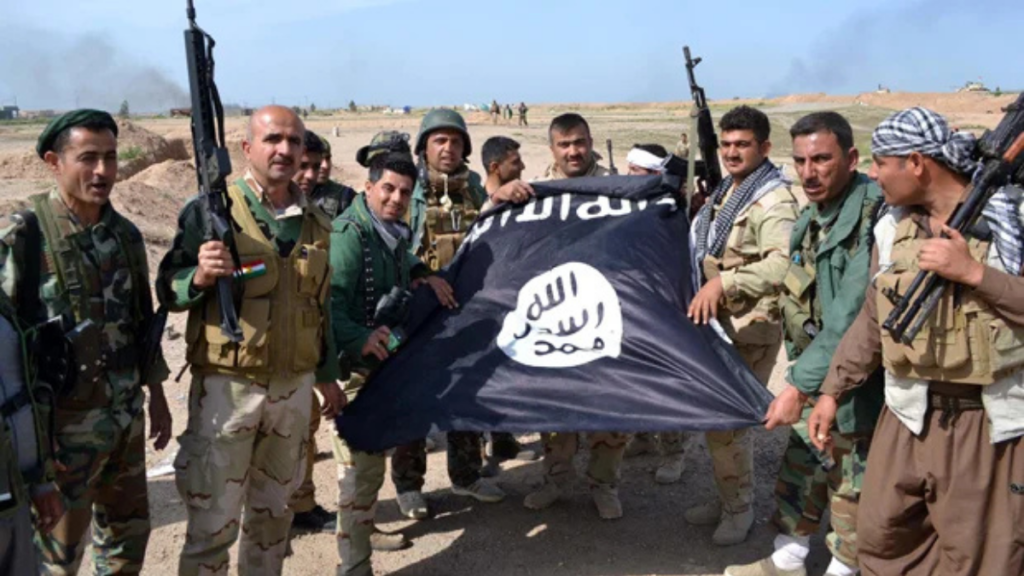
Ending military aid to Kurds would shift more responsibility to Baghdad and the Kurdistan Regional Government at a sensitive moment. Iraqi federal forces could fill some gaps, while Washington could preserve narrower training, intelligence, or security cooperation under a new arrangement. The real test is whether this transition happens without weakening pressure on ISIS or creating exploitable gaps between Iraqi and Kurdish forces.
Iran Changes the Entire Calculation
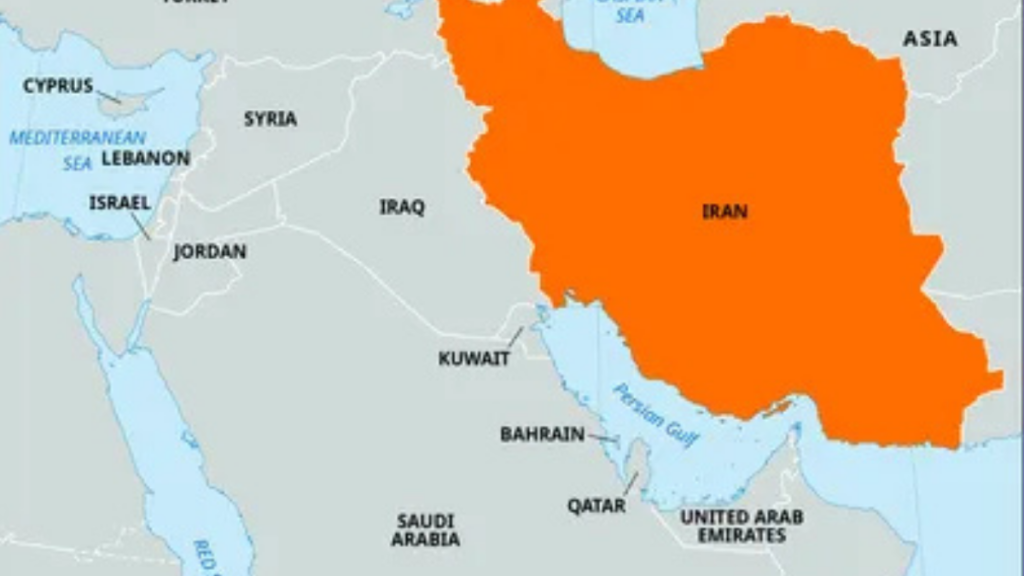
ISIS is no longer the only threat shaping this debate. Iraqi Kurdistan has also faced repeated missile and drone attacks linked to Iran and Iran aligned groups, pushing regional security far beyond the original counter ISIS mission. This makes any reduction in military aid to Kurds much more sensitive than a simple postwar budget decision.
For Kurdish leaders, the timing is the biggest concern. The Peshmerga were built up with US support to fight ISIS, but they now operate in a region exposed to broader state and militia pressure. If Washington reduces military aid to Kurds while also drawing down its military presence, Kurdish officials fear their deterrence and response capacity could weaken.
Iran also holds significant political and military influence inside Iraq through allied parties and armed groups. A smaller American footprint could give Tehran more room to pressure Erbil, shape security calculations in Baghdad, and expand its regional leverage without confronting the same level of US presence.
This leaves Iraqi Kurdistan facing two very different dangers at once. ISIS remains an insurgent threat capable of exploiting security gaps, while Iran represents a far stronger regional power with missiles, drones, militias, and deep influence across Iraq. For Washington, reducing support now could therefore carry consequences far beyond the original fight against ISIS.
September 30 Could Become a Turning Point
September 30, 2026, could mark a major shift in US policy toward Iraq. The Peshmerga agreement expires as the coalition mission winds down, placing military aid to Kurds inside a wider American military transition.
What changes after September 30 could shape northern Iraq in several ways:
- Baghdad gains more responsibility as Iraqi forces take a larger role in national security.
- Kurdish leaders may seek new guarantees if direct US support becomes more limited.
- Iran could test the new balance as American military presence declines.
- ISIS cells may exploit weak coordination between Iraqi and Kurdish security forces.
- US intelligence and training support may shrink unless a new bilateral framework replaces the current arrangement.
The key issue is not only whether military aid to Kurds is reduced. It is whether Washington can leave behind a stable security structure without creating new openings for Iran or ISIS.
Could America Repeat an Old Mistake?
The concern comes from a painful lesson in Iraq. US forces completed their withdrawal in 2011, but the security environment deteriorated dramatically in the following years. By June 2014, ISIS had captured Mosul, Iraq’s second largest city, and turned it into one of the most important centers of its self proclaimed caliphate. The scale of the crisis eventually forced Washington back into a major military campaign. For critics of cutting military aid to Kurds, this history makes another rapid reduction in local security support difficult to ignore.
Retaking Mosul showed how expensive reversing an extremist takeover could become. Iraqi forces began their major advance in October 2016 and fought for nine months before securing victory. The National Museum of the United States Army describes the battle as some of the fiercest urban combat since World War II. US led coalition support helped enable the Iraqi victory, with American Army advisers assisting Iraqi forces throughout the campaign.
Iraq is stronger today and ISIS no longer controls a territorial state, so 2026 should not be treated as a replay of 2014. The lesson is narrower but still important. Allowing security gaps to grow can make containing an extremist threat far harder later. Supporters of continued military aid to Kurds can therefore argue for preserving capable local partners before a smaller security problem becomes another costly regional crisis.
(National Museum of the United States Army, Dr. Mason Watson, June 14, 2022, The Conflict with ISIS: Operation INHERENT RESOLVE, June 2014 to January 2020) (https://www.thenmusa.org/class/the-conflict-with-isis-operation-inherent-resolve-june-2014-january-2020-with-mason-watson-2/)
Why Ending Aid Could Benefit Iran
Reducing military aid to Kurds could change more than Kurdish security. A smaller American role may give Iran greater room to expand its political and strategic influence across Iraq while raising doubts about Washington’s commitment to longtime partners.
3 consequences deserve close attention:
a. Iran Gains More Strategic Space
Iran already maintains significant influence in Iraq through political relationships, economic ties, and aligned armed groups. Cutting military aid to Kurds while American forces withdraw could weaken an important counterweight in northern Iraq and give Tehran greater freedom to pressure both Erbil and Baghdad.
b. US Credibility Faces a Test
The Peshmerga fought alongside the US led coalition during the campaign against ISIS. Other American partners will watch how Washington manages this relationship after the battlefield mission ends. A sudden reduction in support could raise questions about how long US security commitments last once immediate strategic goals have been achieved.
c. Russia and China Could Find an Opening
Any decline in American influence creates diplomatic opportunities for competitors. Russia can offer security and political engagement, while China can deepen economic relationships without demanding a large military presence. If Iraqi Kurdish leaders feel increasingly exposed, they may diversify foreign partnerships rather than depend primarily on Washington.
Baghdad Will Play a Bigger Role
Washington increasingly wants security coordination to run through Iraq’s national institutions, which would give Baghdad a larger role in supporting and directing the country’s defense structure. The Peshmerga remain part of Iraq’s wider security system, even with the Kurdistan Region’s extensive autonomy.
Reducing military aid to Kurds would therefore push Baghdad and Erbil toward deeper cooperation on funding, intelligence, border security, and counterterrorism. In theory, this could strengthen Iraqi sovereignty and reduce dependence on direct American support.
The challenge is political as much as military. Baghdad and Kurdish authorities have repeatedly clashed over budgets, salaries, energy, territory, and authority. If military aid to Kurds is reduced without a reliable replacement, funding gaps or poor coordination could weaken security in disputed areas and create new opportunities for ISIS.
What Happens Next
The September 30 deadline will decide whether Washington extends the current arrangement, replaces it, or allows it to expire. Congress could still reshape Pentagon funding, so military aid to Kurds may remain part of budget negotiations even after the administration signals its preferred direction.
Congress Could Still Change the Outcome
Pentagon budget requests do not become law automatically. Lawmakers can restore, reduce, or redirect funding during negotiations, leaving room for continued Peshmerga support under a revised structure.
A New Security Framework Could Replace Direct Aid
Washington could also shift support through Baghdad rather than continue a separate Peshmerga program. Training, intelligence, equipment, and operational cooperation may survive under a broader bilateral framework. The final arrangement will show whether Washington is making a genuine strategic withdrawal or restructuring how US security support reaches Iraqi Kurdistan.
Iran will Shape Every Decision
Any transition will unfold amid the wider confrontation between Washington and Tehran. Iran’s military reach and political influence in Iraq make its response important to both Baghdad and Erbil. For deeper context on how this conflict is reshaping regional security, read Kocean24’s analysis of the escalating US and Iran confrontation.
(Kocean24, Fred Laxy, August 24, 2026, USA Iran Peace Under Fire) (https://kocean24.com/usa-iran-peace-under-fire/)
Conclusion
Military aid to Kurds now sits at the heart of a bigger question about US power in Iraq. The Peshmerga helped defeat ISIS, but Washington is preparing for a smaller role while Iran gains room to maneuver. September 30 may reveal whether this shift strengthens Iraqi security or creates a new vulnerability. The next chapter could define who holds influence across northern Iraq. Until then, the region can only watch closely and hope diplomacy prevents another costly security crisis. Let’s see what happens next.